

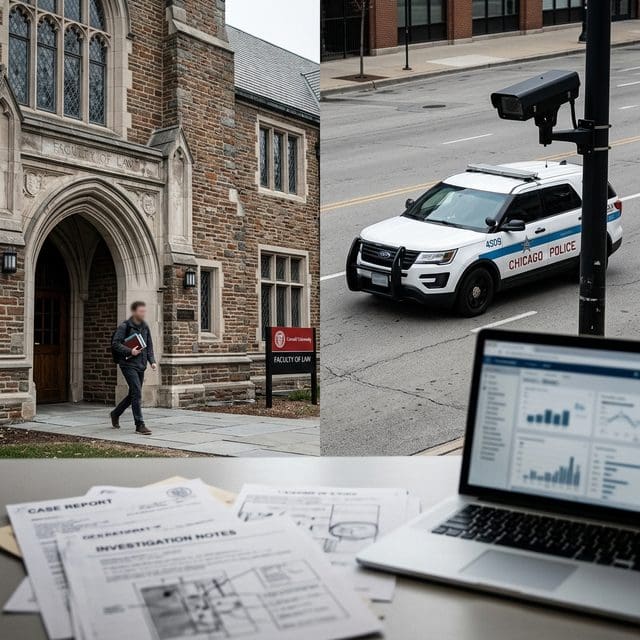
ABC News reporting on Cornell records and a FOX 32 report on Chicago police access to Flock data underscore how much remains unknown in two public-accountability cases.
Two recent investigations point to the same public-records problem: disclosures can sharpen questions about official decisions without supplying enough evidence to answer them. In Cornell’s handling of a 2024 sexual-assault allegation, ABC News reports that a police statement included language not reflected in an earlier prosecutor’s public summary. In Chicago, FOX 32 reports that audit logs reveal police use of Flock Safety camera data, but the records needed to assess the scope and authorization of that access remain unavailable in the material reviewed here.
The Cornell case has drawn renewed scrutiny after New York Gov. Kathy Hochul appointed Attorney General Letitia James special prosecutor on October 1. The appointment followed newly released information that raised questions about the Cornell Police Department investigation and the Tompkins County district attorney’s decision not to prosecute, according to the supplied reporting.
ABC News reported that Jane Doe’s full statement to Cornell police included the phrase “felt like coercion.” That wording was not included in the district attorney’s earlier public summary. The distinction is material to understanding what investigators and prosecutors were told, but it does not, by itself, establish what happened or resolve questions about the evidence.
Cornell’s own FAQ says university police investigated the matter in 2024 and provided the district attorney’s office with Doe’s sworn statement and a Snapchat screenshot. The FAQ, updated October 8, says the district attorney reopened the investigation after additional allegations appeared in a civil complaint. A criminal investigation being reopened is a procedural development, not a finding of guilt.
ABC News also obtained a heavily redacted report on Cornell’s internal Title IX investigation, conducted from May 2 to May 29, 2025. The available information establishes that the report covered hearings and witness interviews, but the underlying figures are not reliably available here. The redactions and missing detail limit what can be independently assessed about the process, the evidence considered, and the conclusions reached.
In Chicago, FOX 32 reported October 8 that audit logs shed light on Chicago Police Department searches of Flock Safety data and that the city was paying for access. The supplied account does not provide the logs themselves, the number of searches, the payment amount or mechanism, or an agreement authorizing access. It also does not establish which officers or agencies searched, what purposes they cited, how long data is retained, or whether the access complied with city policy.
Those gaps matter. Audit logs can document activity, but without the records and governing agreements, the public cannot determine the searches’ scale or whether they were permitted. The available reporting supports questions about access and oversight; it does not support a conclusion that police violated policy or law.
The two cases are distinct, and the available material does not connect them. But both illustrate why consequential claims should be tied to records that can be examined. For Cornell, the newly reported statement and the state appointment add context to a reopened inquiry, while the redacted internal report leaves important details unclear. For Chicago, the reported logs point toward a traceable record trail, but the logs and authorization documents are still the key documents needed to test the account.
Until those records are available, the firmest conclusions are limited: New York has assigned a special prosecutor to the Cornell matter, the district attorney has reopened the investigation, and a news report says Chicago police used and paid for access to Flock data. The unanswered questions are not evidence of misconduct. They are reasons to seek the documents that could confirm, qualify or disprove the claims.
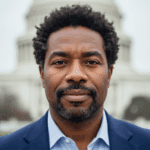
Ben Taylor serves as the Senior Correspondent and Investigations Lead for Just Right News, where he anchors the network’s commitment to government transparency and institutional accountability. With a career defined by a relentless pursuit of the facts, Taylor spearheads the acclaimed feature series “The Paper Trail,” a deep-dive investigative column that prioritizes primary source documentation over political rhetoric. Based in the heart of the nation’s capital, he has earned a reputation as one of the most formidable investigative journalists in Washington, D.C., known specifically for his mastery of public records and the Freedom of Information Act.
Taylor’s approach to journalism is deeply rooted in his upbringing in Kansas City, Missouri. Growing up in the “Show Me State,” he developed a healthy skepticism of centralized power and a profound respect for the common-sense values of the American heartland. This Midwestern foundation informs his reporting today, as he bridges the gap between the complex machinations of federal bureaucracy and the everyday concerns of citizens across the country. For Taylor, investigative reporting is not about chasing headlines; it is about ensuring that the government remains answerable to the people it serves.
As an African American man working within the conservative media landscape, Taylor brings a principled perspective to his beat. He views the Constitution and the right to information as the ultimate equalizers in a free society. His work often highlights how bureaucratic overreach and lack of transparency disproportionately affect individual liberties. By focusing on the “paper trail,” Taylor strips away the spin of partisan talking points, instead providing Just Right News readers with the raw data and internal communications that reveal how their tax dollars are spent and how policy decisions are actually made.
In his role as Investigations Lead, Taylor oversees a team dedicated to uncovering the stories that mainstream outlets often overlook. Whether he is auditing federal spending, investigating regulatory overreach, or exposing inefficiencies within the administrative state, his methodology remains consistent: follow the evidence wherever it leads. His presence in Washington, D.C., allows him to maintain a constant watch over the halls of power, yet he remains steadfastly connected to his roots, ensuring his reporting reflects the clarity and directness of his Missouri home.
Throughout his tenure at Just Right News, Taylor has become a vital voice for those who demand integrity in public office. He believes that a well-informed electorate is the strongest defense against government overreach, and he has dedicated his career to providing the public with the tools they need to hold their leaders accountable. Through “The Paper Trail” and his broader investigative work, Ben Taylor continues to set the standard for rigorous, document-driven journalism that champions the values of transparency, individual responsibility, and the rule of law.