

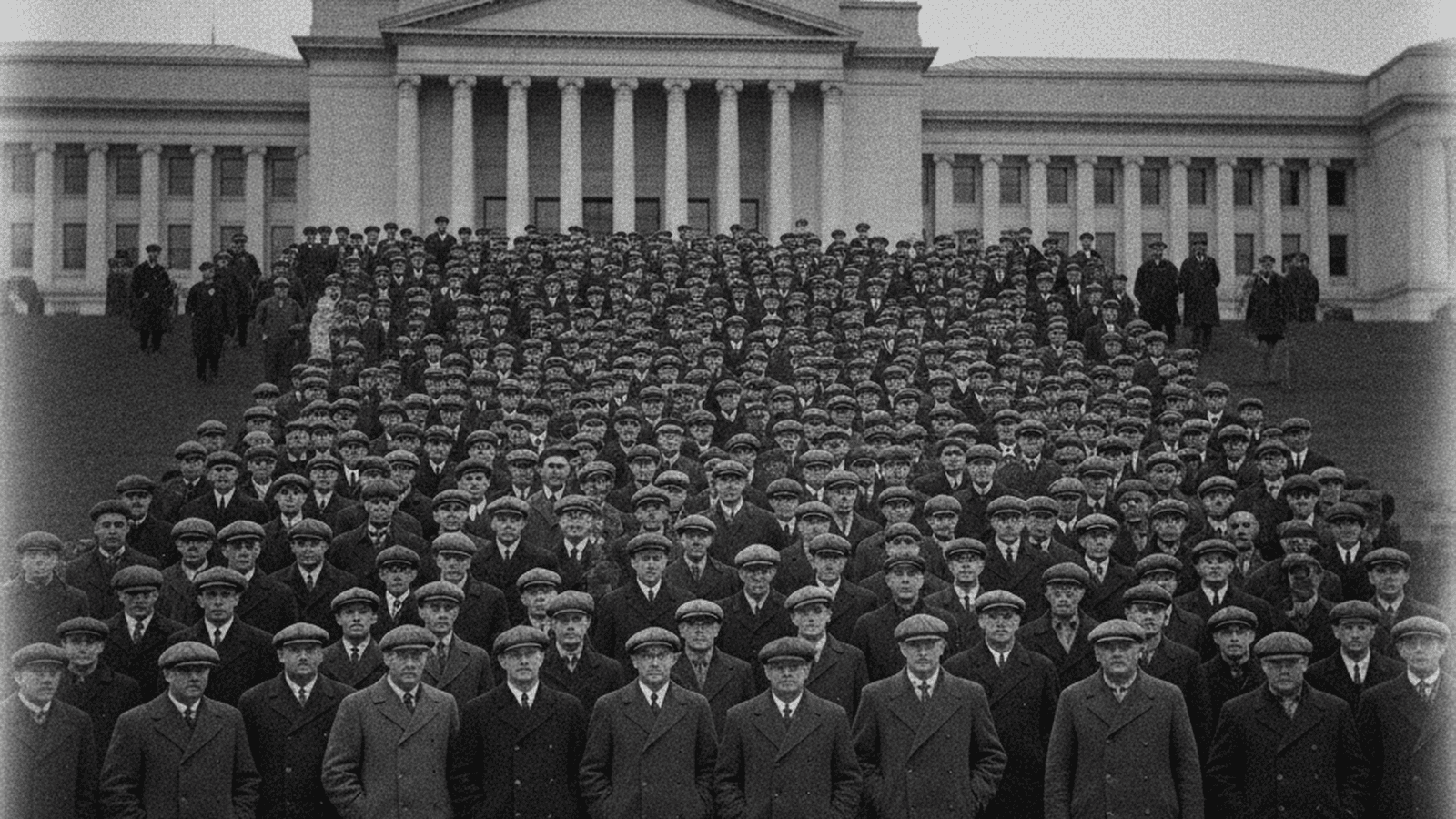
In 1933, Washington State underwent a massive political realignment as the Great Depression swept a populist Democratic majority into the legislature. This shift ended decades of Republican dominance and introduced radical relief measures that reshaped the state’s relationship with its citizens in the United States.
TLDR: Following the 1932 landslide, Washington’s 1933 legislative session marked a permanent shift toward Democratic control. Inexperienced populist lawmakers pushed for aggressive relief programs and new taxes, fundamentally altering the state’s political structure and social policy during the height of the New Deal era.
The 1932 general election in Washington State represented one of the most abrupt political shifts in the history of the Pacific Northwest. For nearly forty years, the Republican Party had maintained a stranglehold on the state’s executive and legislative branches, reflecting the region’s conservative, resource-based economy. However, the onset of the Great Depression and the resulting collapse of the timber and fishing industries created a vacuum that was filled by a new, more radical brand of politics. When the 1933 legislative session opened in Olympia, the political landscape of the United States had been fundamentally altered at the local level, mirroring the national rise of Franklin D. Roosevelt.
The newly elected Democratic majority was not a cohesive block. It was comprised of traditional party members and a large contingent of political outsiders affiliated with the Unemployed Citizens’ League (UCL) and the “Liberty League.” These freshman legislators were often workers, farmers, and activists who had never held public office. Their arrival in the state capital signaled a departure from the business-friendly policies of the 1920s toward a platform of direct relief and state-managed economic intervention. This influx of populist energy created a volatile environment within the state capitol, as the new members sought to bypass traditional legislative norms.
Governor Clarence D. Martin, a businessman from Cheney, led the new administration. While Martin was a Democrat, he represented the more conservative wing of the party. He immediately faced pressure from the “left-wing” of his own caucus, which demanded the implementation of “Production for Use” programs. These proposals suggested that the state should take over idle factories and farms to allow the unemployed to produce goods for their own consumption, bypassing the traditional capitalist market. Martin, wary of such radical departures, spent much of the session attempting to moderate the demands of his own party.
The 1933 session was characterized by intense legislative maneuvering as the different factions struggled to define the state’s response to the economic crisis. One of the most significant achievements was the passage of the 1933 Revenue Act. This legislation introduced a graduated personal income tax and a corporate income tax, intended to shift the tax burden away from property owners who were facing widespread foreclosures. Additionally, the legislature passed the “Bone Power Bill,” which allowed municipal power districts to sell electricity outside their borders, a major victory for proponents of public utilities over private monopolies.
Tensions reached a boiling point in early 1933 when thousands of UCL members organized a “March on Olympia.” The protesters occupied the capitol grounds and even entered the legislative galleries, demanding that the state provide more robust support for the destitute. This direct action forced the legislature to accelerate its deliberations on the Washington Emergency Relief Administration, which was designed to coordinate the distribution of state and federal aid. The presence of the unemployed in the halls of power served as a constant reminder of the high stakes of the session.
The parliamentary realignment of 1933 had lasting consequences for Washington’s governance. Although the state Supreme Court eventually declared the graduated income tax unconstitutional in the case of Culliton v. Chase, the legislature quickly pivoted to implement a “Business and Occupation” tax to maintain state revenue. This period marked the end of the Republican era and the beginning of a competitive, often Democratic-leaning, political environment. The structural changes made during this session, including the centralization of relief efforts and the expansion of executive authority, became permanent features of the state’s administrative framework. Subsequent reforms in the late 1930s continued to refine these systems, ensuring that the state remained a primary actor in the economic security of its residents.

Dylan Brooks serves as the Senior Correspondent for Statehouses and Local Governance at Just Right News, where he brings a principled, constitutionalist lens to the often-overlooked machinery of state-level politics. As the lead voice behind the acclaimed feature series “Fifty Laboratories of Power,” Dylan has dedicated his career to the idea that the most impactful governance happens closest to home. His reporting consistently champions the Tenth Amendment, exploring how individual states can serve as testing grounds for innovative, conservative policy solutions that prioritize personal liberty and fiscal responsibility.
A native of Des Moines, Iowa, Dylan’s journalistic philosophy was forged in the heart of the American Midwest. Growing up in a community where local school board meetings and town halls were the bedrock of civic life, he developed a deep appreciation for the “retail politics” of the heartland. This upbringing instilled in him a fundamental belief that the American experiment is best preserved when power is decentralized. He carries the values of his Iowa roots into every assignment, maintaining a healthy skepticism of federal overreach and a steadfast commitment to the concerns of everyday citizens over the interests of the administrative state.
Now based in Madison, Wisconsin, Dylan operates from one of the nation’s most pivotal political battlegrounds. His location in a state capital known for its rigorous policy debates allows him to provide Just Right News readers with a front-row seat to the legislative process. From Madison, he tracks the ripple effects of statehouse decisions on local municipalities, ensuring that the connection between high-level policy and community impact is never lost. His work often highlights the success of conservative governors and legislatures in fostering economic growth, protecting parental rights, and securing the integrity of local institutions.
As an African American man in the conservative media landscape, Dylan offers a vital perspective on how limited government and free-market principles empower individuals and families. He frequently reports on how deregulation and school choice initiatives provide new avenues for success in underserved communities, challenging the monolithic narratives often presented by legacy media outlets. Dylan’s work is characterized by a commitment to the facts and a refusal to shy away from the complex realities of modern governance.
Throughout his tenure at Just Right News, Dylan has become a trusted authority for readers who value a rigorous, principled approach to the news. Whether he is dissecting a complex state budget or profiling a local grassroots movement, his goal remains the same: to provide the American public with the information they need to hold their local leaders accountable. By focusing on the “Fifty Laboratories of Power,” Dylan Brooks ensures that the vital work being done in statehouses across the country receives the national attention it deserves, always through a lens that respects the traditions and sovereignty of the American people.