

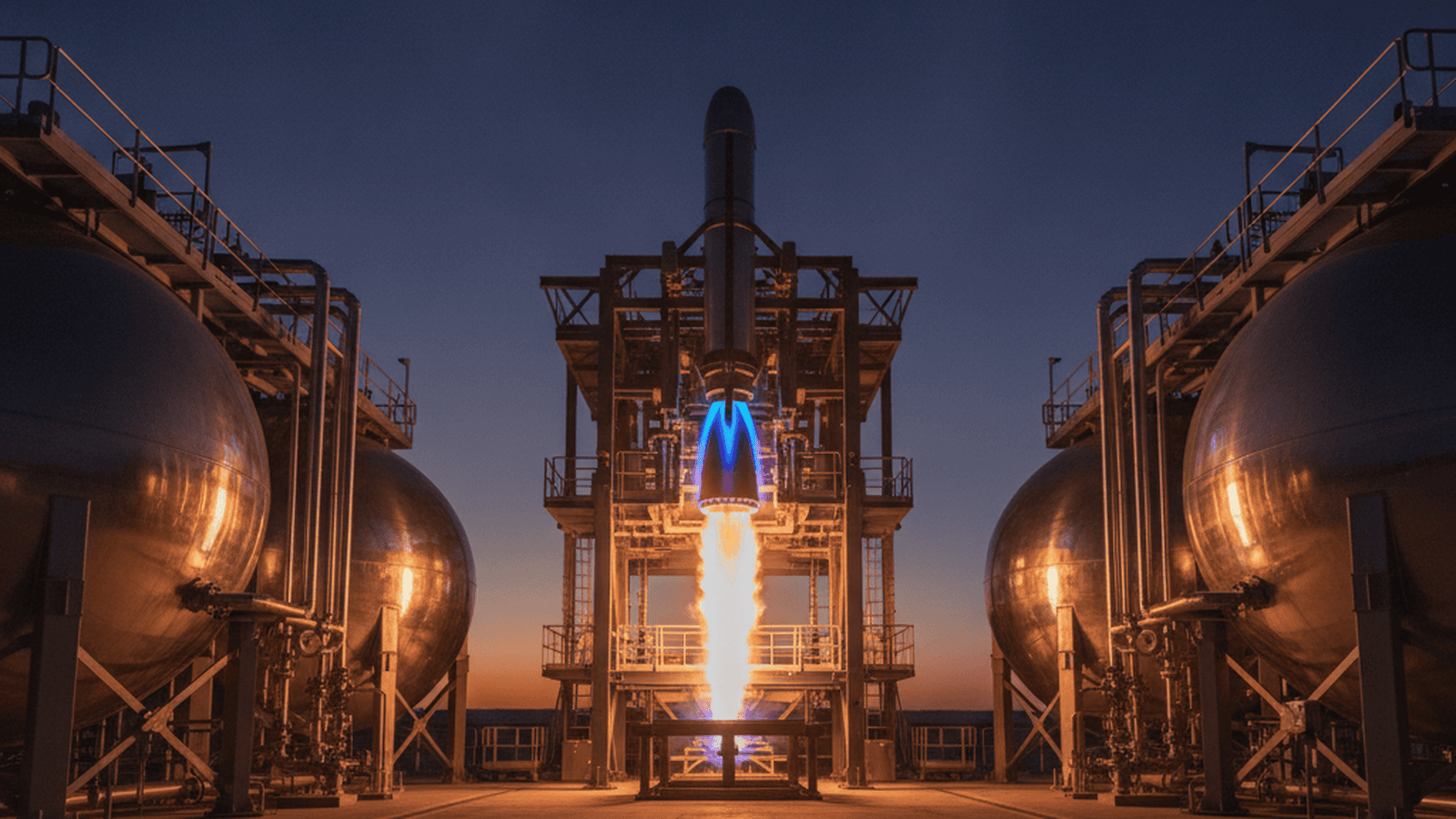
Stoke Space has successfully tested its full-flow staged combustion engine, a high-efficiency propulsion system designed for its fully reusable Nova rocket. The test at the Moses Lake facility confirms the viability of the complex engine cycle, which maximizes propellant energy and reduces hardware stress. This milestone positions the private firm as a key player in the next generation of rapid-turnaround orbital launch technology.
TLDR: Washington-based Stoke Space has validated its full-flow staged combustion engine, a feat of engineering that enables high-efficiency, fully reusable rockets. By mastering this complex propulsion cycle, the company moves closer to its goal of 100% vehicle reusability, potentially lowering the cost and increasing the frequency of commercial space missions.
Stoke Space, an aerospace manufacturer based in Kent, Washington, has successfully completed a full-power test fire of its first-stage engine, marking a critical milestone in the development of its fully reusable Nova launch vehicle. The test, conducted at the company’s dedicated facility in Moses Lake, validated the performance of a full-flow staged combustion (FFSC) cycle. This propulsion architecture is widely considered the pinnacle of liquid rocket engine design due to its high efficiency and inherent suitability for rapid reusability.
The FFSC cycle operates by routing the entire flow of liquid oxygen and liquefied natural gas through separate pre-burners before they reach the main combustion chamber. In most traditional rocket engines, a small portion of the propellant is burned and exhausted to power the pumps, which results in wasted energy. By contrast, the full-flow design ensures that all propellants are eventually consumed in the main chamber, maximizing the specific impulse and thrust-to-weight ratio of the engine. This method also allows the turbines to run cooler and at lower pressures, which significantly reduces the mechanical fatigue on the engine components.
During the recent validation campaign, the engine reached its target chamber pressures and demonstrated stable combustion across its intended operating envelope. Engineers monitored thousands of data points to ensure that the regenerative cooling systems and high-pressure seals performed according to theoretical models. The success of this test confirms that the company has overcome the significant thermal and fluid dynamic challenges associated with managing two separate gas-phase propellant streams. The test stand at Moses Lake was specifically upgraded to handle the cryogenic requirements and the immense acoustic energy generated by the engine at full throttle.
Mastering FFSC technology places Stoke Space in an elite category of aerospace entities. Historically, only the Soviet Union’s experimental RD-270 and SpaceX’s Raptor engine have successfully utilized this cycle in a functional capacity. The ability of a private startup, founded by former engineers from Blue Origin and SpaceX, to develop such a complex system independently signals a shift in the accessibility of advanced aerospace engineering. While larger firms have focused on heavy-lift capabilities, Stoke Space is applying this high-efficiency technology to a medium-lift vehicle designed for high-frequency orbital sorties.
The broader objective for the firm is the creation of a rocket that can be flown, landed, and reflown with minimal refurbishment. Traditional rockets often require weeks or months of maintenance between launches, largely due to the corrosive and erosive effects of rocket exhaust on engine internals. The cooler turbine temperatures of the FFSC cycle are expected to extend the operational life of the engine, making daily orbital flights a more realistic possibility for the commercial satellite industry. This approach addresses the primary bottleneck in modern space access: the high cost of hardware that is discarded after a single use.
With the first-stage engine validated, the engineering team is now shifting focus toward the integration of the propulsion system with the Nova airframe. Upcoming milestones include long-duration static fires and the testing of the unique regeneratively cooled heat shield designed for the rocket’s second stage. This second stage is intended to survive the intense heat of atmospheric reentry using a novel metallic cooling system rather than traditional ablative tiles. If these subsequent phases are successful, the company will move toward its first orbital flight attempt, potentially transforming the economics of the satellite market by providing a truly circular launch infrastructure.

Mason Reed serves as a Staff Writer for Just Right News, where he spearheads the Future Frontiers & Special Projects desk. In an era defined by rapid technological shifts and evolving social landscapes, Mason provides a steady, principled voice, examining the innovations of tomorrow through the lens of traditional American values. His work is most prominently featured in his signature series, “The Next Horizon,” where he explores the intersection of emerging technology, national sovereignty, and the preservation of individual liberty.
A native of San Diego, California, Mason’s worldview was shaped by the unique culture of his hometown. Growing up in a region defined by its strong military presence and its history of maritime industry, he developed a deep-seated respect for the institutions that provide national stability and the entrepreneurial spirit that drives the American economy. This upbringing instilled in him a belief that true progress is not found in discarding the past, but in building upon a foundation of proven principles. His reporting often reflects this San Diego influence, emphasizing the importance of a robust national defense and the necessity of maintaining a competitive edge in the global marketplace.
Now based in San Francisco, Mason operates from the heart of the world’s technological engine. Living and working in the Bay Area provides him with a front-row seat to the advancements—and the ideological challenges—emanating from Silicon Valley. While many in the region embrace a “move fast and break things” mentality, Mason’s reporting serves as a vital counterweight. He offers Just Right News readers a “boots on the ground” perspective, documenting how radical local policies and the concentration of tech power impact the everyday lives of citizens. His proximity to the industry allows him to cut through the marketing jargon of big tech to uncover the real-world implications for privacy, free speech, and the nuclear family.
In his “Future Frontiers” beat, Mason tackles complex subjects ranging from the ethics of artificial intelligence to the burgeoning private space race. He approaches these topics with a healthy skepticism toward centralized bureaucracy, championing instead the decentralized innovations that empower individuals. Through “The Next Horizon,” he highlights the pioneers and thinkers who are working to ensure that the future remains a place where human dignity and constitutional rights are protected. He believes that the rapid pace of change requires more than just technical expertise; it requires a moral compass rooted in the Western tradition.
Throughout his tenure at Just Right News, Mason has remained committed to the idea that the future is something to be shaped, not merely accepted. His writing is characterized by a rigorous defense of American exceptionalism and a belief that the country’s best days lie ahead, provided it remains true to its founding ideals. Whether he is investigating the impact of automation on the American workforce or profiling the next generation of aerospace engineers, Mason Reed ensures that his readers are equipped with the insights they need to navigate a changing world with confidence and clarity.