

Recent legal and regulatory actions signal a shift toward stricter institutional accountability, focusing on teacher qualification standards and the urgent need for safe, adequate student housing.
A series of recent legal and regulatory interventions highlights a growing global emphasis on institutional accountability and the preservation of merit within the education sector. From the enforcement of rigorous teacher qualifications to the demand for safe student infrastructure, authorities are signaling that bureaucratic complacency must end to protect students and the workforce. These actions reflect a principled stance that educational institutions must function as effective engines of human capital.
On September 8, 2026, the Supreme Court of India issued a significant interim order barring the appointment or continuation of teachers in schools and colleges who fail to meet established federal qualifications. The ruling specifically targets practices in Assam, where local laws had allowed for the provincialization of services without the transparent, merit-based vetting required by the National Council for Teacher Education (NCTE) and the University Grants Commission (UGC). This judicial intervention reinforces the principle that long-term contractual service does not grant a right to permanent employment if professional standards are not met. The Court held that the state’s power to enforce higher appointment standards prevails over the “legitimate expectations” of those who entered the system through less rigorous channels.
This push for quality control is supported by mandates requiring teachers to obtain mandatory Teacher Eligibility Test (TET) credentials by August 31, 2028. To facilitate this, governments are being urged to hold these qualifying exams twice a year. By tightening compliance, the judiciary is prioritizing student outcomes over the convenience of institutional hiring, ensuring the workforce is trained by qualified professionals.
Parallel to these workforce standards, the National Human Rights Commission (NHRC) has turned its attention to student safety. The commission ordered the Delhi Chief Secretary and the UGC to produce a comprehensive action plan by October 15, 2026, to address the severe hostel shortage at Delhi University. The scale of the gap is staggering; current data suggests the university offers only about 4,000 seats for a student population numbering in the tens of thousands. This scarcity has forced students into unregulated, off-campus private accommodations that often bypass safety codes.
The urgency of this housing crisis was underscored by the recent collapse of a building in Satya Niketan, a primary hub for student rentals. In the wake of this tragedy, the Delhi government ordered structural audits of private guest accommodations and is exploring increased floor area ratios to allow colleges to expand vertically. While the Delhi High Court recently refused an urgent hearing on a petition demanding hostels in all colleges, the NHRC’s mandate forces a quantification of the shortfall and assigns clear financial responsibility for new construction.
Some regional governments are stepping in where central institutions have failed. Uttar Pradesh has earmarked ₹5 crore in its 2026-27 budget to build state-run hostels in the Delhi-NCR region specifically for its residents pursuing higher education. This move highlights a growing recognition that student success is linked to safe, affordable living conditions. Meanwhile, elite institutions like Princeton University continue to focus on refining the student experience, such as the launch of the Black Theater Initiative, illustrating a contrast between institutions managing basic growth and those enhancing campus life.
Ultimately, these developments reflect a trend toward treating education as essential human capital requiring both physical safety and intellectual rigor. By enforcing teacher standards and demanding infrastructure, regulators are ensuring that the investment students and parents make in the future is not undermined by administrative neglect.
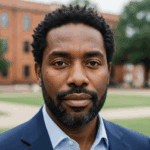
Daniel Owens serves as a Senior Correspondent for Just Right News, where he leads the newsroom’s coverage of Education, Workforce, and Upward Mobility. In an era where the national conversation often overlooks the practical foundations of success, Owens brings a principled perspective to the forefront of the media landscape. His work is defined by a commitment to the idea that a strong society is built on the pillars of quality education, a robust work ethic, and the removal of bureaucratic barriers to individual achievement.
Born and raised in Cleveland, Ohio, Owens’s worldview was shaped by the industrial landscape of the Midwest. Growing up in a city known for its grit and resilience, he witnessed firsthand the transformative power of steady employment and the devastating effects of economic stagnation. This background instilled in him a deep respect for the American worker and a healthy skepticism toward top-down government solutions that often fail to reach the communities they intend to help. As an African American man who has navigated the path to professional success, Owens approaches his beat with a nuanced understanding of how meritocracy and personal responsibility intersect with opportunity. He frequently draws on his roots to highlight the importance of family stability and community-led initiatives in fostering the next generation of leaders.
At Just Right News, Owens is the architect of the acclaimed feature series, “The Learning Curve.” Through this platform, he explores the evolving landscape of American schooling, from the rise of the school choice movement to the revitalization of trade schools and vocational training. He frequently challenges the status quo of higher education, advocating for a return to academic rigor and the practical alignment of degrees with market demands. For Owens, education is not merely about obtaining credentials; it is about equipping young people with the tools necessary to lead self-sufficient, meaningful lives. His reporting on “The Learning Curve” has become essential reading for parents and policymakers who believe that educational competition and parental rights are the keys to a brighter future.
Now based in Raleigh, North Carolina, Owens finds himself at the heart of one of the nation’s most dynamic regions for innovation and growth. Raleigh’s unique blend of traditional values and a fast-paced economy provides the perfect backdrop for his reporting on the modern workforce. From the tech hubs of the Research Triangle to the rural communities of the South, he tracks how shifts in the economy are impacting families and local industries. His reporting often highlights the success stories of entrepreneurs and workers who are thriving by embracing the values of hard work and innovation.
Throughout his career, Daniel Owens has remained a steadfast voice for the student seeking a better path and the worker striving for a better life. His reporting for Just Right News serves as a vital resource for readers who value common-sense solutions to the challenges of the 21st-century economy. By focusing on the intersection of policy and the human spirit, Owens continues to provide a roadmap for how individuals and communities can achieve lasting upward mobility.