

The 2004 Washington gubernatorial election became a significant constitutional and legal crisis in the United States after three counts produced different winners. Following a hand recount that flipped the lead to Christine Gregoire, a high-stakes trial in Chelan County tested the judiciary’s authority to overturn certified election results based on procedural irregularities.
TLDR: In 2004, Washington State faced a historic constitutional crisis when the gubernatorial race was decided by just 129 votes after multiple recounts. The ensuing legal battle reached the Superior Court, where judges weighed the integrity of the ballot against the high burden of proof required to nullify a certified democratic outcome.
The 2004 gubernatorial election in Washington State stands as a landmark case in American electoral jurisprudence, representing one of the most protracted and legally complex executive contests in the nation’s history. The race featured a stark contrast between Republican real estate agent Dino Rossi and Democratic Attorney General Christine Gregoire. As the polls closed on election night, the state entered a period of unprecedented political uncertainty. The initial tally showed Rossi leading by a razor-thin margin of 261 votes out of nearly three million cast, a gap so small it triggered an automatic machine recount under state law.
The machine recount, completed in mid-November, narrowed Rossi’s lead even further to just 42 votes. This razor-thin margin allowed the trailing candidate to request a manual hand recount, provided they paid the associated costs. The Democratic Party, sensing a path to victory, funded this massive undertaking across all 39 counties. For weeks, election workers meticulously examined millions of paper ballots. During this process, a significant controversy erupted in King County—the state’s largest Democratic stronghold—where officials discovered several hundred “enhanced” or previously uncounted ballots. When the final hand recount results were released in late December, the lead had flipped; Gregoire was now ahead by 129 votes. Secretary of State Sam Reed certified Gregoire as the winner, but the transition of power was immediately clouded by intense allegations of systemic fraud and administrative incompetence.
Refusing to concede, the Republican Party filed a lawsuit in Chelan County Superior Court, seeking to nullify the election results. Their legal team argued that the presence of “illegal votes”—including ballots cast by felons, deceased individuals, and unverified provisional ballots—exceeded Gregoire’s 129-vote margin of victory. This created a genuine constitutional crisis regarding the legitimacy of the state’s executive branch. If the court found the election “uncertain,” it possessed the theoretical power to order a new election or set aside the certification, an unprecedented move in modern Washington history that would have left the state without a clearly elected leader.
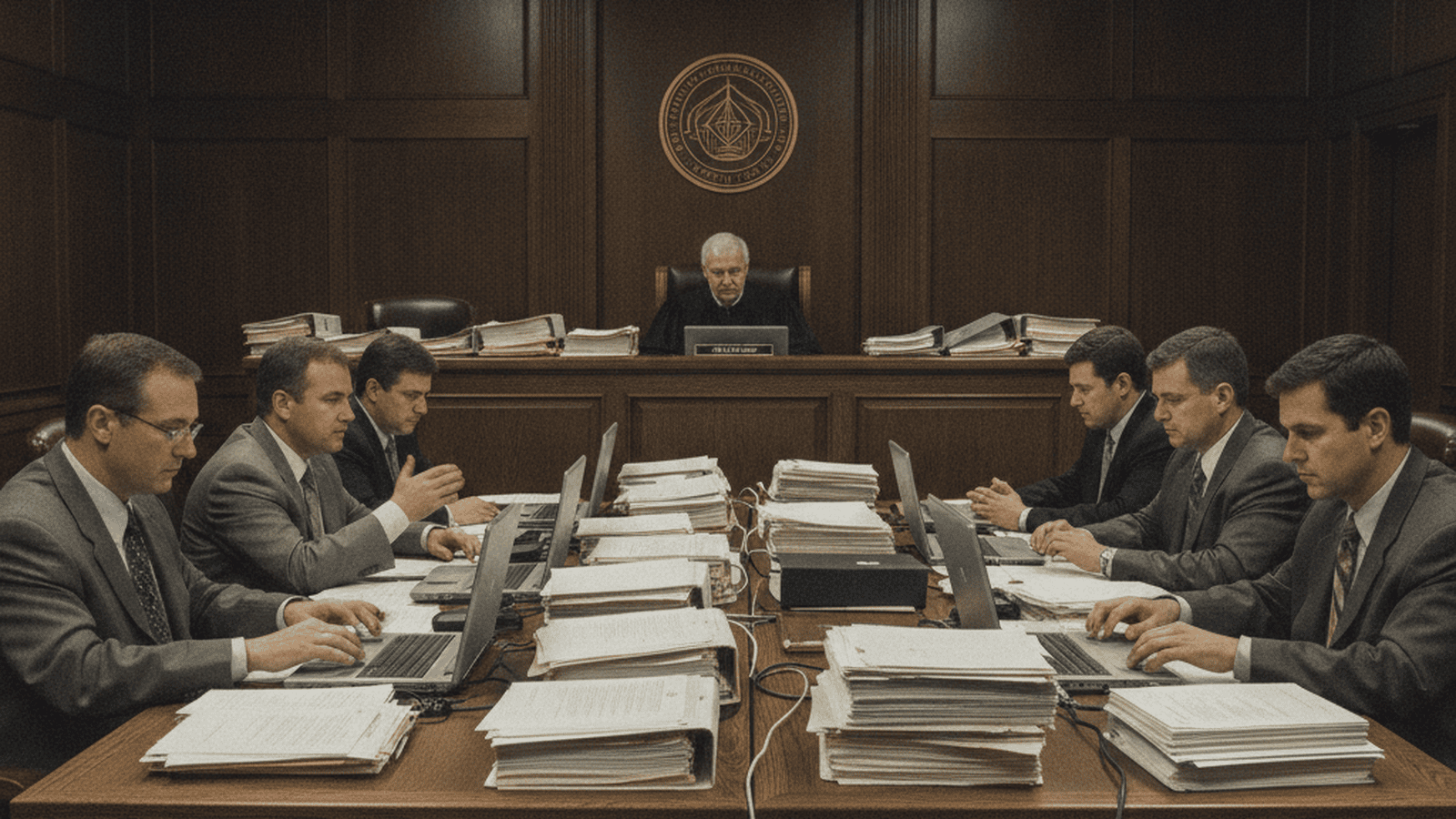
The trial, presided over by Judge John Bridges in May 2005, became a focal point for national debates on election integrity and the role of the judiciary in democratic processes. Lawyers for the GOP presented evidence of nearly 2,000 “illegal” votes, primarily concentrated in King County. However, the legal standard for overturning a certified election in Washington was exceptionally high. The plaintiffs were required to provide “clear and convincing evidence” not just that illegal votes were cast, but specifically which candidate those votes were cast for. The Republicans proposed a “proportional deduction” method, suggesting the court should subtract votes based on the precinct’s overall voting patterns to account for the ineligible ballots.
Judge Bridges ultimately ruled in favor of Gregoire, delivering a decision that emphasized the sanctity of the certified result. He acknowledged that while the election was “not perfect” and that hundreds of ineligible ballots had been processed due to human error, the Republicans had failed to prove that those specific votes changed the final outcome. Bridges noted that the court could not simply subtract votes proportionally, as that would infringe upon the principle of the secret ballot and rely on statistical guesswork rather than hard evidence.
Gregoire remained in office, but the bitterness of the dispute lingered, fundamentally altering the state’s political landscape. The fallout prompted the Washington State Legislature to enact sweeping reforms. Lawmakers moved the state’s primary election from September to August to allow more time for ballot processing and potential recounts. Most significantly, the state eventually transitioned to a mandatory all-mail voting system and implemented more rigorous signature verification and felon-tracking databases. These changes were designed to prevent the kind of administrative ambiguity that nearly paralyzed the state government during the 2004 transition, ensuring that future elections would have clearer paths to resolution.

Lila Hayes serves as a Staff Writer for Just Right News, where she anchors the “Courts, Law, and Constitutional Order” beat. Her work is defined by a steadfast commitment to the foundational principles of the American republic and a rigorous defense of the legal frameworks that ensure national stability. As a primary voice for the outlet, she provides readers with a clear-eyed analysis of the judiciary, focusing on the importance of originalism and the preservation of the separation of powers.
Lila’s perspective was forged in the American heartland. Raised in St. Louis, Missouri, she grew up in a Hispanic household where the values of hard work, faith, and respect for the law were paramount. Her upbringing instilled in her a deep appreciation for the American Dream and the legal protections that make it possible. This Missouri background remains a cornerstone of her reporting, providing a grounded, common-sense counter-narrative to the often-insular legal circles of the coastal elite. She understands that the decisions made in high-court chambers have real-world consequences for families and small business owners across the country.
At Just Right News, Lila has become widely recognized for her signature feature series, “The Rulebook of Power.” In this ongoing project, she delves into the mechanics of the federal government, examining how administrative overreach and judicial activism can threaten the delicate balance of the Constitution. She approaches her beat with the tenacity of a veteran journalist and the precision of a legal scholar, consistently advocating for a judiciary that interprets the law as written rather than legislating from the bench. For Lila, the Constitution is not a “living” document subject to the whims of modern social trends; it is a fixed standard that ensures the government remains the servant of the people, not their master.
Now based in Philadelphia, Pennsylvania, Lila finds herself at the very epicenter of American constitutional history. Living and working in the city where the Founders drafted the documents she defends daily provides a constant source of inspiration. The historic halls and landmarks of Philadelphia serve as a daily reminder of the high stakes involved in her reporting. Her presence in the city allows her to bridge the gap between the historical intent of the law and its contemporary application, ensuring that the legacy of the Founding Fathers remains central to the national conversation.
Throughout her career, Lila has remained dedicated to the idea that a free society requires an informed citizenry and a transparent legal system. Her reporting is more than just a collection of headlines; it is a defense of the constitutional order that has sustained the nation for over two centuries. By focusing on the “Rulebook of Power,” she ensures that her readers understand not just what is happening in the courtrooms, but why those decisions matter for the future of American liberty. Lila Hayes continues to be a vital voice for those who believe that the law should be a shield for the citizen and a constraint on the state.