

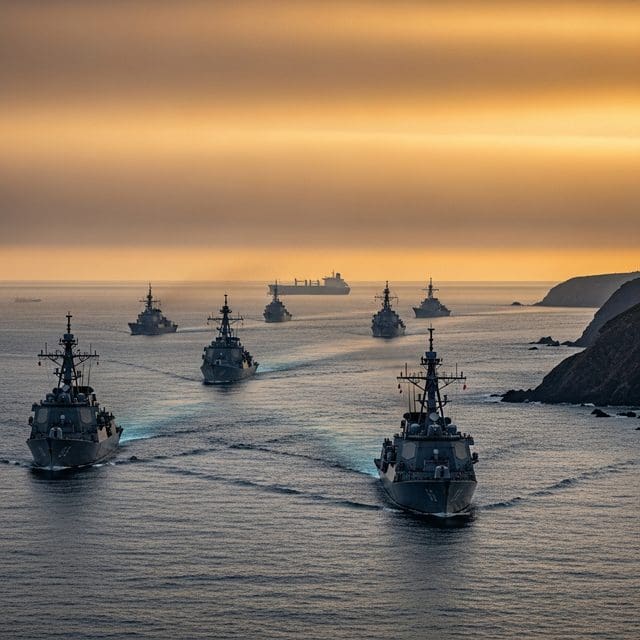
Tehran adopts a maximum deterrence strategy and centralizes military command while Pakistan attempts to broker an end to the Strait of Hormuz blockade.
The Middle East has entered a volatile phase as Tehran formalizes a shift toward offensive readiness. Reports indicate that Iran’s new Supreme Leader, Mojtaba Khamenei, has ordered a transition to a “maximum deterrence” posture. This strategy integrates the Islamic Revolutionary Guard Corps (IRGC) command through the Khatam al-Anbiya headquarters, signaling a centralized military readiness directed at the United States and its regional allies. To solidify this pivot, Tehran promoted Ahmad Vahidi to major general to lead this posture, ensuring the IRGC is prepared for offensive operations rather than reactive defense.
Domestically, the return of former IRGC intelligence chief Hossein Taeb to lead the Basij suggests an intensified focus on internal security. This tilt ensures the regime maintains control at home while projecting power abroad. The centralization of command under Mojtaba Khamenei appears designed to eliminate factional squabbling that surfaced during the Supreme Leader’s recent absences. By consolidating the security apparatus, Tehran is signaling that its leadership remains unified in its confrontation with external adversaries.
At the center of global economic friction is the continued disruption in the Strait of Hormuz. Mohsen Rezaei, representing Iran’s Supreme National Security Council, reiterated that the waterway will remain effectively closed until U.S. military operations cease, the naval blockade is lifted, and frozen Iranian assets are released. The closure has triggered warnings from the UK Treasury, which notes that elevated fuel prices and supply chain disruptions are projected to drag on Western economic growth through 2027. Official forecasts for the United Kingdom flag these disruptions as a primary risk to national prosperity.
Amidst this escalation, Pakistan has emerged as a primary intermediary. Interior Minister Mohsin Naqvi is currently in Tehran for his sixth visit, engaging in high-level talks with President Masoud Pezeshkian and Foreign Minister Abbas Araghchi. Islamabad is attempting to revive the “Islamabad MoU” to facilitate direct communication between Washington and Tehran. While Pakistani officials suggest a peace deal may be “back in sight,” regional analysts remain skeptical. Indian commentary highlights the difficulty a “Sunni NATO” aligned state faces in gaining the trust of a Shia-led Iran, suggesting sectarian hurdles complicate Islamabad’s role.
While the Middle East remains the primary theater of friction, China is navigating its own transition following the death of former Premier Zhu Rongji at age 97. As the architect of China’s WTO entry, Zhu’s legacy has sparked renewed debate in Beijing regarding economic liberalization. This comes as China balances growth objectives against energy volatility. Beijing is also managing regional tensions, stating the border with India remains stable despite reports of military activity in Arunachal.
For the United States, the stakes involve maintaining freedom of navigation while managing a multi-front deterrent. The Pentagon continues to monitor Iranian movements and conduct strikes against threats to shipping, even as diplomatic channels in Islamabad and Qatar remain active. The tension between Iran’s hardening military red lines and optimistic messaging from mediators suggests a resolution remains contingent on concessions neither side has fully embraced. As the administration navigates these waters, the confirmation of Todd Blanche as Attorney General and the release of Marine veteran Robert Gilman from Russia underscore a focus on domestic legal control and the recovery of American personnel.

Olivia Kendall serves as the Senior Correspondent for Geopolitics, Defense, and Foreign Policy at Just Right News, where she provides a principled, conservative perspective on the complex forces shaping the global stage. With a career dedicated to deconstructing the intricacies of international relations, Kendall has become a trusted voice for readers who value national sovereignty, a robust military, and a foreign policy that prioritizes American interests above all else.
A native of Washington, D.C., Kendall’s professional journey is deeply rooted in her upbringing within the nation’s capital. Growing up in the epicenter of American political life, she developed an early and profound understanding of how policy is crafted and, more importantly, how it often fails to account for the values of the American heartland. This unique vantage point allowed her to witness firsthand the rise of globalist bureaucracies, fueling her commitment to reporting that champions the constitutional foundations of the United States. Her background as a British White American further informs her worldview, providing her with a keen appreciation for the Western tradition and the enduring importance of the “Special Relationship” in maintaining global stability.
Now based in Arlington, Virginia, Kendall operates from the doorstep of the Pentagon and the heart of the nation’s defense establishment. Her proximity to the decision-makers in the military and intelligence communities allows her to provide boots-on-the-ground reporting that is both timely and deeply informed. For Kendall, Arlington is more than just a base of operations; it is a daily reminder of the sacrifices made by the men and women in uniform. This connection to the defense community drives her rigorous coverage of military readiness and her advocacy for a “peace through strength” approach to diplomacy.
At Just Right News, Kendall is perhaps best known for her acclaimed feature series, “The World’s Shadow on America.” In this ongoing project, she explores the direct correlation between international developments and the daily lives of American citizens. Whether she is analyzing the encroachment of foreign adversaries in domestic supply chains or the impact of international treaties on local economies, Kendall’s work serves as a vital bridge between distant geopolitical shifts and their consequences at home. She rejects the notion that foreign policy is an abstract concern for elites, instead proving that what happens in the corridors of power in Brussels or Beijing has a tangible “shadow” that falls across every American doorstep.
Throughout her tenure, Kendall has remained a steadfast critic of international overreach and a vocal proponent of a clear-eyed, realistic foreign policy. She brings a sharp analytical mind to her beat, often challenging the prevailing narratives of the mainstream media to uncover the underlying truths that affect national security. Her reporting is characterized by a refusal to compromise on the truth and a dedication to the idea that a strong, secure America is the world’s best hope for liberty. As a Senior Correspondent, Olivia Kendall continues to lead the charge in providing the essential context and conservative insight necessary to navigate an increasingly volatile world.