

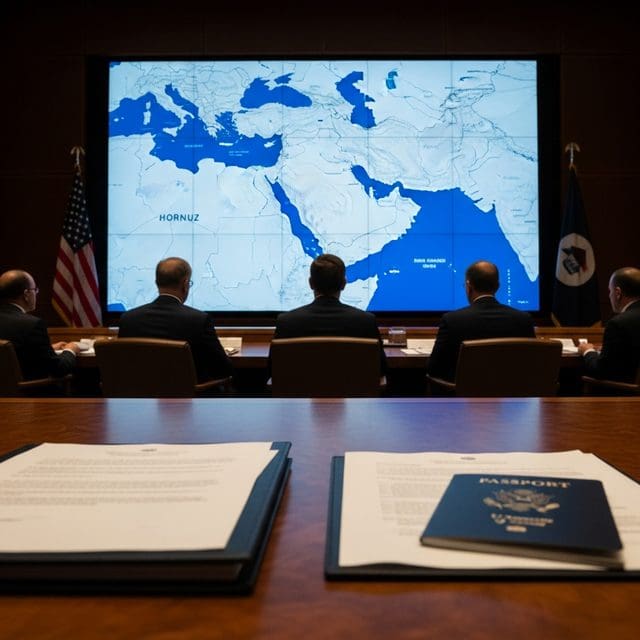
Strategic Middle East negotiations and domestic legal disputes over security clearances highlight the complex interplay between international stability and the administrative integrity of U.S. border policy.
The intersection of international diplomacy and domestic administrative stability remains a critical factor in managing global migration flows and maintaining the integrity of the American social contract. As the Trump administration navigates a complex 60-day ceasefire extension involving Lebanon and Iran, the implications for regional displacement and long-term demographic shifts are coming into sharper focus. The memorandum of understanding, which includes the reopening of the Strait of Hormuz without tolls and sanctions relief based on compliance, represents a strategic effort to stabilize a region that has historically been a primary driver of asylum seekers fleeing conflict-driven volatility.
Despite these diplomatic efforts, internal friction within the U.S. security apparatus poses potential risks to the consistent application of enforcement policy. Former Air Force Secretary Frank Kendall announced on August 11, 2026, his intention to sue the administration in federal district court over the revocation of his security clearance. Kendall alleges the move was retaliatory and lacked due-process protections. Legal experts suggest this case could test the limits of executive authority in managing the personnel responsible for sensitive national security and migration data, particularly when those officials publicly criticize ongoing war policy.
Strategic analysts, including former Defense Secretary Mark Esper, have noted that the administration remains on its ‘back foot’ despite heavy military strikes in the nearly six-month conflict with Iran. This strategic reactivity often complicates the long-term planning required for border enforcement and the processing of migrant populations. Fresh reporting indicates the administration is working on a ‘secret plan’ for a longer regional accommodation with Iran and Hezbollah, including quiet talks on rules of engagement. However, the lack of a durable political settlement continues to leave the door open for sudden shifts in migration patterns should the ceasefire fail to hold beyond its current term.
On the domestic front, the administration continues to fill key roles that oversee the intersection of intelligence and law enforcement. The nomination of Jay Clayton, U.S. Attorney for the Southern District of New York, as Director of National Intelligence on June 11, 2026, signals a focus on integrating financial and legal oversight into the national security framework. This integration is vital for monitoring the illicit networks that facilitate unauthorized migration and human trafficking, as well as ensuring that visa programs are not exploited by bad actors during periods of regional transition.
While global attention is often captured by cultural milestones, such as the record-breaking domestic box office performance of ‘Spider-Man: Brand New Day’ or the $75 billion IPO of SpaceX, the underlying mechanics of international law remain the primary determinants of national stability. The ability to maintain community character depends heavily on the success of these diplomatic ceasefires and the integrity of the administrative systems that support them. Even as organizations like the Cohen Veterans Network expand mental health access for Air Force and Space Force families—addressing the human cost of these conflicts—the broader challenge remains the preservation of the rule of law amid shifting global demographics.
Ultimately, the success of the April 17 ceasefire and its subsequent extensions will be measured by their ability to prevent a renewed surge of displaced persons. For a nation rooted in the social contract, the stability of the Strait of Hormuz is not merely an economic concern regarding oil prices; it is a foundational element of a global order that, when fractured, places immense pressure on the American border and the local communities tasked with upholding the law.

Julie Harris serves as a Staff Writer for Just Right News, where she tackles some of the most pressing and complex issues facing the nation today. As the lead reporter for the Migration, Demographics & Cultural Shifts beat, Julie provides a grounded, principled perspective on how the movement of people and the changing makeup of communities are reshaping the American landscape. Her work is defined by a commitment to exploring the long-term consequences of social change, prioritizing the stability of local institutions and the preservation of national identity.
Her deep understanding of these issues is rooted in her upbringing in Tucson, Arizona. Growing up in a prominent border state, Julie witnessed firsthand the intricate realities of migration and the profound impact it has on local infrastructure, law enforcement, and the social fabric. This early exposure instilled in her a respect for the rule of law and a keen awareness of the challenges that arise when federal policies fail to align with the needs of border communities. Her reporting often reflects this lived experience, bringing a necessary level of nuance to topics that are often treated with abstraction in coastal newsrooms.
Now based in Santa Fe, New Mexico, Julie continues to report from the heart of the American Southwest. Her location provides a unique vantage point to observe the intersection of traditional regional cultures and the modern shifts brought about by both internal and external migration. In Santa Fe, a city defined by its rich history and distinct cultural heritage, she finds a perfect environment to explore how communities strive to maintain their character while navigating the pressures of a rapidly changing world. This perspective allows her to bridge the gap between policy debates in Washington and the reality of life in the high desert.
At Just Right News, Julie’s work is characterized by a dedication to examining the data and the human stories that define the “New Mosaic” of America. Her signature feature series, “The New Mosaic,” has become a cornerstone of her reporting. Through this series, Julie explores the evolving social architecture of the United States, documenting how shifts in population affect everything from local economies to the political landscape. She brings a critical eye to the narrative of demographic inevitability, instead asking how these shifts impact the average citizen’s sense of belonging and the integrity of the American social contract.
Julie’s background and her dedication to conservative principles make her a vital voice in contemporary journalism. She understands that demographics are more than just numbers on a spreadsheet; they represent the future of the American family and the nation’s enduring legacy. Through her diligent reporting and insightful analysis, Julie Harris ensures that her readers are informed about the forces shaping their world, providing a perspective that is as thoughtful as it is necessary for the modern era.