

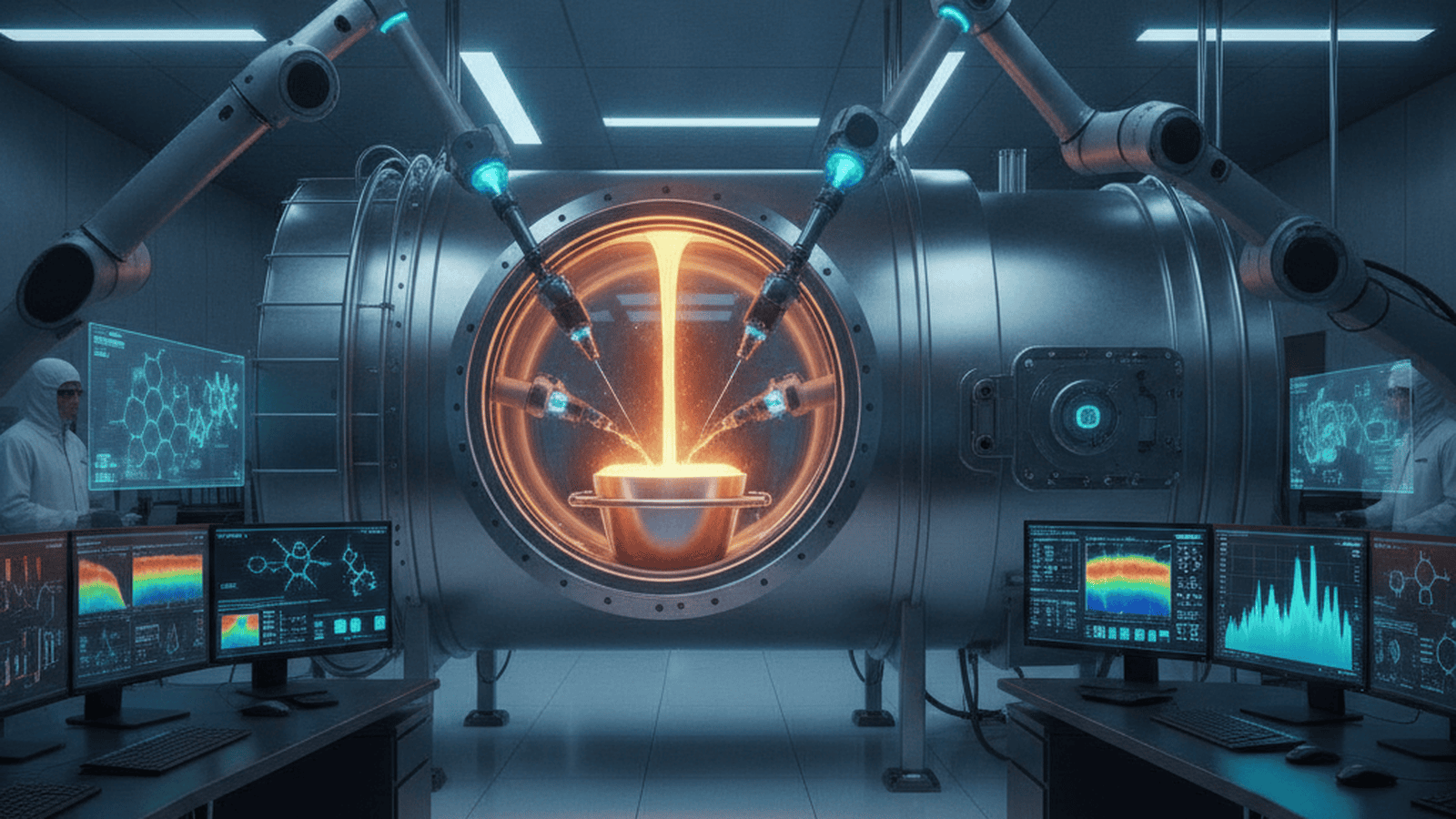
Astroforge has successfully tested its asteroid refinery technology in a vacuum chamber, proving that precious metals can be extracted from regolith in space-like conditions. This validation marks a major shift toward industrializing deep space and sourcing rare elements like platinum from near-Earth asteroids.
TLDR: California-based Astroforge has validated its proprietary refinery technology in a vacuum environment, successfully extracting platinum-group metals from simulated asteroid material. This breakthrough demonstrates the feasibility of in-situ resource processing, a critical requirement for making asteroid mining economically viable and reducing the environmental burden of terrestrial mining operations.
The pursuit of extraterrestrial resources transitioned from theoretical physics to industrial engineering this year as Astroforge, a California-based aerospace startup, successfully demonstrated its refinery technology in a simulated space environment. The test, conducted within a high-vacuum chamber, validated the company’s ability to extract platinum-group metals from simulated asteroid material. This milestone represents a critical step toward reducing the cost of rare earth elements by sourcing them from the millions of near-Earth asteroids that orbit the sun.
Traditional mining on Earth is an energy-intensive process with significant environmental impacts, often requiring the displacement of vast amounts of soil to reach concentrated ore. In contrast, asteroid mining targets celestial bodies that are essentially pure concentrations of valuable minerals. Astroforge’s approach focuses on refining these materials in situ, or during transit, rather than hauling raw rock back to Earth’s gravity well. This strategy minimizes the mass required for return trips, making the economics of deep-space commerce more viable for private investors.
During the recent laboratory trials, engineers subjected a proprietary refinery unit to conditions mimicking the harsh vacuum of space. The system utilized a combination of heat and chemical processing to vaporize and then isolate specific metallic components from a regolith simulant. By maintaining structural integrity and chemical efficiency under these conditions, the hardware proved it could survive the thermal cycles and pressure differentials inherent in deep-space operations. The refinery must operate without the benefit of atmospheric convection for cooling, requiring advanced radiative heat management systems.
The engineering team focused specifically on the extraction of platinum, iridium, and palladium. These metals are essential for modern electronics, hydrogen fuel cells, and catalytic converters but are notoriously difficult to mine sustainably on the terrestrial surface. The success of the vacuum test suggests that the automated systems required for such a feat can operate without human intervention, a necessity for missions targeting asteroids millions of miles away. The automated software managed the entire extraction cycle, from initial heating to the final collection of refined ingots.
Astroforge is currently preparing for its upcoming Odin mission, which aims to fly by a target asteroid to characterize its composition using deep-space sensors. The data gathered from that mission will inform the final design of the refinery that was validated in the lab. Unlike previous government-led sample return missions that focused on scientific analysis, this private-sector initiative is built entirely around industrial scalability and resource acquisition. The company’s roadmap includes a series of increasingly complex missions designed to prove the entire supply chain from prospecting to delivery.
The implications of successful asteroid refining extend beyond the immediate market for precious metals. If the technology can be scaled, it could provide the raw materials necessary for large-scale orbital construction, such as solar power satellites or permanent habitats. By sourcing materials in space, future missions can bypass the gravity tax of launching heavy components from Earth. This could lead to a self-sustaining space economy where the resources for exploration are found along the way.
Future research will focus on the long-term durability of the refinery components against cosmic radiation and micro-meteoroid impacts. The company plans to integrate the validated refinery into a full-scale spacecraft for a demonstration mission in the coming years. As the private space sector matures, the ability to process resources in the vacuum of space will likely become the cornerstone of a new cis-lunar economy, fundamentally altering the global supply chain for rare minerals.

Mason Reed serves as a Staff Writer for Just Right News, where he spearheads the Future Frontiers & Special Projects desk. In an era defined by rapid technological shifts and evolving social landscapes, Mason provides a steady, principled voice, examining the innovations of tomorrow through the lens of traditional American values. His work is most prominently featured in his signature series, “The Next Horizon,” where he explores the intersection of emerging technology, national sovereignty, and the preservation of individual liberty.
A native of San Diego, California, Mason’s worldview was shaped by the unique culture of his hometown. Growing up in a region defined by its strong military presence and its history of maritime industry, he developed a deep-seated respect for the institutions that provide national stability and the entrepreneurial spirit that drives the American economy. This upbringing instilled in him a belief that true progress is not found in discarding the past, but in building upon a foundation of proven principles. His reporting often reflects this San Diego influence, emphasizing the importance of a robust national defense and the necessity of maintaining a competitive edge in the global marketplace.
Now based in San Francisco, Mason operates from the heart of the world’s technological engine. Living and working in the Bay Area provides him with a front-row seat to the advancements—and the ideological challenges—emanating from Silicon Valley. While many in the region embrace a “move fast and break things” mentality, Mason’s reporting serves as a vital counterweight. He offers Just Right News readers a “boots on the ground” perspective, documenting how radical local policies and the concentration of tech power impact the everyday lives of citizens. His proximity to the industry allows him to cut through the marketing jargon of big tech to uncover the real-world implications for privacy, free speech, and the nuclear family.
In his “Future Frontiers” beat, Mason tackles complex subjects ranging from the ethics of artificial intelligence to the burgeoning private space race. He approaches these topics with a healthy skepticism toward centralized bureaucracy, championing instead the decentralized innovations that empower individuals. Through “The Next Horizon,” he highlights the pioneers and thinkers who are working to ensure that the future remains a place where human dignity and constitutional rights are protected. He believes that the rapid pace of change requires more than just technical expertise; it requires a moral compass rooted in the Western tradition.
Throughout his tenure at Just Right News, Mason has remained committed to the idea that the future is something to be shaped, not merely accepted. His writing is characterized by a rigorous defense of American exceptionalism and a belief that the country’s best days lie ahead, provided it remains true to its founding ideals. Whether he is investigating the impact of automation on the American workforce or profiling the next generation of aerospace engineers, Mason Reed ensures that his readers are equipped with the insights they need to navigate a changing world with confidence and clarity.