

A 2021 study comparing brain scans found that Tsimane adults in Bolivia experienced age-related brain-volume loss about 70 percent more slowly than people in several industrialized populations. The research highlights a population with both high exposure to infection and low cardiovascular disease, but does not identify a single cause or prove that slower volume loss guarantees better cognitive function.
TLDR: Brain scans from 746 Tsimane adults in Bolivia showed age-related brain-volume loss about 70 percent slower than in comparison groups from industrialized countries. The field study offers clues about brain aging, but its results do not prove that any single lifestyle factor caused the difference or that brain volume alone measures cognitive health.
A study of Indigenous Tsimane adults in Bolivia found that their brains shrink with age substantially more slowly, on average, than brains in several industrialized populations. The finding offers a rare look at brain aging among people whose lives differ sharply from those of urban populations, and raises questions about how health, activity and daily environment shape the brain over time.
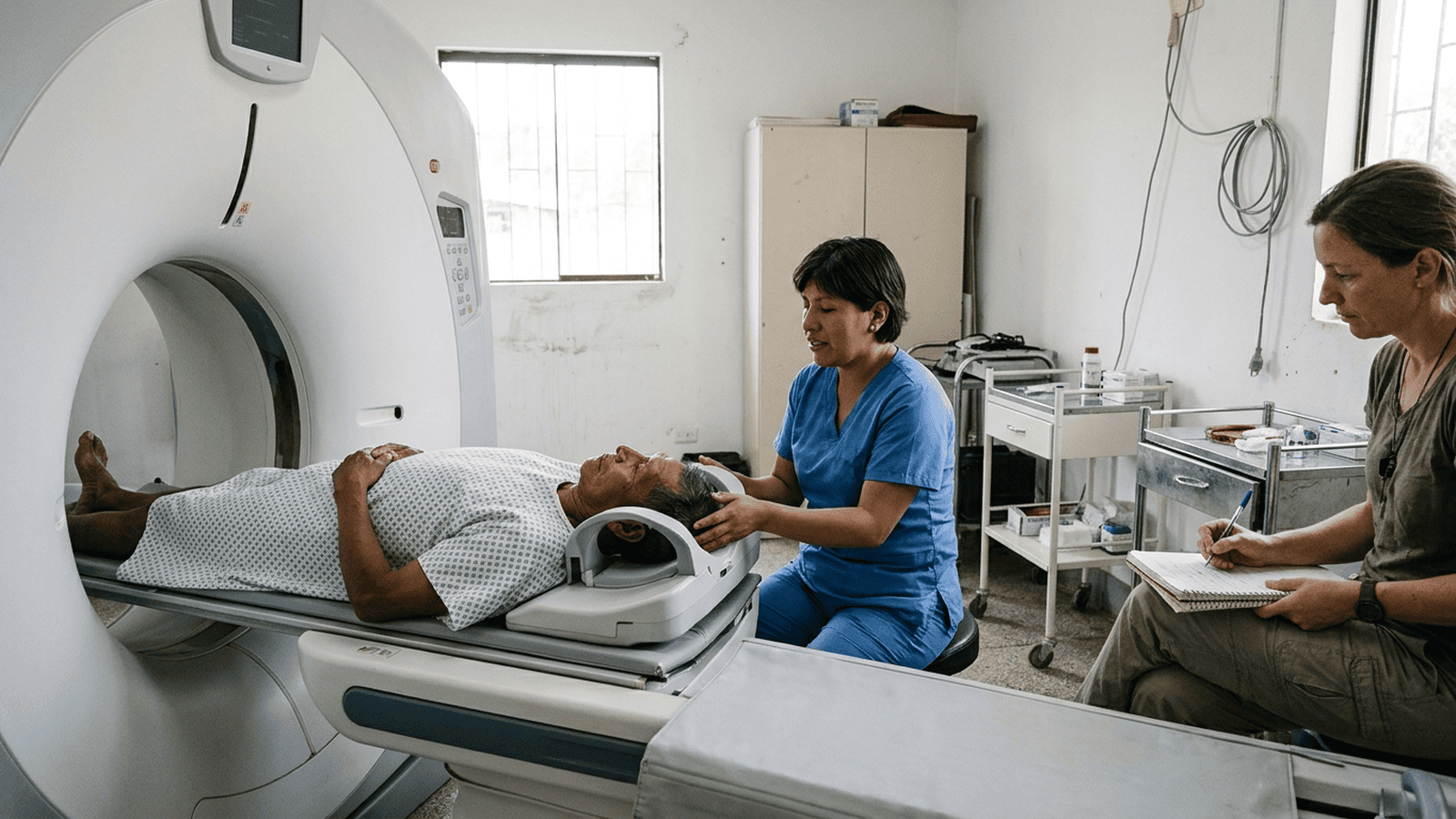
Researchers assessed 746 Tsimane adults aged 40 to 94, a community living in the Bolivian Amazon whose livelihoods include farming, fishing, hunting and gathering. Participants traveled from remote villages to a medical facility for brain scans, an undertaking that required extensive coordination across difficult terrain. The team compared brain volumes across ages with measurements from people in Germany, the Netherlands and the United States.
The results, published in the Journal of Gerontology: Medical Sciences in 2021, indicated that age-related loss of brain volume among the Tsimane was about 70 percent lower than in the comparison populations. Brain volume generally declines as people age, reflecting changes in tissue that can accompany both ordinary aging and disease. The researchers found that the difference persisted across the adult age range studied, rather than appearing only in a small group of unusually healthy older participants.
That pattern is striking because Tsimane people face substantial exposure to infections and parasites, which can contribute to inflammation. Inflammation has been linked to poorer health in many settings, and chronic inflammation is often considered a possible risk to the aging brain. Yet the Tsimane also have relatively low levels of cardiovascular disease, a major contributor to damage in blood vessels that supply the brain. Their daily lives typically involve considerable physical activity, while diets are based largely on locally available, minimally processed foods.
The study does not establish that any one feature of Tsimane life caused slower brain-volume loss. Differences in diet, movement, infection, education, access to health care and other conditions may interact, and the comparisons cannot disentangle all of them. The researchers also cautioned that brain volume is only one measure of brain health. A scan cannot by itself show how well someone thinks, remembers or carries out everyday tasks.
The work adds to a growing body of research showing that brain aging is not identical across populations. Earlier research with Tsimane communities found low rates of coronary artery disease, even though infections and inflammation are common. Taken together, those findings suggest that the risks associated with inflammation may depend on broader conditions, including cardiovascular health and daily behavior. They also underline why research based on a narrow range of wealthy, urban populations may not capture the full range of human aging.
Conducting research in remote communities required more than bringing scientific equipment into the field. Researchers worked with local participants and interpreters, arranged travel, and sought to make the scanning process accessible to people who might otherwise be excluded from medical studies. Such logistics shape which communities are represented in neuroscience and help explain why large, comparable datasets from diverse populations remain uncommon.
The findings should not be treated as a simple prescription to copy one community’s lifestyle. Tsimane people face health challenges of their own, and their circumstances cannot be separated from their history, culture and access to services. Instead, the results point to useful questions for future research: which combinations of physical activity, cardiovascular protection, nutrition and other factors best preserve brain tissue, and whether those influences can be measured over time. Longer-term studies linking repeated scans with cognitive tests and health records could help clarify how brain structure relates to everyday function.

Susan Carter serves as a Senior Correspondent for Just Right News, where she leads the network’s comprehensive coverage of Health, Medicine, and Public Policy. With a career dedicated to dissecting the complexities of the American healthcare system, Susan brings a principled perspective to the most pressing debates of the day. Her reporting is characterized by a commitment to individual liberty, fiscal responsibility, and a healthy skepticism of government overreach, making her a vital voice for audiences seeking clarity in an increasingly regulated landscape.
Raised in Minneapolis, Minnesota, Susan’s professional outlook is deeply informed by the values of the American heartland. Growing up in the Twin Cities, she witnessed firsthand the importance of community-driven solutions and the resilience of the individual. This Midwestern foundation instilled in her a firm belief that the best answers to public policy challenges often come from local innovation and personal responsibility rather than top-down federal mandates. Her background allows her to translate complex legislative jargon into stories that resonate with families who value common sense and local autonomy.
Now based in Baltimore, Maryland, Susan operates from a unique vantage point at the intersection of medical innovation and urban policy. Living and working in a city renowned for its world-class medical institutions and significant public health challenges, she has a front-row seat to the realities of the modern healthcare landscape. Her proximity to these hubs of research and policy allows her to scrutinize how government intervention affects the quality of care and the freedom of medical professionals. In Baltimore, she sees the tangible results of policy decisions, using the city as a lens through which to examine the broader national health debate and the impact of federal spending on local communities.
As the lead for the acclaimed feature series “The Cost of Care,” Susan dives deep into the economic realities facing patients and providers alike. Her work focuses on the necessity of price transparency, the benefits of market competition, and the preservation of the sacred doctor-patient relationship. She is a staunch advocate for the idea that a well-informed public is the best defense against bureaucratic inefficiency. Through this series, she has exposed the hidden drivers of rising medical expenses, always seeking to empower the individual consumer over the massive institution.
Susan’s reporting on public policy is characterized by a commitment to rigorous inquiry and a focus on constitutional limits. Whether she is analyzing new pharmaceutical regulations, investigating the impact of federal health mandates, or exploring the future of medical technology, her goal remains the same: to provide Just Right News audiences with the facts they need to navigate a complex world. By blending her Midwestern sensibilities with the insights gained from her base in Maryland, Susan Carter has become a trusted authority for those who believe that personal freedom and public health are inextricably linked. Her work continues to challenge the status quo, advocating for a system that respects the taxpayer and prioritizes the patient.