

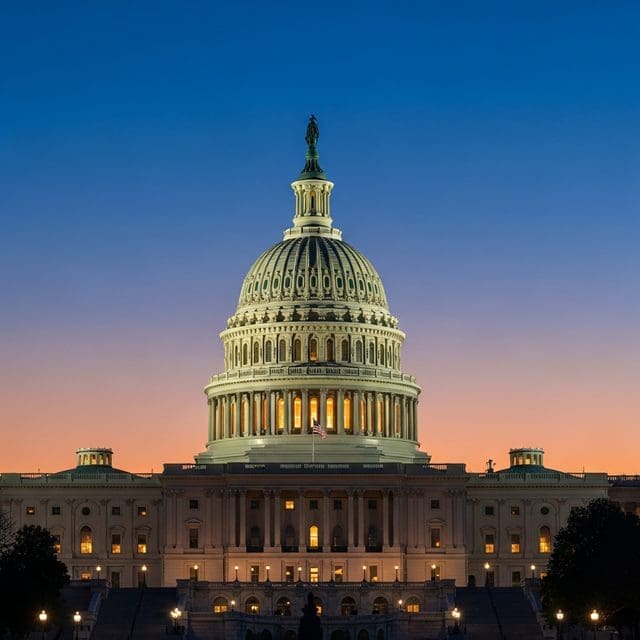
The House narrowly approved H.R. 9770 to avert a shutdown through December, while committees advanced measures to repeal federal workplace heat standards and reform chemical risk management.
The House of Representatives narrowly passed a continuing resolution on Tuesday, providing a temporary reprieve from a looming government shutdown while setting the stage for a high-stakes fiscal confrontation in December. H.R. 9770, the Continuing Appropriations Act of 2027, passed in a 220–205 vote. The measure extends federal funding at current levels through December 4, 2026, allowing the chamber to bypass immediate brinkmanship as the 2026 midterm season approaches. The vote was largely partisan, with 213 Republicans joined by only six Democrats, while 205 members—mostly Democrats and a handful of fiscal conservatives—voted in opposition.
Appropriations Chairman Tom Cole positioned the bill as a “clean” extension intended to remove shutdown leverage from the political calendar. By extending safety-net programs like SNAP, WIC, and TANF, alongside FEMA’s disaster flexibility and the National Flood Insurance Program, the resolution maintains the status quo. Cole argued that this move allows the House to keep work moving on full-year FY2027 appropriations without the immediate threat of a lapse in funding. However, the narrow margin of victory signals that the bill faces a difficult path in the Senate. Senate Majority Leader John Thune has already characterized the House proposal as an “uphill climb,” noting that Senate Democrats are drafting a competing stopgap that includes supplemental funding for Ukraine, Israel, and domestic disaster aid.
While the spending bill provides a momentary pause in fiscal hostilities, House committees are simultaneously moving to dismantle specific elements of the administrative state’s regulatory apparatus. The House Education and Workforce Committee advanced the Heat Workforce Standards Act of 2025, sponsored by Representative Mark Messmer. This legislation seeks to repeal a proposed federal OSHA rule regarding workplace heat exposure. Messmer and his colleagues argue the federal rule imposes a “one-size-fits-all” burden on industries such as agriculture, construction, and logistics. This effort aligns with a broader state-level push, where Messmer has led Indiana in coordinated litigation against federal methane and industrial emissions standards, urging Congress to use the Congressional Review Act to block such mandates.
In a rare display of bipartisanship within the regulatory sphere, the House Energy and Commerce Committee approved the CHARM Act. Co-sponsored by Representatives Gary Palmer and Paul Tonko, the bill addresses chemical risk management and regulatory oversight. While Palmer has been a vocal proponent of using the appropriations process to target Biden-era environmental and labor regulations—a strategy he calls “phase two” of the conservative agenda—the CHARM Act suggests a targeted, legislative approach to reforming industrial compliance frameworks. Tonko, meanwhile, is reportedly working with Republicans on separate language to limit the EPA’s ability to delay permits for energy projects, framing it as essential permitting reform rather than broad deregulation.
These maneuvers reflect a broader strategy to utilize the fiscal 2027 budget cycle as a vehicle for regulatory rollbacks. By decoupling the immediate threat of a shutdown from these specific policy fights, House leadership appears to be clearing the deck for a more concentrated effort to use appropriations riders against executive branch priorities. This legislative activity occurs against a backdrop of significant administrative shifts, including the Department of Homeland Security finally releasing delayed data showing that ICE arrests have reached a new record. Furthermore, the political landscape in South Carolina is shifting following the passing of Senator Lindsey Graham, with Representative Ralph Norman and Representative Russell Fry entering the race for the vacated seat, while the late senator’s sister, Darline Graham, also seeks the office at the request of the former president.
For now, the focus shifts to the Senate, where the December 4 deadline ensures that the most difficult decisions regarding the federal purse and the reach of the bureaucracy remain unresolved. The White House has criticized H.R. 9770 for locking in existing spending caps without room for negotiated increases in domestic priorities, suggesting that the Biden administration expects the Senate to substantially modify the House bill before it reaches the President’s desk. With military tensions in the Iran conflict resulting in at least 17 American deaths and economic indicators showing a decline in the Leading Economic Index, the pressure on Congress to resolve these funding and regulatory disputes remains immense.

Miles Harrington serves as the Senior Correspondent for Federal Systems & Executive Power at Just Right News, where he brings a disciplined, constitutionalist lens to the inner workings of the American government. With a focus on the mechanics of the federal bureaucracy and the limits of executive authority, Harrington has established himself as a vital voice for readers who value transparency, accountability, and the preservation of the separation of powers.
A native of Richmond, Virginia, Harrington’s perspective is deeply rooted in the traditions of the Old Dominion. Growing up in a city defined by its historical significance and its role as a center of American jurisprudence, he developed an early appreciation for the foundational principles of the Republic. His upbringing in Richmond—a place where the legacy of the Founding Fathers is woven into the landscape—instilled in him a belief that the federal government should remain within its constitutional bounds. This background informs his skepticism of centralized overreach and his commitment to reporting on the ways in which the administrative state impacts the lives of everyday citizens.
In his current role, Harrington specializes in the complexities of federal systems. He doesn’t just report on the headlines of the day; he digs into the structural shifts within the executive branch that often go unnoticed by the mainstream press. Whether he is analyzing the implications of a new federal regulation or investigating the expansion of agency jurisdiction, his work is characterized by a rigorous adherence to the facts and a dedication to the rule of law.
Harrington is perhaps best known for his signature feature series, “How Washington Works.” Through this ongoing project, he demystifies the often-opaque processes of the nation’s capital, pulling back the curtain on the “Deep State” and the unelected officials who wield significant influence over national policy. By breaking down complex legislative maneuvers and executive orders, he empowers Just Right News readers to understand the true levers of power in Washington. His reporting serves as a necessary check on the federal government, ensuring that the actions of those in power are held up to the light of public scrutiny.
Now based in Washington, D.C., Harrington operates at the epicenter of the political world, yet he remains intentionally distanced from the “Beltway bubble.” His proximity to the halls of power allows him to maintain a robust network of sources across the federal landscape, but his heart remains in the principled conservatism of his Virginia roots. He views his role not merely as a reporter, but as a steward of the public trust, dedicated to providing the clarity and context that conservative voters need to navigate an increasingly complex political environment.
Through his sharp analysis and unwavering commitment to the truth, Miles Harrington continues to be a cornerstone of the Just Right News team. His work ensures that the principles of limited government and executive restraint remain at the forefront of the national conversation, providing a crucial service to those who believe in a government that is truly of, by, and for the people.