

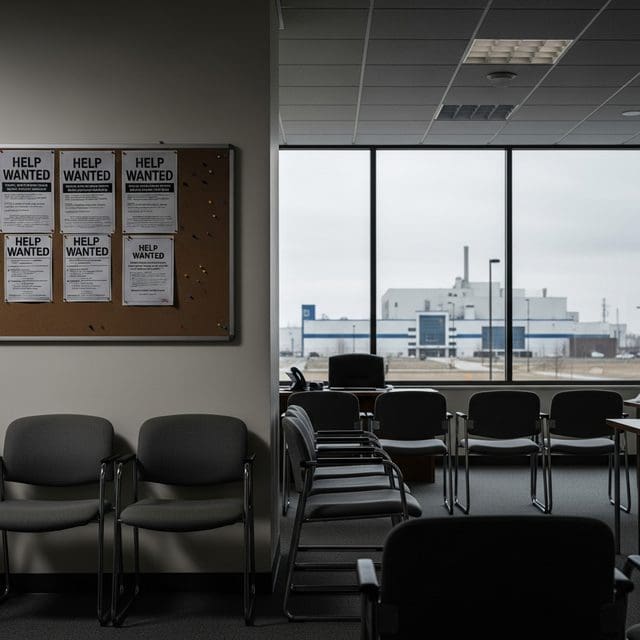
The U.S. labor market faces a cooling trend as 720,000 workers exit the force, while AI-driven layoffs reshape the white-collar landscape despite steady wage growth.
The American labor market is signaling a cooling period that demands a hard look at the dignity of work. Recent data from the July 2 Employment Situation report reveals a concerning retreat: 720,000 people left the labor force in June, driving the participation rate down to 61.5%. This marks the lowest level of engagement since March 2021, suggesting that despite a headline unemployment rate of 4.2%, a significant portion of the population is simply stepping away from the hunt for a paycheck.
For those remaining in the workforce, the news is a mixed bag of resilience and stagnation. Average hourly earnings rose 0.3% in June, bringing the year-over-year increase to 3.5%. This means worker incomes are still managing to outpace inflation, providing a thin layer of protection for the American family budget. However, the bargaining power that defined the post-pandemic era appears to be waning. The latest JOLTS data shows job openings have flattened at 7.6 million, and quit rates have dipped to 3.1 million. This signals that the era of easy job-hopping for higher pay is coming to a close.
A more troubling trend is emerging in the duration of joblessness. Approximately 1.9 million Americans are now classified as long-term unemployed, representing over 27% of all jobless individuals. This suggests that once a worker falls out of the cycle, getting back in is becoming increasingly difficult, even as nonfarm payrolls added a modest 57,000 jobs last month. This figure was far below expectations and underscores a sharp cooling in hiring that economists are now treating as evidence of a stable but softer labor market. While this softness complicates the interest-rate path for the Federal Reserve, it does not yet signal a formal recession.
The pressure is particularly acute in the technology and corporate sectors, where automation is no longer a future threat but a present reality. Through July 1, 2026, more than 2,600 layoff events affecting 230,000 workers have been recorded. Tech companies alone account for over 121,000 of these cuts in the U.S., with the vast majority tied to AI-related restructuring. Mid-summer cuts have been relentless; July alone has seen over 12,000 corporate jobs slashed, including 4,800 at Microsoft and 3,000 at Verizon. This is a structural shakeout, not a cyclical one, as firms trade human capital for algorithmic efficiency.
While global geopolitical shifts provide some peripheral relief, they do little to address the core anxieties of the domestic tradesman. The reopening of the Strait of Hormuz following a memorandum of understanding between the U.S. and Iran led to a 10% drop in oil prices on April 17, offering a reprieve at the gas pump. Furthermore, the massive $75 billion IPO of SpaceX in June highlights the immense capital flowing into high-tech frontiers. Yet, for the worker in the heartland, these headlines feel worlds away from the reality of the 230,000 individuals already displaced this year.
The path forward for the American worker requires a focus on local industry and the tangible well-being of the manual trades. As white-collar roles are increasingly automated, the stability of the American family depends on a labor market that values human presence over digital replacement. The current cooling trend is a warning that the dignity of work must be defended against both regulatory overreach and the relentless march of AI-driven restructuring.

Tom Blake serves as the Senior Correspondent for Labor, Wages, and Automation at Just Right News, where he brings a grounded, principled perspective to the most pressing economic issues facing the American heartland. As the lead voice behind the acclaimed feature series “The Price of Work,” Tom focuses his reporting on the intersection of traditional industry and the rapidly evolving technological landscape, always prioritizing the dignity of the individual worker and the health of the American family.
Tom’s deep understanding of the labor market is not merely academic; it is rooted in his upbringing in Detroit, Michigan. Growing up in the shadow of the automotive industry, he witnessed firsthand the triumphs and tribulations of the American blue-collar workforce. He saw how the stability of a manufacturing job could build a community and, conversely, how the erosion of those industries could tear the social fabric apart. This background instilled in him a lifelong respect for the trades and a healthy skepticism toward economic policies that prioritize globalist interests over the well-being of local communities.
Now based in Pittsburgh, Pennsylvania, Tom continues to report from the front lines of the shifting economy. Pittsburgh, a city that has reinvented itself while maintaining its gritty, industrious spirit, provides the perfect vantage point for his beat. From the steel mills that remain to the high-tech robotics labs reshaping the city’s future, Tom explores how automation is changing the nature of employment. His reporting often highlights the tension between innovation and tradition, arguing that while progress is inevitable, it must not come at the expense of the American worker’s ability to provide for their family through honest, meaningful labor.
In his role at Just Right News, Tom has become a vital voice for those who feel overlooked by mainstream economic coverage. He rejects the notion that the decline of American manufacturing is an unavoidable casualty of the modern era. Instead, his work often examines how regulatory overreach, rising energy costs, and the unchecked rise of automation impact the take-home pay of everyday citizens. Through “The Price of Work,” Tom delves into the true cost of economic shifts, looking beyond the raw data to tell the stories of the people behind the statistics.
Tom’s reporting is characterized by a commitment to the conservative values of self-reliance, fiscal responsibility, and the preservation of the American dream. He believes that a strong nation is built on a foundation of stable jobs and fair wages, and his work seeks to hold both government and corporate entities accountable to that standard. Whether he is interviewing a shop floor manager about the implementation of new AI technology or analyzing the impact of wage inflation on small businesses, Tom provides a clear-eyed analysis that resonates with readers who value hard work and common sense.
Through his dedicated coverage, Tom Blake remains a steadfast advocate for the American workforce, ensuring that the voices of those in the industrial heartland are heard loud and clear in the national conversation. His perspective is essential for anyone seeking to understand the complex realities of labor and automation in the twenty-first century.