

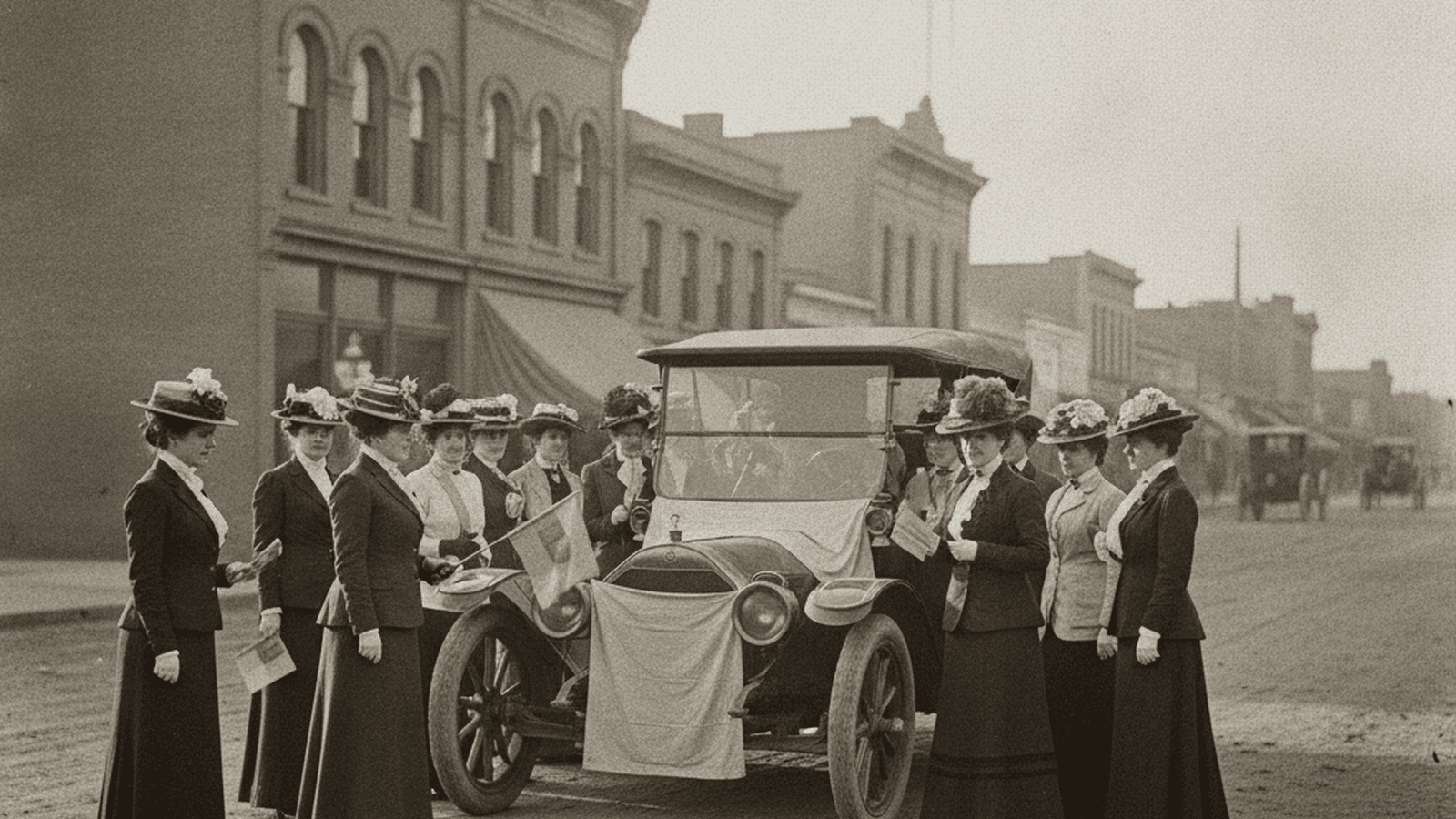
In 1911, California voters approved Proposition 4, a constitutional amendment that granted women the right to vote. This victory in the United States’ most populous Western state significantly energized the national suffrage movement during the Progressive Era.
TLDR: California became the sixth state to enfranchise women in 1911 following a hard-fought referendum. The narrow victory, driven by rural support despite urban opposition, proved that large-scale suffrage was politically viable. This success provided critical momentum for the eventual passage of the 19th Amendment to the U.S. Constitution.
In the autumn of 1911, California became the epicenter of the American struggle for gender equality. Following years of tireless advocacy by the California Equal Suffrage Association and other grassroots organizations, the state legislature placed Senate Constitutional Amendment 8 on the ballot as Proposition 4. This measure sought to remove the word “male” from the state’s voting requirements, a move that would fundamentally alter the democratic landscape of the Pacific Coast and provide a blueprint for the national movement.
The campaign for Proposition 4 was a masterpiece of Progressive Era political strategy. Suffragists recognized that traditional methods of persuasion were insufficient to overcome the entrenched interests of the “liquor trust” and urban political machines. These groups feared that women voters would usher in prohibition and strict civil service reforms that would dismantle patronage systems. To counter this, activists like Elizabeth Lowe Watson and Maria de Lopez organized a sophisticated statewide effort. They utilized modern technology, including touring cars—most notably the “Blue Liner”—to reach remote farming communities and electric signs in city centers. Maria de Lopez, a translator and educator, notably led the effort to produce suffrage literature in Spanish, ensuring the movement reached California’s significant Latina population and making the campaign one of the first truly multilingual political efforts in the state.
The rhetoric of the movement emphasized “expediency” alongside “justice.” Proponents argued that women’s unique perspectives on education, public health, and labor conditions were essential for the “social housekeeping” required in a rapidly industrializing society. This approach resonated with the broader Progressive movement led by Governor Hiram Johnson. Johnson’s administration sought to break the power of the Southern Pacific Railroad and return governance to the people through the initiative, referendum, and recall. Suffrage was viewed by many as the logical extension of these democratic reforms, a necessary step to purify the electorate and challenge corporate dominance.
Opposition was fierce and well-funded. The “Men’s League Opposed to Woman Suffrage” argued that enfranchisement would “unsex” women and lead to the destruction of the traditional family unit. They distributed pamphlets claiming that women did not actually want the vote and that their involvement in politics would lead to increased corruption and the neglect of domestic duties. In San Francisco, the political establishment and the powerful saloon industry worked feverishly to suppress the “yes” vote, viewing the movement as a direct threat to the city’s social and economic status quo.
Election day on October 10, 1911, was a tense affair. Early returns from San Francisco and Oakland suggested a crushing defeat, as urban voters largely rejected the measure. However, as the tallies from rural counties and the growing suburbs of Southern California arrived over the following days, the tide began to turn. The amendment ultimately passed by a razor-thin margin of approximately 3,587 votes. This averaged out to a victory of just one vote per precinct, highlighting the critical importance of the grassroots ground game and the persistence of rural organizers.
The victory in California was a watershed moment for the United States. It proved that a large, diverse, and economically powerful state could successfully integrate women into the electorate without the predicted social collapse. The number of enfranchised women in the country doubled overnight, providing a massive boost to the National American Woman Suffrage Association’s federal efforts. California’s success broke the “suffrage doldrums,” a period of nearly 14 years where no new states had granted women the right to vote. Following the referendum, California women quickly mobilized to exercise their new rights, playing a decisive role in the 1912 presidential election and pushing for legislative reforms targeting child labor and industrial safety. This victory provided the necessary political leverage that eventually led to the passage of the 19th Amendment in 1920.

Julie Harris serves as a Staff Writer for Just Right News, where she tackles some of the most pressing and complex issues facing the nation today. As the lead reporter for the Migration, Demographics & Cultural Shifts beat, Julie provides a grounded, principled perspective on how the movement of people and the changing makeup of communities are reshaping the American landscape. Her work is defined by a commitment to exploring the long-term consequences of social change, prioritizing the stability of local institutions and the preservation of national identity.
Her deep understanding of these issues is rooted in her upbringing in Tucson, Arizona. Growing up in a prominent border state, Julie witnessed firsthand the intricate realities of migration and the profound impact it has on local infrastructure, law enforcement, and the social fabric. This early exposure instilled in her a respect for the rule of law and a keen awareness of the challenges that arise when federal policies fail to align with the needs of border communities. Her reporting often reflects this lived experience, bringing a necessary level of nuance to topics that are often treated with abstraction in coastal newsrooms.
Now based in Santa Fe, New Mexico, Julie continues to report from the heart of the American Southwest. Her location provides a unique vantage point to observe the intersection of traditional regional cultures and the modern shifts brought about by both internal and external migration. In Santa Fe, a city defined by its rich history and distinct cultural heritage, she finds a perfect environment to explore how communities strive to maintain their character while navigating the pressures of a rapidly changing world. This perspective allows her to bridge the gap between policy debates in Washington and the reality of life in the high desert.
At Just Right News, Julie’s work is characterized by a dedication to examining the data and the human stories that define the “New Mosaic” of America. Her signature feature series, “The New Mosaic,” has become a cornerstone of her reporting. Through this series, Julie explores the evolving social architecture of the United States, documenting how shifts in population affect everything from local economies to the political landscape. She brings a critical eye to the narrative of demographic inevitability, instead asking how these shifts impact the average citizen’s sense of belonging and the integrity of the American social contract.
Julie’s background and her dedication to conservative principles make her a vital voice in contemporary journalism. She understands that demographics are more than just numbers on a spreadsheet; they represent the future of the American family and the nation’s enduring legacy. Through her diligent reporting and insightful analysis, Julie Harris ensures that her readers are informed about the forces shaping their world, providing a perspective that is as thoughtful as it is necessary for the modern era.