


Internal Revenue Service top lawyer Ken Kies is departing following reports of his resistance to White House directives regarding specific tax audits and a controversial $10 billion settlement.
The departure of Internal Revenue Service top tax lawyer Ken Kies has triggered new questions regarding the independence of the nation’s tax enforcement agency. Kies is set to leave his position in mid-August 2026, following reports that he opposed White House directives to initiate specific audits. Such directives would potentially violate long-standing statutory prohibitions against executive branch interference in individual tax matters. Kies, who previously served as a personal tax lawyer for the president, is now being framed by legal observers as a potential whistleblower due to his reported resistance to directives that would bypass the traditional wall between the West Wing and the IRS.
Legal experts are identifying Kies as a pivotal figure following his refusal to facilitate a disputed $10 billion IRS settlement. That settlement was recently voided by U.S. District Judge Kathleen Williams, who referred administration lawyers for professional discipline. Court records indicate the judge found the administration had misused the legal system to secure personal benefits and shield past audits from scrutiny. Kies reportedly declined to work on the settlement prior to his scheduled exit, creating a rift within the agency’s leadership. President Trump has nominated tax attorney Jim Gadwood to replace Kies, a move that follows the withdrawal of Donald Korb’s nomination for IRS chief counsel in late 2025 after political activists criticized Korb’s “by-the-book” approach.
This transition comes as the administration continues to assert broader control over the federal bureaucracy. This pattern of executive pressure was further evidenced on July 17, 2026, when acting Attorney General Todd Blanche dismissed U.S. Attorney Roger Rogoff in Seattle. Rogoff, who had been appointed by a panel of 17 judges, was removed as the Department of Justice asserted absolute presidential authority over prosecutorial selections. The dismissal coincides with a primetime address delivered by the president on the same day, in which he alleged a “deep state” coverup regarding the 2020 election and declassified a series of documents to support his claims of foreign interference.
While the administration reshapes the IRS and Department of Justice, other federal agencies are facing scrutiny through leaked internal communications. A leaked memo purportedly from United Airlines suggested instructions for agents to offer travel discounts or free changes to passengers expressing opposition to the renaming of facilities to Trump International Airport. United Airlines has pushed back against the memo’s characterization, though the document has fueled ongoing debates regarding corporate involvement in political friction and the handling of internal dissent.
In the national security sector, records show a continuing legal battle over the use of security clearances as a tool of administrative discipline. A federal judge issued a preliminary injunction to block a White House memorandum that sought to revoke the clearance of whistleblower attorney Mark Zaid. The court’s intervention follows a broader effort to strip clearances from 37 current and former officials who have drawn the administration’s ire. This judicial check on executive power highlights the ongoing tension between whistleblower protections and the administration’s push for total loyalty within the national security apparatus.
Simultaneously, the administration is utilizing regulatory frameworks to implement strict financial requirements for immigrants. The State Department is currently reviewing a proposal to require a $100,000 bond for green-card applicants. This move aligns with the revival of the “public charge” rule, which allows the government to deny residency to individuals who utilize public benefits such as Medicaid, housing assistance, or food stamps. These policy shifts, documented in recent filings, underscore a broader strategy of using administrative rules to achieve policy goals that ensure new arrivals are “financially self-sufficient” and do not rely on government support systems.
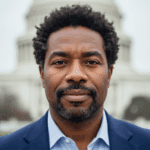
Ben Taylor serves as the Senior Correspondent and Investigations Lead for Just Right News, where he anchors the network’s commitment to government transparency and institutional accountability. With a career defined by a relentless pursuit of the facts, Taylor spearheads the acclaimed feature series “The Paper Trail,” a deep-dive investigative column that prioritizes primary source documentation over political rhetoric. Based in the heart of the nation’s capital, he has earned a reputation as one of the most formidable investigative journalists in Washington, D.C., known specifically for his mastery of public records and the Freedom of Information Act.
Taylor’s approach to journalism is deeply rooted in his upbringing in Kansas City, Missouri. Growing up in the “Show Me State,” he developed a healthy skepticism of centralized power and a profound respect for the common-sense values of the American heartland. This Midwestern foundation informs his reporting today, as he bridges the gap between the complex machinations of federal bureaucracy and the everyday concerns of citizens across the country. For Taylor, investigative reporting is not about chasing headlines; it is about ensuring that the government remains answerable to the people it serves.
As an African American man working within the conservative media landscape, Taylor brings a principled perspective to his beat. He views the Constitution and the right to information as the ultimate equalizers in a free society. His work often highlights how bureaucratic overreach and lack of transparency disproportionately affect individual liberties. By focusing on the “paper trail,” Taylor strips away the spin of partisan talking points, instead providing Just Right News readers with the raw data and internal communications that reveal how their tax dollars are spent and how policy decisions are actually made.
In his role as Investigations Lead, Taylor oversees a team dedicated to uncovering the stories that mainstream outlets often overlook. Whether he is auditing federal spending, investigating regulatory overreach, or exposing inefficiencies within the administrative state, his methodology remains consistent: follow the evidence wherever it leads. His presence in Washington, D.C., allows him to maintain a constant watch over the halls of power, yet he remains steadfastly connected to his roots, ensuring his reporting reflects the clarity and directness of his Missouri home.
Throughout his tenure at Just Right News, Taylor has become a vital voice for those who demand integrity in public office. He believes that a well-informed electorate is the strongest defense against government overreach, and he has dedicated his career to providing the public with the tools they need to hold their leaders accountable. Through “The Paper Trail” and his broader investigative work, Ben Taylor continues to set the standard for rigorous, document-driven journalism that champions the values of transparency, individual responsibility, and the rule of law.