

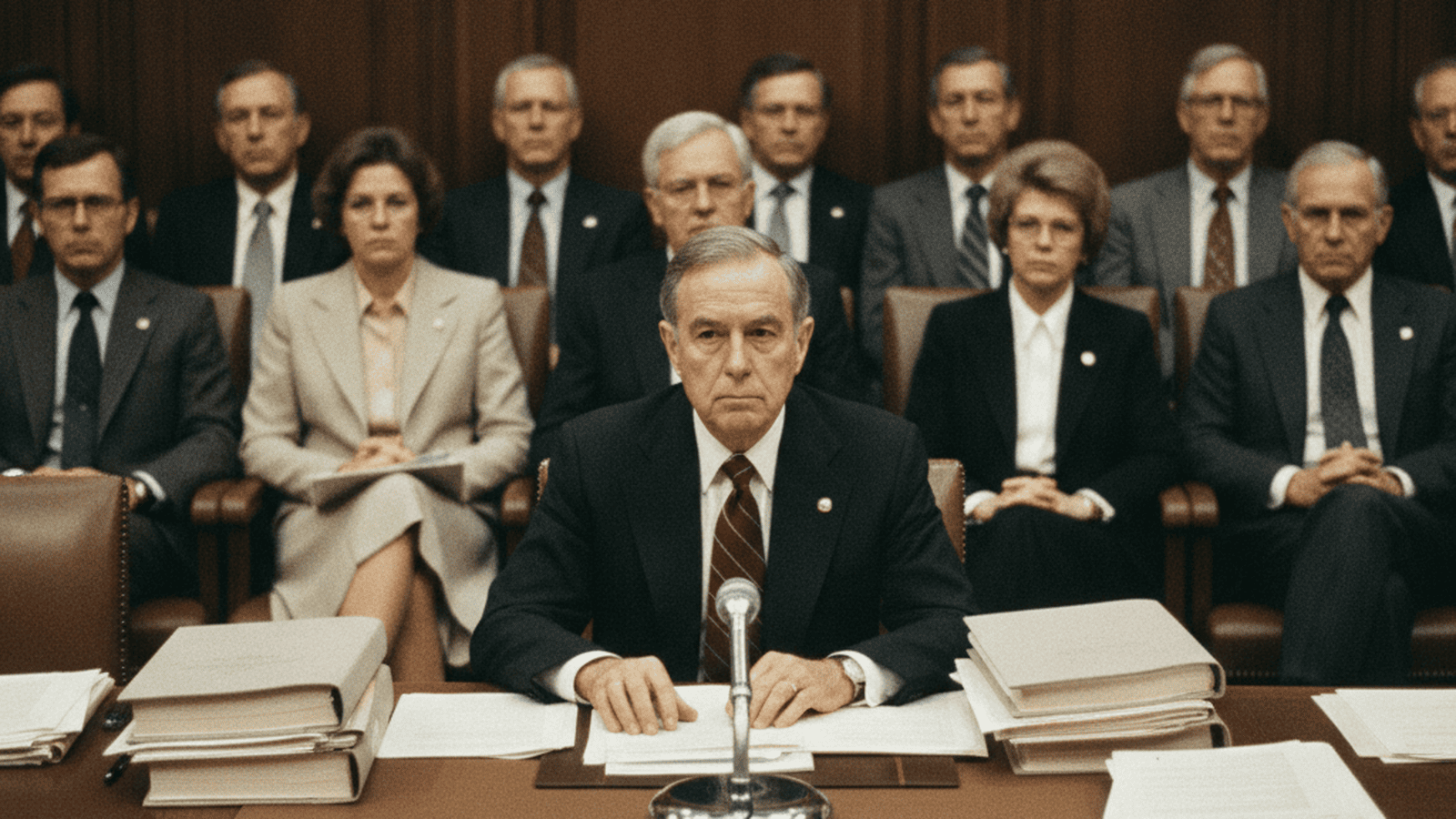
In 1982, the United States Congress passed significant amendments to the Voting Rights Act of 1965, fundamentally altering the legal standard for challenging discriminatory election practices. These changes shifted the burden of proof from demonstrating discriminatory intent to showing discriminatory results, a move that profoundly reshaped political representation across the American South.
TLDR: The 1982 Voting Rights Act Amendments transformed U.S. elections by establishing the results test for discrimination. This legislative compromise, brokered by Senator Bob Dole, allowed for legal challenges against electoral systems that diluted minority voting power, leading to a surge in minority representation in Southern legislatures and the U.S. House.
The 1982 amendments to the Voting Rights Act (VRA) represent one of the most consequential shifts in American electoral law since the original passage of the Act in 1965. By the early 1980s, the civil rights landscape was shifting. While the overt violence and blatant disenfranchisement of the Jim Crow era had largely subsided, more subtle structural barriers remained. The debate over the 1982 extension became a battleground for the future of minority political power, specifically focusing on how to define and prove discrimination in a post-segregation society.
The catalyst for the 1982 legislative push was the 1980 Supreme Court decision in City of Mobile v. Bolden. In that case, the Court ruled that the at-large election system in Mobile, Alabama, did not violate the Fourteenth or Fifteenth Amendments, nor Section 2 of the VRA, because the plaintiffs failed to prove that the system was maintained with a “discriminatory purpose.” This “intent standard” created a nearly insurmountable hurdle for civil rights litigants. It required them to find “smoking gun” evidence—such as minutes from meetings or private correspondence—proving that lawmakers intended to disenfranchise minority voters. Civil rights advocates argued that the focus should be on the “results” of the system: if a voting practice effectively diluted the power of a minority group, it should be illegal regardless of the stated intent.
When the 97th Congress took up the reauthorization of the VRA, the House of Representatives quickly passed a version that replaced the intent standard with a “results test.” However, the bill faced stiff opposition in the Senate Judiciary Committee, led by Chairman Strom Thurmond. President Ronald Reagan and many conservative allies expressed deep reservations, fearing that a results-based test would lead to a system of proportional representation or mandatory racial quotas. They argued that any group that failed to win seats in proportion to its population would sue, forcing courts to micromanage every election district in the country.
The resulting stalemate threatened the expiration of Section 5, the “preclearance” provision that required jurisdictions with a history of discrimination to clear any voting changes with the Department of Justice. Into this breach stepped Senator Bob Dole, a Republican from Kansas. Dole recognized that a failure to extend the VRA would be a political disaster for the GOP and a moral failure for the country. He brokered a masterful compromise. His amendment incorporated the results test into Section 2 but added a crucial proviso: while the “totality of circumstances” could be used to prove a violation, the law did not establish a right to have members of a protected class elected in numbers equal to their proportion in the population.
This “Dole Compromise” broke the legislative logjam. It allowed conservatives to claim they had prevented quotas while giving civil rights advocates the legal tool they needed to challenge discriminatory systems. President Reagan signed the bill into law on June 29, 1982, extending the preclearance provisions for twenty-five years and permanently changing Section 2.
The impact was transformative, particularly in the South. Throughout the 1980s and into the 1990 redistricting cycle, the amended Section 2 was used to dismantle at-large voting systems in favor of single-member districts. This led to the creation of “majority-minority” districts, where minority voters constituted a majority of the population. The results were immediate: in the 1992 elections, the number of Black members in the U.S. House of Representatives jumped from 26 to 39. Similar gains were seen in state legislatures across the Black Belt. While these changes also had the side effect of making surrounding districts more Republican—a phenomenon known as “bleaching”—the 1982 amendments succeeded in ensuring that minority communities finally had a seat at the table in American governance.

Sophie Carter serves as a Staff Writer for Just Right News, where she anchors the outlet’s critical coverage of Elections, Influence, and Democracy Infrastructure. In an era where the mechanics of voting and the flow of political capital are under constant scrutiny, Sophie provides a steady, principled voice dedicated to the preservation of American institutional integrity and the rule of law.
Raised in Charlotte, North Carolina, Sophie’s perspective was forged in a community that balances rapid modern growth with a deep respect for tradition and civic duty. Growing up in the Queen City, she witnessed firsthand how a robust local culture depends on the trust between the citizen and the state. This upbringing instilled in her a foundational belief that the right to vote is a sacred trust—one that must be protected from both administrative overreach and the encroaching influence of special interest groups. Her reporting reflects these North Carolina roots, emphasizing the importance of community-led governance and the preservation of the individual’s voice in the face of nationalized political movements.
Now based in Atlanta, Georgia, Sophie operates from the heart of one of the nation’s most pivotal and contested political landscapes. Her location allows her to report from the front lines of the debate over election security, legislative reform, and the modernization of voting systems. For Sophie, the “infrastructure” of democracy is not merely a matter of machines and ballots; it is the collection of laws, people, and transparent processes required to maintain public confidence. Her work often highlights the necessity of clear, enforceable standards that ensure every legal vote is counted fairly and that the machinery of our republic remains accountable to the taxpayers who fund it.
Central to her work at Just Right News is her acclaimed feature series, “The Price of a Vote.” Through this ongoing project, Sophie explores the complex web of influence that shapes modern campaigns and policy decisions. She delves into how high-level lobbying, non-governmental organizations, and shifting bureaucratic regulations impact the weight of an individual citizen’s ballot. By examining the financial and structural pressures placed on the electoral process, she provides readers with a comprehensive look at the forces vying for control over the American political system.
Sophie’s approach to journalism is rooted in a commitment to the constitutional framework. She views her role as a watchdog for the voter, ensuring that the systems meant to serve the public remain transparent and free from corruption. Whether she is analyzing the implementation of new voting technologies or investigating the influence of outside money on state-level policy, her work is characterized by a rigorous adherence to facts and a refusal to succumb to the sensationalism that often plagues modern political reporting.
At Just Right News, Sophie Carter continues to be a vital resource for readers who value clarity, conviction, and a defense of traditional American values. Her deep ties to the Southeast and her specialized focus on the mechanics of our republic make her an essential voice in the ongoing conversation about the future of American self-governance. Through her reporting, she remains dedicated to the idea that a secure and honest electoral system is the bedrock of a free and prosperous society.