

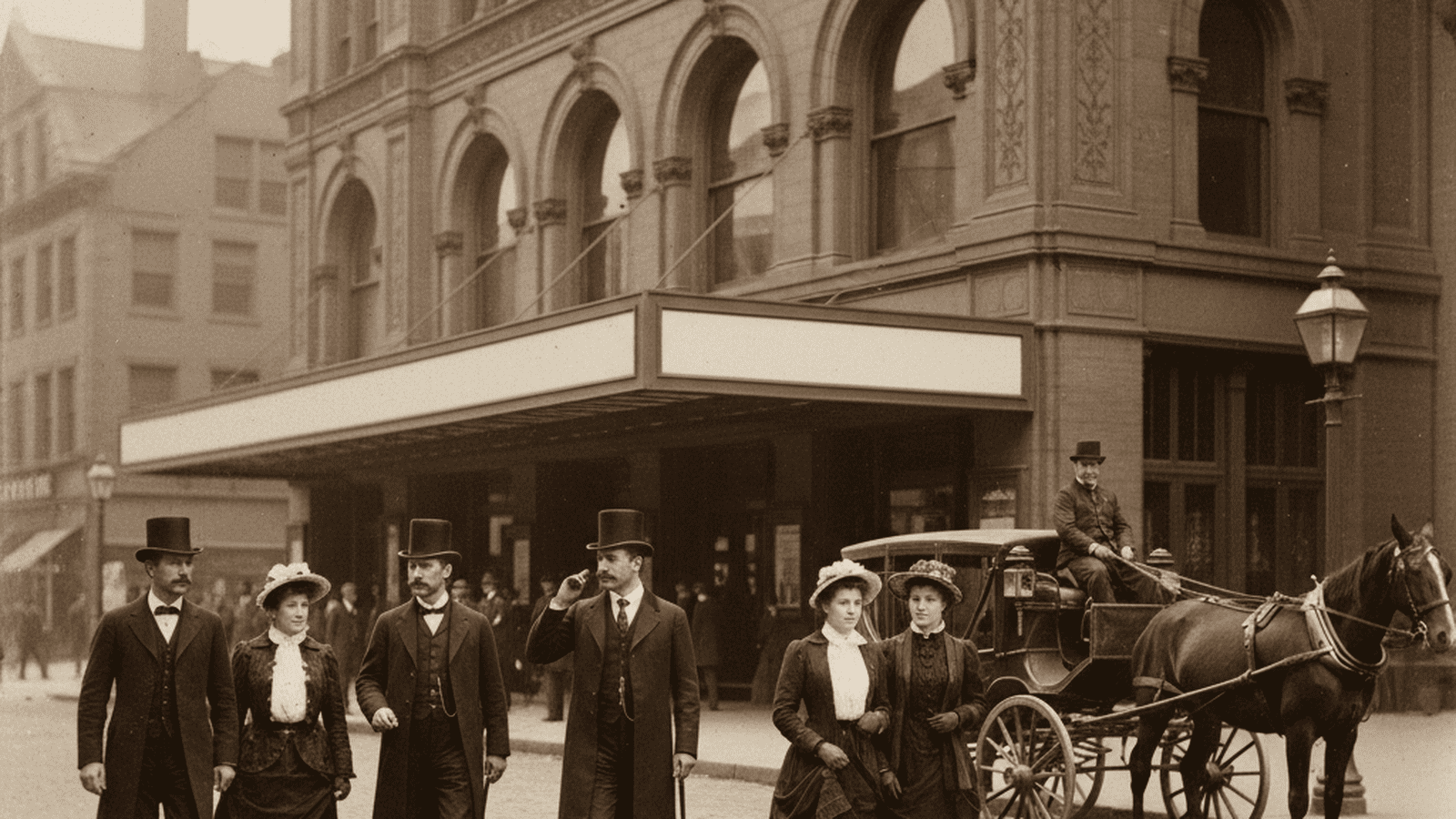
Following the U.S. Supreme Court’s 1883 decision to strike down federal civil rights protections, Massachusetts legislators passed the Civil Rights Act of 1885. This landmark state law in the United States prohibited racial discrimination in public accommodations, including theaters and public transportation.
TLDR: In 1885, Massachusetts enacted a pioneering civil rights law to protect Black citizens after the U.S. Supreme Court invalidated federal protections. The act prohibited discrimination in public spaces, establishing a state-level framework for equality that countered the growing national trend toward segregation during the Gilded Age.
The 1883 United States Supreme Court decision in the Civil Rights Cases sent shockwaves through the nation’s Black communities, marking a definitive end to the protections of the Reconstruction era. By declaring the federal Civil Rights Act of 1875 unconstitutional, the Court ruled that the Fourteenth Amendment only prohibited state-sponsored discrimination, not the actions of private individuals or businesses. This decision effectively stripped federal protections against racial discrimination in public accommodations, signaling that the federal government would no longer intervene when Black citizens were denied service at hotels, theaters, or on transit. In response to this federal retreat, activists in Massachusetts mobilized to ensure that the principles of equality remained enforceable within their state borders.
The push for state-level legislation was spearheaded by a sophisticated coalition of Black leaders and white allies in Boston. Figures such as Lewis Hayden, a former slave who became a prominent abolitionist and state legislator, and George L. Ruffin, the first Black man to graduate from Harvard Law School and the state’s first Black judge, were instrumental in the effort. They argued that the Commonwealth of Massachusetts had a moral and legal obligation to protect its citizens from the indignity of exclusion. Their advocacy targeted the Massachusetts General Court, urging lawmakers to codify the rights that the federal judiciary had recently abandoned. This movement was not just about access to services; it was a fight for the recognition of full citizenship in the face of a growing national trend toward segregation.
In May 1885, the Massachusetts legislature successfully passed “An Act to Punish Persons Making Discrimination in Public Places on Account of Race or Color.” The law was remarkably broad and progressive for its time. It mandated that no person could be excluded from or restricted in “inns, public conveyances, or public meetings” or “theaters and other places of licensed amusement” based on race or color. Crucially, the Act provided teeth for enforcement: violators faced criminal fines of up to $300 and the possibility of civil lawsuits from the aggrieved parties, who could seek damages between $25 and $300. This dual mechanism for enforcement—both criminal and civil—was a rare and powerful tool in the 19th century.
The passage of the 1885 Act represented a significant political victory during the Gilded Age. While much of the United States was beginning to drift toward the “separate but equal” doctrine that would eventually be formalized in Plessy v. Ferguson, Massachusetts chose a different path. The law affirmed that public life required a baseline of equal access, regardless of private prejudices. It was a rejection of the notion that businesses serving the public could operate as purely private entities exempt from civil rights obligations. This stance positioned Massachusetts as a leader in the struggle against the emerging Jim Crow system.
Implementation of the law, however, faced immediate challenges. While the statute was clear, enforcement often depended on the willingness of local prosecutors and the courage of individuals to bring suits. Black Bostonians frequently tested the law by attempting to patronize high-end hotels and theaters, documenting instances where they were refused service. These “test cases” were essential for establishing legal precedents and ensuring that the 1885 Act was more than just a symbolic gesture. The courts generally upheld the statute, reinforcing the idea that state citizenship carried specific, protected rights that the state was bound to defend.
The 1885 Act did not end all forms of prejudice, but it established a critical legal framework for future progress. In 1893 and 1895, the legislature expanded the law to include more types of public spaces, such as skating rinks, barbershops, and restaurants. These amendments closed loopholes that businesses had used to circumvent the original 1885 language. By the turn of the century, Massachusetts possessed some of the most robust anti-discrimination laws in the country. This legislative tradition provided a foundation for the 20th-century civil rights movement, demonstrating the power of statehouses to act as “laboratories of democracy” decades before the federal government would revisit the issue during the 1960s. Today, the 1885 Act is remembered as a pivotal moment when a state government stepped forward to defend the promise of equal protection under the law.

Lila Hayes serves as a Staff Writer for Just Right News, where she anchors the “Courts, Law, and Constitutional Order” beat. Her work is defined by a steadfast commitment to the foundational principles of the American republic and a rigorous defense of the legal frameworks that ensure national stability. As a primary voice for the outlet, she provides readers with a clear-eyed analysis of the judiciary, focusing on the importance of originalism and the preservation of the separation of powers.
Lila’s perspective was forged in the American heartland. Raised in St. Louis, Missouri, she grew up in a Hispanic household where the values of hard work, faith, and respect for the law were paramount. Her upbringing instilled in her a deep appreciation for the American Dream and the legal protections that make it possible. This Missouri background remains a cornerstone of her reporting, providing a grounded, common-sense counter-narrative to the often-insular legal circles of the coastal elite. She understands that the decisions made in high-court chambers have real-world consequences for families and small business owners across the country.
At Just Right News, Lila has become widely recognized for her signature feature series, “The Rulebook of Power.” In this ongoing project, she delves into the mechanics of the federal government, examining how administrative overreach and judicial activism can threaten the delicate balance of the Constitution. She approaches her beat with the tenacity of a veteran journalist and the precision of a legal scholar, consistently advocating for a judiciary that interprets the law as written rather than legislating from the bench. For Lila, the Constitution is not a “living” document subject to the whims of modern social trends; it is a fixed standard that ensures the government remains the servant of the people, not their master.
Now based in Philadelphia, Pennsylvania, Lila finds herself at the very epicenter of American constitutional history. Living and working in the city where the Founders drafted the documents she defends daily provides a constant source of inspiration. The historic halls and landmarks of Philadelphia serve as a daily reminder of the high stakes involved in her reporting. Her presence in the city allows her to bridge the gap between the historical intent of the law and its contemporary application, ensuring that the legacy of the Founding Fathers remains central to the national conversation.
Throughout her career, Lila has remained dedicated to the idea that a free society requires an informed citizenry and a transparent legal system. Her reporting is more than just a collection of headlines; it is a defense of the constitutional order that has sustained the nation for over two centuries. By focusing on the “Rulebook of Power,” she ensures that her readers understand not just what is happening in the courtrooms, but why those decisions matter for the future of American liberty. Lila Hayes continues to be a vital voice for those who believe that the law should be a shield for the citizen and a constraint on the state.