

Policymakers in India, Canada, and the UK are recalibrating social safety nets through expanded labor guarantees, direct cash transfers, and controversial fiscal austerity measures.
The dignity of work and the structural integrity of the social safety net are under renewed scrutiny as governments worldwide roll out divergent strategies to address economic mobility. From the rural districts of Andhra Pradesh to the energy-rich provinces of Canada, the tension between state-led transfers and work-based resilience is defining the next chapter of social policy. As inflation continues to squeeze household budgets, the debate has shifted from whether to provide aid to how that aid can best foster long-term independence rather than permanent dependency.
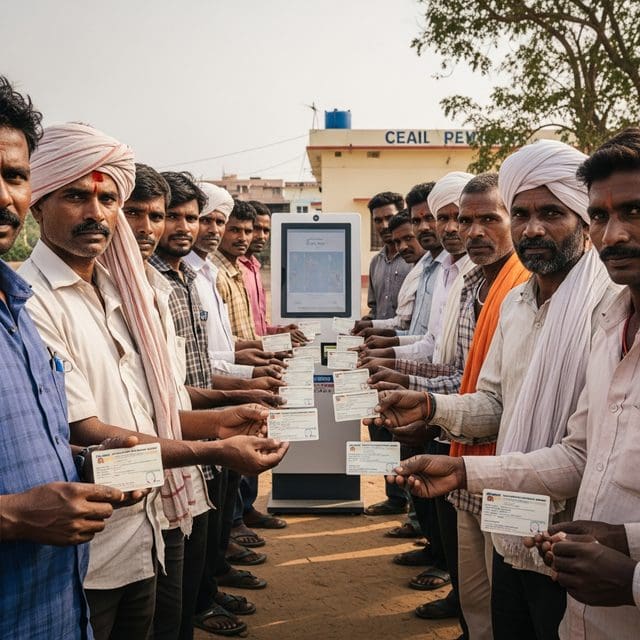
In India, a significant expansion of the rural safety net took shape on July 2 as leaders formally launched the VB-G RAM G jobs scheme in Tirupati. The initiative, championed by regional and national figures including Naidu, Pawan Kalyan, and Shivraj Singh Chouhan, fundamentally alters the country’s approach to rural stability. By increasing the guaranteed wage employment for eligible households from 100 to 125 days, the program emphasizes a labor-first philosophy. This shift is supported by a massive interim allocation of ₹95,692.31 crore, ensuring the national average notified wage rises to ₹327.4 a day. To modernize the rollout, the government introduced a dedicated software platform and Rural Employment Guarantee Cards, aiming to eliminate the bureaucratic friction that often prevents aid from reaching the most remote villages.
While India doubles down on labor-contingent support, Alberta, Canada, has opted for a broader, direct-transfer approach that tests the limits of universal relief. Premier Danielle Smith’s administration opened applications on July 1 for a $100-per-adult Alberta Energy Rebate. Though the program is accessible to roughly 3.4 million adults in households earning up to $225,000, it has faced sharp criticism. Critics argue that a one-time $100 payment is a superficial response to the systemic pressures of grocery and utility costs. For a senior on a fixed income, such a rebate represents less than a single week’s grocery bill, highlighting the recurring critique that broad-based cash infusions often provide a fleeting reprieve without addressing the underlying causes of regional poverty.
In the United Kingdom, the conversation has turned toward fiscal sustainability under Keir Starmer and the looming influence of Andy Burnham. The government is navigating a fragile welfare package that has already seen significant concessions, reducing expected fiscal savings to approximately £2 billion. Analysts warn that these reforms could push an additional 150,000 people into relative poverty by 2030. Within the Labour Party, Andy Burnham is pushing for a localized approach through his “No 10 North” plan, which prioritizes council housing and the elimination of the “poverty premium”—the estimated £380 annual surcharge that low-income households pay for basic services due to lack of capital.
Closer to home, private philanthropy and collective bargaining continue to supplement the public safety net, often providing more immediate results than federal bureaucracy. Recent developments include the Leon Levine Foundation’s $2.8 million investment to expand maternal healthcare in North Carolina, and the launch of the Patient Advocate Foundation’s TotalAssist program, which consolidates 150 financial assistance funds. On the labor front, significant wage increases for Teamsters at O-AT-KA Milk Products and Bimbo Bakeries demonstrate that private-sector negotiations can provide the economic mobility that government transfers often fail to sustain. These gains suggest that while government programs remain a critical backstop, the most sustainable path to upward mobility remains rooted in local civic investment, the fair valuation of labor, and the restorative power of a steady paycheck.

James Foster serves as the Senior Correspondent for Inequality and the Social Safety Net at Just Right News, where he brings a principled and nuanced perspective to the most pressing economic challenges facing the nation. With a career dedicated to exploring the intersection of policy and personal responsibility, Foster has become a leading voice in documenting how government programs and economic shifts impact the American family. His reporting is characterized by a commitment to the “human element,” moving beyond cold statistics to highlight the stories of resilience, work, and community that define the modern American experience.
Foster’s perspective is deeply rooted in his upbringing in Birmingham, Alabama. Growing up in a city with a rich industrial heritage and a history of economic transformation, he witnessed firsthand the importance of the dignity of work and the strength of local institutions. In Birmingham, he saw how the most effective safety nets were often those woven by neighbors, faith-based organizations, and local civic groups. This background instilled in him a lifelong skepticism of “one-size-fits-all” solutions from distant bureaucracies, favoring instead the localized, community-driven support systems that he frequently champions in his writing.
Now based in Atlanta, Georgia, Foster operates from one of the most dynamic and rapidly evolving metropolitan hubs in the South. His location provides a front-row seat to the stark contrasts of the modern economy. From the gleaming towers of Atlanta’s financial districts to the struggling neighborhoods on the city’s periphery, Foster finds the stories that illustrate the complexities of upward mobility. His reporting from the Sun Belt serves as a microcosm for the national debate on poverty, highlighting how inflation, housing costs, and labor market shifts affect the working class in real-time.
As the lead for the acclaimed feature series “America’s Balancing Act,” Foster explores the delicate tension between providing a necessary hand up and fostering long-term independence. The series has become a cornerstone of Just Right News, offering a deep dive into the unintended consequences of social welfare policies. Foster’s work often focuses on the “cliff effect” and other systemic hurdles that can inadvertently discourage employment, arguing that true compassion is measured by how many people are empowered to leave the safety net, rather than how many are added to it.
Throughout his tenure, Foster has remained dedicated to the mission of Just Right News, providing a clear-eyed, conservative analysis of social issues. He believes that a free society thrives when individuals are empowered and the private sector is allowed to innovate. Whether he is interviewing small business owners about the challenges of a changing workforce or documenting the success of private charitable initiatives, Foster’s goal is to provide readers with the truth about the state of the American Dream. His work serves as a vital reminder that while the challenges of inequality are great, the solutions are often found in the strength of the American spirit and the preservation of traditional values.