

Federal regulators face mounting pressure as a deadly Listeria outbreak linked to soft cheeses coincides with a June 29 deadline for sweeping new EPA restrictions on agricultural fungicide use.
Federal health and environmental agencies are currently navigating a high-stakes period for American food safety as a deadly Listeria monocytogenes outbreak coincides with a critical regulatory deadline. The CDC and FDA are investigating 26 confirmed illnesses and four deaths across 11 states. While the investigation has narrowed the source to Hispanic-style soft cheeses from a single manufacturer, federal officials have yet to issue a nationwide recall or name specific brands. This lack of transparency leaves a significant gap in public awareness, even as cases have been tracked from March 2023 through June 2026.
This domestic crisis comes as the World Health Organization raises global stakes for food and water safety. In a June 2026 update, the WHO estimated that foodborne illnesses claim 1.5 million lives annually, with nearly 866 million people falling ill. A staggering 73% of these deaths are attributed to chemical contaminants like inorganic arsenic and lead, which enter the food supply through contaminated water and soil runoff. Children under five are particularly vulnerable; despite making up only 9% of the global population, they account for nearly one-third of all foodborne disease cases. This vulnerability underscores the necessity of grounded stewardship of the resources sustaining the American family.
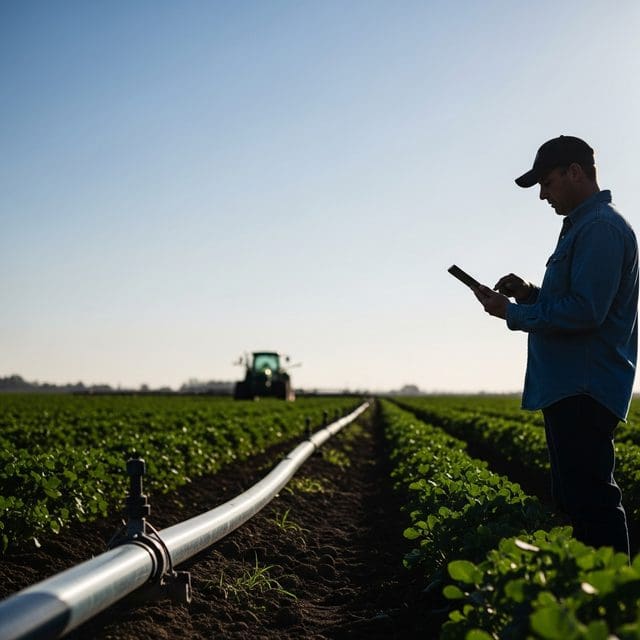
In Washington, the EPA is moving forward with its draft Fungicide Strategy, with the public comment window set to close on June 29, 2026. The strategy aims to protect over 1,000 federally listed endangered species by imposing new restrictions on how farmers apply fungicides. While the EPA frames these as science-based protections, the reality for growers is an increasingly complex web of compliance. Farmers must now consult digital tools like the EPA’s ‘Bulletins Live! Two’ before every application, adding a layer of federal bureaucracy to daily operations. These burdens carry compliance risks that can disrupt irrigation practices and food safety protocols at the farm level.
The tension between regulators and the agricultural sector is further evidenced by recent friction regarding raw dairy outbreaks. Congressional Research Service briefs show that federal regulators often press large-scale producers toward recalls even when producers dispute the evidence of causation. This pattern of enforcement highlights an ongoing struggle where federal agencies prioritize administrative control over collaborative problem-solving. When regulators and agricultural interests clash, the resulting uncertainty can delay the identification of actual contamination sources, as seen in the current soft cheese investigation.
As the EPA prepares to finalize its fungicide rules by November 2026, the agricultural community remains skeptical of whether these top-down mandates truly improve safety or merely increase production costs. San Joaquin Valley growers are already grappling with label changes that dictate product usage based on proximity to endangered habitats. For the American farmer, these regulations often feel like a solution in search of a problem, drafted by bureaucrats far removed from commercial orchards. Ultimately, when the FDA fails to name contaminated brands during an active outbreak while the EPA adds red tape to food production, the system fails those it is meant to serve.

Eric Nolan serves as the Senior Correspondent for Food, Water, and Environmental Health at Just Right News, where he brings a principled, common-sense perspective to the most fundamental issues facing the American public. With a career dedicated to uncovering the truth behind the policies that govern our natural resources, Eric has become a trusted voice for readers who value traditional stewardship over bureaucratic overreach. His reporting is defined by a commitment to the idea that true environmentalism is rooted in the protection of the American family and the preservation of the nation’s agricultural heritage.
Raised in Fresno, California, Eric’s worldview was shaped in the heart of the San Joaquin Valley. Growing up in one of the world’s most productive agricultural hubs, he witnessed firsthand the vital connection between the land, the water, and the dinner table. In Fresno, he saw the resilience of farmers and the devastating impact that distant, top-down regulations can have on local communities. This upbringing instilled in him a deep respect for the producers who feed the country and a lifelong skepticism toward the alarmist narratives often pushed by mainstream media. For Eric, environmental health is not an abstract political talking point; it is a matter of ensuring that the people who work the land have the freedom and the resources to do so effectively.
Now based in Eugene, Oregon, Eric operates from a unique vantage point in the Pacific Northwest. Living in a region often defined by intense environmental debate, he provides a necessary counter-narrative to the prevailing trends of the area. From his base in Eugene, he monitors the shifting tides of federal and state policies, ensuring that the voices of rural citizens and property owners are not drowned out by urban activism. His reporting often bridges the gap between the rugged realities of the outdoors and the legislative halls where decisions are made, offering a grounded perspective that prioritizes local sovereignty and practical solutions.
As the lead for the acclaimed feature series “Earth on the Table,” Eric explores the intricate journey of the American food supply. He tackles critical issues such as water rights, soil health, and food security through a lens of national stability and individual liberty. He believes that a healthy environment and a thriving economy are not mutually exclusive, but rather two sides of the same coin of national prosperity. His work consistently highlights how innovation and private-sector ingenuity are the most effective tools for ensuring clean water and a safe food supply, rather than the expansion of the administrative state.
At Just Right News, Eric’s reporting serves as a vital resource for those who seek accountability and transparency. Whether he is investigating the impact of federal land management on local economies or examining the safety of the national food infrastructure, his work remains anchored in the values of heritage and hard work. Eric Nolan continues to be a leading voice in environmental journalism, championing the belief that the best way to protect our natural resources is to empower the people who live and work closest to them.