

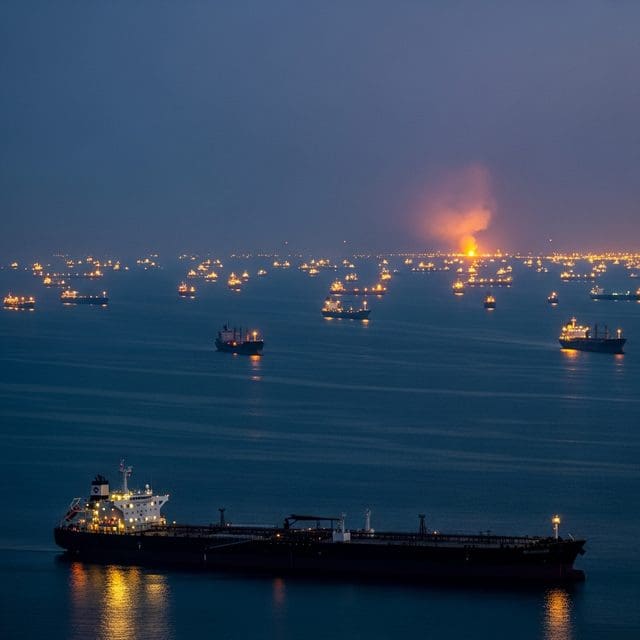
Iranian drone strikes on Bahrain and tankers have paralyzed the Strait of Hormuz, stranding thousands of mariners and forcing a massive rerouting of global manufacturing feedstocks around Africa.
The delicate machinery of global trade has ground to a halt at its most critical juncture. Following a series of Iranian drone strikes targeting a commercial tanker and strategic sites within Bahrain, traffic through the Strait of Hormuz has reached a near standstill. This escalation follows U.S. retaliatory strikes on June 26, 2026, and has effectively scuttled a United Nations-led effort to evacuate roughly 600 vessels and 11,000 mariners currently trapped in the crossfire. The situation in Manama, a key U.S. ally and regional logistics hub, marks a widening of the conflict that now directly threatens the infrastructure underpinning global energy and metals markets.
For the American worker and the domestic manufacturer, the implications are immediate and physical. The Persian Gulf is not merely a source of crude oil; it is the origin point for the petrochemical feedstocks and refined products that fuel factories and form the basis of modern plastics, electronics, and fertilizers. With the waterway blocked, major oil majors and commodity traders are beginning to reroute cargoes around the Cape of Good Hope. This detour adds weeks to transit times and massive fuel costs, injecting volatility into just-in-time supply chains that were already reeling from high energy costs and a recent surge in domestic inflation.
The crisis in the Middle East is compounded by a simultaneous squeeze on energy production in Eastern Europe. An intensifying campaign of Ukrainian drone attacks has reached deep into Russian territory, disabling significant refining capacity, including the NORSI refinery, Russia’s fourth-largest. This dual shock to global diesel and gasoline supplies arrives just as the AI boom drives a massive increase in domestic electricity demand, turning energy into a scarce commodity across the American economy. As companies are forced into the energy business just to keep their data centers and factories running, the disruption of Gulf exports via Hormuz threatens to push the cost of production to unsustainable levels.
Geopolitical tensions are further complicating the trade landscape. While the Trump administration mediated a framework agreement between Israel and Lebanon on June 26, the situation with Iran remains volatile. The Senate recently saw a sharp divide over a war powers resolution to halt the conflict, which was ultimately rejected by Republicans following presidential intervention. Simultaneously, the administration has maintained a hard line on trade sovereignty, threatening 100% tariffs on European imports if digital service taxes are imposed on American firms. This protectionist stance, while aimed at defending domestic interests, occurs against a backdrop of rising maritime insurance premiums that make every imported component more expensive.
Maritime and naval sources report that even limited Iranian mining of the strait could delay any reopening for months. Tehran is believed to hold roughly 6,000 naval mines, a credible threat that has already forced force majeure declarations at major refineries like Bahrain’s BAPCO complex. As shipping insurers struggle to price war-risk coverage, the cost of moving goods is set to rise, likely fueling the inflation that has already begun to outpace recent income growth. For those who believe in the dignity of local production, this crisis serves as a stark reminder of the risks inherent in over-reliance on distant, unstable chokepoints.
The journey of a single barrel of oil or a container of industrial chemicals has never looked more perilous. From the strikes in the Baltic to the drone swarms over the Gulf, the physical reality of trade is being rewritten by conflict. This environment reinforces the urgent need for true energy independence and a robust domestic manufacturing base that can withstand the tremors of global instability without sacrificing the prosperity of the American workforce.

Sean Bradley serves as the Senior Correspondent for Trade, Supply Chains, and Global Labor at Just Right News, where he brings a principled, clear-eyed perspective to the complex systems that power the modern world. With a focus on the economic forces that impact the American household, Bradley has distinguished himself as a leading voice in explaining how global shifts in manufacturing and logistics translate to the kitchen table.
Growing up in Long Beach, California, Bradley’s interest in the movement of goods was forged against the backdrop of one of the nation’s most vital maritime gateways. Raised in a community where the towering cranes of the port were a constant fixture on the horizon, he developed an early appreciation for the blue-collar industries that form the backbone of the American economy. This upbringing instilled in him a profound respect for the dockworkers, truckers, and laborers who keep the country moving, a sentiment that remains a cornerstone of his reporting today. For Bradley, trade is not merely a series of abstract figures on a spreadsheet; it is a human endeavor that sustains families and defines the strength of a nation.
Now based in Seattle, Washington, Bradley occupies a strategic vantage point in another of the country’s most significant trade hubs. His location allows him to witness firsthand the intersection of traditional industry and the evolving technological landscape of global logistics. From the Pacific Northwest, he monitors the flow of goods across the ocean, providing Just Right News readers with timely insights into how international tensions, regulatory hurdles, and labor disputes affect the availability and cost of essential goods.
His signature feature series, “The Journey of Things,” has become a staple for readers seeking to understand the intricate path products take from raw materials to the retail shelf. Through this series, Bradley pulls back the curtain on the global marketplace, often highlighting the risks of over-reliance on foreign adversaries and the importance of domestic manufacturing resilience. His reporting consistently emphasizes the conservative values of national sovereignty, free-market competition, and the protection of the American worker from unfair global practices.
As a journalist of Irish heritage, Bradley maintains a deep-seated respect for the dignity of the individual worker and the importance of community stability. He approaches his beat with a commitment to transparency, often questioning the status quo of globalist policies that prioritize corporate efficiency over local prosperity. Whether he is reporting from a warehouse floor or analyzing a new international trade agreement, his goal remains the same: to provide the American public with the truth about where their products come from and what it costs to get them there.
Throughout his tenure at Just Right News, Bradley has remained a steadfast advocate for economic common sense. His work serves as a vital resource for those who believe that a strong nation is built on secure borders, robust trade, and a respected workforce. By combining his local roots in Long Beach with his professional experience in Seattle, Bradley continues to offer a unique and necessary perspective on the forces that shape the American way of life.