

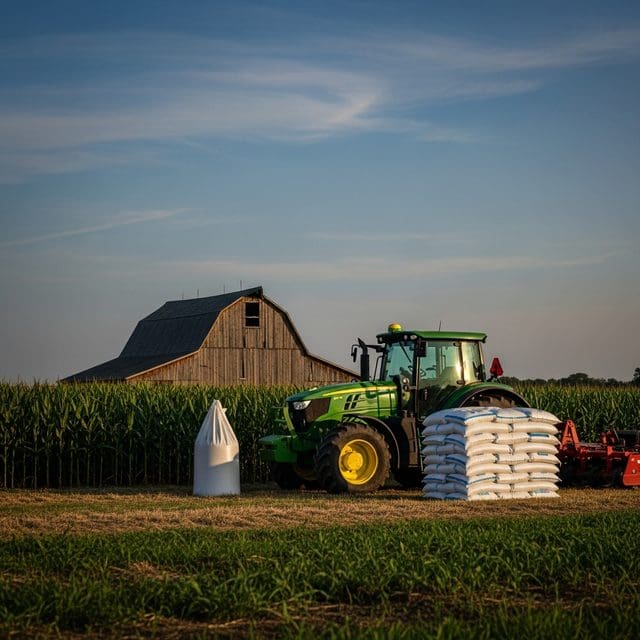
President Trump seeks over $11 billion in federal aid to shield American growers from skyrocketing fertilizer costs and recent storm damage.
The American dinner table is facing a pincer movement of rising input costs and volatile weather, prompting a federal intervention to stabilize the nation’s food supply. On June 24, President Trump requested more than $11 billion in emergency farm aid from Congress, a move designed to buffer growers against a global surge in fertilizer prices and the lingering effects of severe storms. This request comes at a critical juncture for the agricultural sector, where the cost of doing business has outpaced the market value of the harvest for many family-owned operations.
The bulk of the request, approximately $10 billion, targets row and specialty crop growers who have seen their margins evaporated by a 30% spike in urea prices since the onset of recent Middle Eastern conflicts. An additional $1.1 billion is earmarked for Florida producers still reeling from late-2025 and early-2026 storms. If approved, this package could push total direct federal payments to farmers to nearly $55 billion this year. This level of spending reflects an administration prioritizing domestic food sovereignty and the protection of the agricultural base over traditional fiscal restraint, recognizing that a bankrupt farming sector is a national security risk.
While Washington focuses on the checkbook, international developments illustrate the risks of failing to secure agricultural inputs. In Andhra Pradesh, Agriculture Minister Atchannaidu has been forced to defend the new APAIMS 2.0 distribution system. The platform was launched to prevent the illegal diversion and hoarding of subsidized fertilizers as prices climb, ensuring that nearly 297,733 farmers receive essential urea and DAP based strictly on acreage. Reports indicate that over 48,000 metric tons of urea have already been moved through this system. The necessity of such a digital leash on essential nutrients underscores the fragility of the global supply chain and the lengths to which governments must go to ensure that chemicals reach the soil rather than the black market.
Environmental stressors are further compounding these economic pressures. Across the Atlantic, British and European farmers are reporting significant threats to livestock and crop yields due to a persistent heatwave. Scientists in the United Kingdom have warned that if these conditions become the norm, consumers will struggle to find affordable produce. In Belgium, officials have already cautioned that milk and meat output may fall as heat stress takes a toll on herds. These international warnings serve as a harbinger for American producers who are dealing with similar heat-and-input-cost squeezes, particularly in the South and West where water infrastructure remains a perennial concern.
For the American producer, the challenge is twofold: maintaining yields while navigating a regulatory and economic environment that often penalizes high-intensity farming. The administration’s aid request acknowledges that without affordable fertilizer, farmers are likely to cut usage, leading to lower yields and higher grocery prices for the average family. This is not merely a matter of corporate profits; it is a matter of whether the average American can afford to feed their family. The ripple effects of fertilizer inflation are felt in every aisle of the supermarket, from the price of a loaf of bread to the cost of a gallon of milk.
As the EPA and other federal regulators continue to monitor water and soil health, the immediate crisis remains one of availability and cost. The administration’s pivot toward direct financial support suggests a realization that environmental stewardship cannot exist without economic viability for the men and women working the land. Protecting the environment is a noble goal, but it must be balanced against the practical reality that farmers need tools to keep the nation fed. Without this $11.1 billion lifeline, the agricultural heritage of regions like the San Joaquin Valley and the Florida citrus groves faces an uncertain and expensive future.

Eric Nolan serves as the Senior Correspondent for Food, Water, and Environmental Health at Just Right News, where he brings a principled, common-sense perspective to the most fundamental issues facing the American public. With a career dedicated to uncovering the truth behind the policies that govern our natural resources, Eric has become a trusted voice for readers who value traditional stewardship over bureaucratic overreach. His reporting is defined by a commitment to the idea that true environmentalism is rooted in the protection of the American family and the preservation of the nation’s agricultural heritage.
Raised in Fresno, California, Eric’s worldview was shaped in the heart of the San Joaquin Valley. Growing up in one of the world’s most productive agricultural hubs, he witnessed firsthand the vital connection between the land, the water, and the dinner table. In Fresno, he saw the resilience of farmers and the devastating impact that distant, top-down regulations can have on local communities. This upbringing instilled in him a deep respect for the producers who feed the country and a lifelong skepticism toward the alarmist narratives often pushed by mainstream media. For Eric, environmental health is not an abstract political talking point; it is a matter of ensuring that the people who work the land have the freedom and the resources to do so effectively.
Now based in Eugene, Oregon, Eric operates from a unique vantage point in the Pacific Northwest. Living in a region often defined by intense environmental debate, he provides a necessary counter-narrative to the prevailing trends of the area. From his base in Eugene, he monitors the shifting tides of federal and state policies, ensuring that the voices of rural citizens and property owners are not drowned out by urban activism. His reporting often bridges the gap between the rugged realities of the outdoors and the legislative halls where decisions are made, offering a grounded perspective that prioritizes local sovereignty and practical solutions.
As the lead for the acclaimed feature series “Earth on the Table,” Eric explores the intricate journey of the American food supply. He tackles critical issues such as water rights, soil health, and food security through a lens of national stability and individual liberty. He believes that a healthy environment and a thriving economy are not mutually exclusive, but rather two sides of the same coin of national prosperity. His work consistently highlights how innovation and private-sector ingenuity are the most effective tools for ensuring clean water and a safe food supply, rather than the expansion of the administrative state.
At Just Right News, Eric’s reporting serves as a vital resource for those who seek accountability and transparency. Whether he is investigating the impact of federal land management on local economies or examining the safety of the national food infrastructure, his work remains anchored in the values of heritage and hard work. Eric Nolan continues to be a leading voice in environmental journalism, championing the belief that the best way to protect our natural resources is to empower the people who live and work closest to them.