

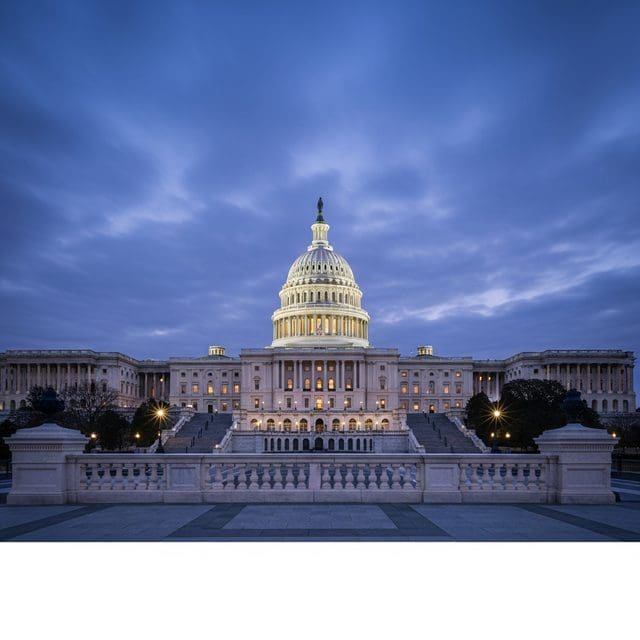
A bipartisan House coalition utilized a rare discharge petition to pass a $9 billion Ukraine aid and sanctions package, marking a major legislative break with President Trump.
The House of Representatives delivered a sharp rebuke to the White House on Thursday, passing the Ukraine Support Act in a 226-195 vote that signals a widening intraparty split over the future of Western security. The legislation, which provides over $1 billion in direct security and reconstruction aid alongside $8 billion in defense loans, represents a rare successful use of the discharge petition to bypass House leadership. This maneuver allowed a majority of the House to force a floor vote after months of blockage by Republican leaders who have sought to align with President Trump’s more skeptical posture toward the conflict.
Eighteen Republicans broke ranks to join 207 Democrats and one independent in supporting the measure. This bipartisan coalition successfully navigated the bill to the floor despite explicit warnings from House Majority Leader Steve Scalise. Scalise argued that the legislation could undermine sensitive, ongoing negotiations between Congress and the White House intended to yield a stronger, though more complicated, result. Opponents of the bill, including Representative French Hill, chairman of the House Financial Services Committee, characterized the measure as flawed and outdated, noting that its funding levels for security assistance actually fall below figures previously discussed in annual defense policy cycles.
Beyond the immediate financial infusion for Kyiv, the bill targets the structural foundations of the Russian economy. It seeks to tighten the noose on Moscow’s energy sector by imposing secondary sanctions and tariffs on third parties and countries doing business with Russian oil, gas, and uranium entities. For proponents like Representative Gregory Meeks, the bill is a necessary assertion of American resolve. Meeks framed the vote as a choice between helping Ukraine negotiate from a position of strength or allowing Vladimir Putin to outlast Western commitment. Representative Don Bacon, one of the Republicans who supported the bill, echoed this sentiment, describing the vote as a fundamental choice between standing with good or evil.
This legislative maneuver comes during a week of significant foreign policy friction between the executive and legislative branches. Only a day prior, the House approved a war powers resolution aimed at curbing military action against Iran. While the White House recently announced that Iran has agreed to high-level nuclear inspections and a temporary memorandum of understanding on oil sales, the administration is simultaneously facing internal pressure from its own base. High-profile figures such as former Representative Marjorie Taylor Greene and Tucker Carlson have recently withdrawn support for the Republican Party over the administration’s military operations in the Middle East.
The Ukraine Support Act now moves to the Senate, where its future remains precarious. While the House vote sends a clear signal to both the Kremlin and the White House, the bill requires 60 votes to clear the upper chamber and would ultimately face a potential veto from President Trump. Representative Brian Fitzpatrick, a key supporter of the discharge petition, acknowledged the Senate hurdle but argued the vote serves as a vital message to Ukrainian soldiers and a reminder to Moscow that the U.S. legislature still maintains an independent pulse on global security.
As the Pentagon requests an additional $80 billion from Congress to cover the costs of the war in Iran, the debate over Ukraine aid underscores the difficult fiscal balancing act facing lawmakers. With domestic gas prices falling below $4 for the first time since March following the June 18 Iran war agreement, the administration has seen some domestic relief. However, the bipartisan defiance in the House suggests that the “peace through strength” tradition remains a potent, if contentious, force in the halls of Congress. The vote reflects a growing impatience with a foreign policy that some members of both parties fear is abandoning long-standing Western alliances in favor of transactional diplomacy.

Olivia Kendall serves as the Senior Correspondent for Geopolitics, Defense, and Foreign Policy at Just Right News, where she provides a principled, conservative perspective on the complex forces shaping the global stage. With a career dedicated to deconstructing the intricacies of international relations, Kendall has become a trusted voice for readers who value national sovereignty, a robust military, and a foreign policy that prioritizes American interests above all else.
A native of Washington, D.C., Kendall’s professional journey is deeply rooted in her upbringing within the nation’s capital. Growing up in the epicenter of American political life, she developed an early and profound understanding of how policy is crafted and, more importantly, how it often fails to account for the values of the American heartland. This unique vantage point allowed her to witness firsthand the rise of globalist bureaucracies, fueling her commitment to reporting that champions the constitutional foundations of the United States. Her background as a British White American further informs her worldview, providing her with a keen appreciation for the Western tradition and the enduring importance of the “Special Relationship” in maintaining global stability.
Now based in Arlington, Virginia, Kendall operates from the doorstep of the Pentagon and the heart of the nation’s defense establishment. Her proximity to the decision-makers in the military and intelligence communities allows her to provide boots-on-the-ground reporting that is both timely and deeply informed. For Kendall, Arlington is more than just a base of operations; it is a daily reminder of the sacrifices made by the men and women in uniform. This connection to the defense community drives her rigorous coverage of military readiness and her advocacy for a “peace through strength” approach to diplomacy.
At Just Right News, Kendall is perhaps best known for her acclaimed feature series, “The World’s Shadow on America.” In this ongoing project, she explores the direct correlation between international developments and the daily lives of American citizens. Whether she is analyzing the encroachment of foreign adversaries in domestic supply chains or the impact of international treaties on local economies, Kendall’s work serves as a vital bridge between distant geopolitical shifts and their consequences at home. She rejects the notion that foreign policy is an abstract concern for elites, instead proving that what happens in the corridors of power in Brussels or Beijing has a tangible “shadow” that falls across every American doorstep.
Throughout her tenure, Kendall has remained a steadfast critic of international overreach and a vocal proponent of a clear-eyed, realistic foreign policy. She brings a sharp analytical mind to her beat, often challenging the prevailing narratives of the mainstream media to uncover the underlying truths that affect national security. Her reporting is characterized by a refusal to compromise on the truth and a dedication to the idea that a strong, secure America is the world’s best hope for liberty. As a Senior Correspondent, Olivia Kendall continues to lead the charge in providing the essential context and conservative insight necessary to navigate an increasingly volatile world.