

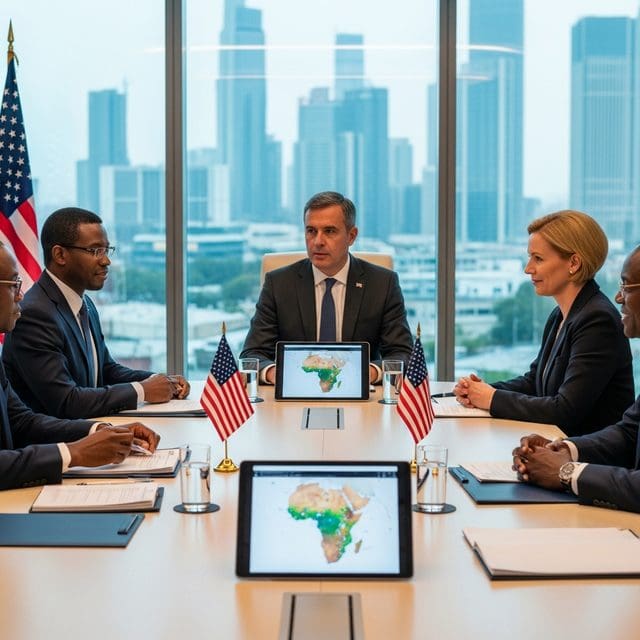
New U.S. health agreements with seven African nations prioritize American surveillance and specimen access, sparking debate over national sovereignty and the future of multilateral pandemic response.
The landscape of global health is shifting toward a more transactional model as the United States formalizes a series of bilateral health agreements across Africa. These pacts, signed with Ethiopia, Kenya, Mozambique, Nigeria, Rwanda, Liberia, and Uganda, represent a significant departure from traditional multilateral aid. By tying hundreds of millions of dollars in funding to specific American requirements for surveillance access and specimen sharing, the U.S. is asserting a more direct role in foreign health policy that prioritizes national security and fiscal transparency over the collective goals of international bureaucracies.
A June 9 think-tank review and reports from Human Rights Watch suggest these agreements could fundamentally alter how pandemic preparedness is managed on the continent. Under the terms of these ‘America First’ arrangements, Washington retains the authority to terminate health funding with a mere 180 days’ notice if partner nations resist data-sharing mandates or fail to enforce Helms Amendment restrictions. This leverage has raised concerns among international observers who argue that such conditions may prioritize U.S. security interests over the equitable development of local healthcare infrastructure, potentially leaving African nations vulnerable if they do not comply with Washington’s data demands.
The timing of these agreements coincides with urgent warnings from the Africa CDC and the World Health Organization. During recent briefings regarding ongoing Ebola outbreak responses in the Democratic Republic of the Congo and Uganda, health officials emphasized that the next pandemic is a matter of ‘when’ rather than ‘if.’ African leaders have long called for predictable, unconditional assistance to build climate-sensitive surveillance systems. However, the new U.S. framework introduces a layer of conditionality that critics say could fragment global response efforts and undermine the WHO-led multilateral pandemic preparedness frameworks currently in development.
From a fiscal and security perspective, the bilateral approach offers the U.S. greater transparency and direct oversight of how taxpayer dollars are utilized in foreign health initiatives. By bypassing the often-criticized bureaucracy of the WHO, the U.S. aims to ensure that pathogen samples and epidemiological data are available to American researchers in real-time. This is particularly relevant as the UN’s ‘State of the Climate in Africa 2024’ report underscores how climate extremes are driving hunger, displacement, and health emergencies across the continent. Proponents of the bilateral deals argue that direct American involvement ensures that aid reaches its intended targets without being diluted by the administrative overhead of global agencies.
While the U.S. focuses on these health security pacts, the broader geopolitical environment remains complex. Recent developments, such as the reopening of the Strait of Hormuz and the U.S.-led naval blockade in the Gulf of Oman, highlight a period of intense American maritime and economic activity. The U.S. military recently disabled an oil tanker, the MT Settebello, for violating this blockade, an incident that resulted in the deaths of three Indian mariners. These events underscore a period of robust American interventionism that now extends into the realm of global health through these new African aid conditions.
As climate change intensifies pressure on health systems, the tension between bilateral interests and multilateral cooperation remains a central friction point. While these deals secure a foothold for American health standards and surveillance, they also test the resilience of international frameworks designed to treat global health as a shared responsibility. For the American taxpayer, the shift represents a move toward market-driven solutions and accountability, even as it challenges the established norms of global development policy. The coming months will determine if these seven nations can balance the need for U.S. funding with the demands for data sovereignty.

Rachel Vaughn serves as a Senior Correspondent for Just Right News, where she leads the network’s coverage of Global Health, Climate, and Development. With a career defined by intellectual rigor and a commitment to principled reporting, Rachel provides a vital conservative perspective on some of the most complex and high-stakes issues facing the world today. Her work is characterized by a refusal to accept bureaucratic narratives at face value, focusing instead on how international policies impact national sovereignty, individual liberty, and the American taxpayer.
Raised in New Haven, Connecticut, Rachel grew up in an environment dominated by elite academic discourse. This upbringing provided her with a front-row seat to the inner workings of the American establishment, but it also instilled in her a healthy skepticism of the “ivory tower” consensus. She learned early on that while academic theories may sound promising in a lecture hall, they often fail to account for the practical realities of the working class. This background drives her to bridge the gap between high-level policy discussions and the common-sense concerns of everyday citizens, ensuring that her reporting remains grounded and accessible.
Now based in Burlington, Vermont, Rachel operates from a unique vantage point within one of the nation’s most progressive political landscapes. Living and working in a region that often serves as a testing ground for radical social and environmental experiments allows her to witness the real-world consequences of these policies firsthand. From her base in the Green Mountain State, she provides Just Right News readers with essential “boots on the ground” reporting, documenting the friction between local mandates and the constitutional freedoms of the individual. Her presence in Burlington ensures that her critiques of globalist agendas are informed by a direct understanding of how those ideologies manifest at the local level.
In her acclaimed feature series, “Planetary Stakes,” Rachel explores the intersection of international development and environmental stewardship. She rejects the alarmism often found in mainstream media, opting instead for a sober analysis of the economic and geopolitical costs of global climate agreements. Her reporting frequently highlights the importance of market-driven innovation and the role of American leadership in fostering global health without ceding authority to unelected international bodies. Through “Planetary Stakes,” she has become a leading voice for those who believe that true conservation and public health are best achieved through transparency, accountability, and the protection of private property rights.
Throughout her tenure at Just Right News, Rachel has distinguished herself as a journalist who is unafraid to ask difficult questions of global institutions. Whether she is investigating the influence of non-governmental organizations on domestic policy or analyzing the fiscal transparency of international health initiatives, her goal remains the same: to provide her audience with the facts necessary to navigate an increasingly interconnected world. Her blend of East Coast intellectual heritage and her current immersion in the political heart of the Northeast makes her an indispensable asset to the newsroom and a trusted source for readers seeking a principled, conservative take on the issues that define our era.