

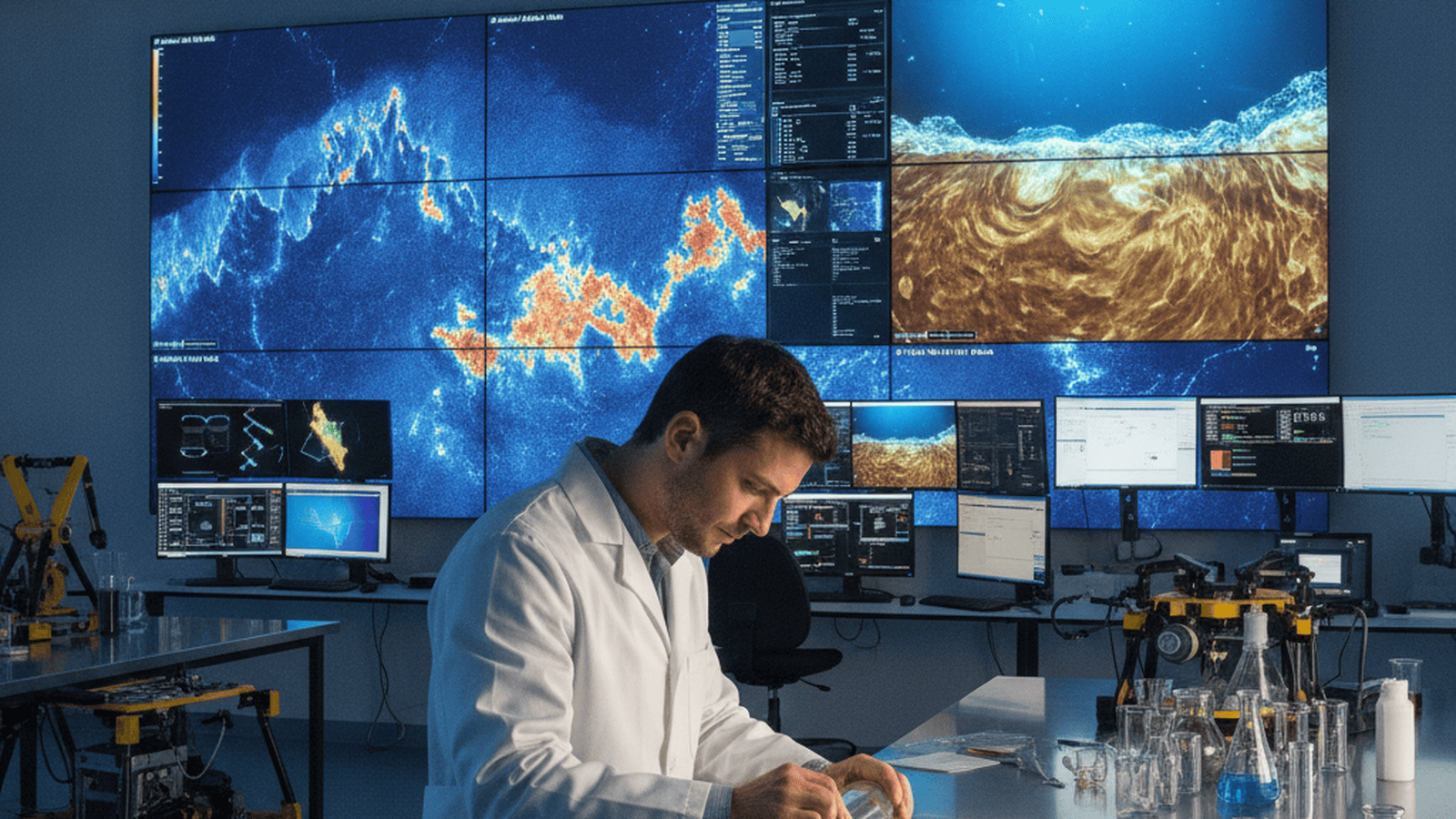
Researchers have discovered rare deep-sea brine pools in the Gulf of Aqaba, the first of their kind found in this region of the Red Sea. These anoxic, highly saline underwater lakes preserve thousands of years of geological history and harbor unique microbial life with potential pharmaceutical applications.
TLDR: A University of Miami team has uncovered extreme brine pools over a mile deep in the Gulf of Aqaba. These oxygen-free, super-salty environments act as time capsules, preserving records of ancient tsunamis and floods while hosting extremophile microbes that could lead to new medical breakthroughs.
Researchers from the University of Miami, in a landmark collaboration with the ocean exploration organization OceanX, have announced the discovery of rare deep-sea brine pools in the Gulf of Aqaba. This finding represents the first time such extreme environments have been identified in this northern extension of the Red Sea. Located at a staggering depth of more than 1,770 meters (approximately 1.1 miles) below the ocean surface, these pools are essentially underwater lakes with salinity levels so high they are toxic to most marine life. The discovery was made during a high-resolution mapping expedition using the state-of-the-art research vessel OceanXplorer, which is equipped with advanced sonar and remotely operated vehicles (ROVs).
Brine pools are among the most extreme and alien environments on our planet. They form in deep-sea basins where salt deposits from ancient geological periods dissolve into the water, creating a solution much denser than the surrounding seawater. Because of this density difference, the brine remains trapped in seafloor depressions, forming a distinct layer with a visible surface interface known as a halocline. To the cameras of a submersible, these pools look like shimmering, oily bodies of water, complete with their own waves and “shorelines.” In the Gulf of Aqaba, these pools are particularly noteworthy because they are situated remarkably close to the coast, offering a rare window into how deep-sea geological processes interact with land-based environmental changes.
The biological landscape of these pools is a study in extremes. The interior of the brine is completely anoxic—devoid of oxygen—and saturated with salt. Any fish or crustacean that inadvertently enters the pool is immediately incapacitated and essentially pickled, leading to the formation of “graveyards” of preserved marine life around the edges. However, this harshness does not mean the pools are lifeless. At the interface where the brine meets the oxygenated seawater, specialized microbes known as extremophiles thrive. These organisms have evolved unique metabolic pathways to survive in conditions that would be lethal to almost any other form of life. Scientists believe these microbes could be a goldmine for the pharmaceutical industry, potentially harboring bioactive compounds that could lead to the development of new antibiotics or anti-cancer medications.
Beyond biology, the brine pools serve as an unparalleled paleo-archive. In most parts of the ocean, the historical record in the sediment is disturbed by “bioturbation”—the movement of burrowing animals—and bottom currents. In the anoxic, toxic environment of a brine pool, no such animals exist. Consequently, the sediment layers remain perfectly stratified and undisturbed for thousands of years. By extracting and analyzing sediment cores from these pools, the research team, led by Professor Sam Purkis, has been able to reconstruct a detailed history of regional geological events. Their findings include evidence of major tsunamis, flash floods, and earthquakes spanning over 1,200 years.
This geological record is not just of academic interest; it has significant practical implications for the region. The Red Sea coastline is currently the site of massive infrastructure projects and urban developments, such as NEOM. Understanding the frequency and intensity of past tsunamis and seismic events is crucial for assessing the long-term risks to these coastal investments. The discovery highlights the importance of exploring the “final frontier” of our own planet. While the central Red Sea has been studied for decades, the deep waters of the Gulf of Aqaba remained largely a mystery until now. This expedition proves that even in well-traveled regions, the deep ocean still holds secrets that can reshape our understanding of Earth’s history and biological potential.

Mason Reed serves as a Staff Writer for Just Right News, where he spearheads the Future Frontiers & Special Projects desk. In an era defined by rapid technological shifts and evolving social landscapes, Mason provides a steady, principled voice, examining the innovations of tomorrow through the lens of traditional American values. His work is most prominently featured in his signature series, “The Next Horizon,” where he explores the intersection of emerging technology, national sovereignty, and the preservation of individual liberty.
A native of San Diego, California, Mason’s worldview was shaped by the unique culture of his hometown. Growing up in a region defined by its strong military presence and its history of maritime industry, he developed a deep-seated respect for the institutions that provide national stability and the entrepreneurial spirit that drives the American economy. This upbringing instilled in him a belief that true progress is not found in discarding the past, but in building upon a foundation of proven principles. His reporting often reflects this San Diego influence, emphasizing the importance of a robust national defense and the necessity of maintaining a competitive edge in the global marketplace.
Now based in San Francisco, Mason operates from the heart of the world’s technological engine. Living and working in the Bay Area provides him with a front-row seat to the advancements—and the ideological challenges—emanating from Silicon Valley. While many in the region embrace a “move fast and break things” mentality, Mason’s reporting serves as a vital counterweight. He offers Just Right News readers a “boots on the ground” perspective, documenting how radical local policies and the concentration of tech power impact the everyday lives of citizens. His proximity to the industry allows him to cut through the marketing jargon of big tech to uncover the real-world implications for privacy, free speech, and the nuclear family.
In his “Future Frontiers” beat, Mason tackles complex subjects ranging from the ethics of artificial intelligence to the burgeoning private space race. He approaches these topics with a healthy skepticism toward centralized bureaucracy, championing instead the decentralized innovations that empower individuals. Through “The Next Horizon,” he highlights the pioneers and thinkers who are working to ensure that the future remains a place where human dignity and constitutional rights are protected. He believes that the rapid pace of change requires more than just technical expertise; it requires a moral compass rooted in the Western tradition.
Throughout his tenure at Just Right News, Mason has remained committed to the idea that the future is something to be shaped, not merely accepted. His writing is characterized by a rigorous defense of American exceptionalism and a belief that the country’s best days lie ahead, provided it remains true to its founding ideals. Whether he is investigating the impact of automation on the American workforce or profiling the next generation of aerospace engineers, Mason Reed ensures that his readers are equipped with the insights they need to navigate a changing world with confidence and clarity.