

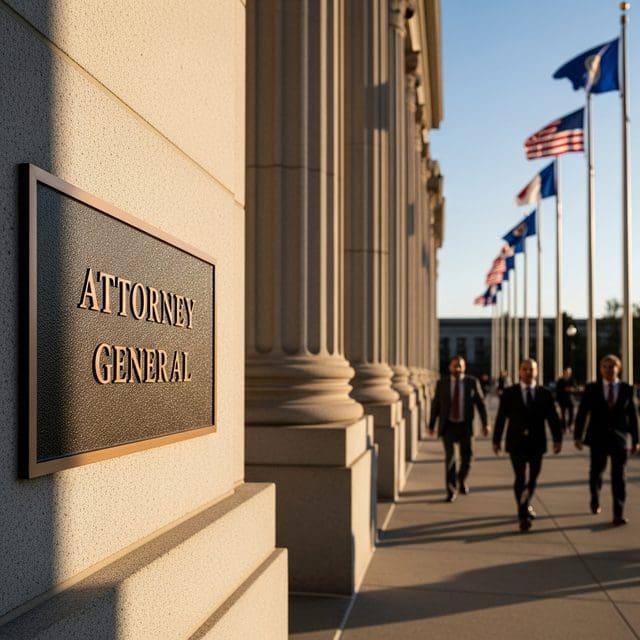
California and New York lead a multistate coalition to block a $111 billion media merger, asserting state antitrust powers as federal regulators remain sidelined.
The constitutional principle of the Tenth Amendment is finding a new and high-stakes battleground in the entertainment industry as state attorneys general move to fill a perceived vacuum in federal antitrust enforcement. California Attorney General Rob Bonta announced this week that he is nearing a final decision on whether to file a lawsuit to block the massive $111 billion acquisition of Warner Bros. Discovery by Paramount Skydance. The move signals a robust exercise of state sovereignty in the face of a federal regulatory environment that has effectively cleared the deal under the Hart-Scott-Rodino Act, leaving the ‘Fifty Laboratories of Power’ as the final line of defense for a competitive marketplace.
Bonta is not acting in isolation. He is currently coordinating a sophisticated antitrust review with at least one other major state power, New York Attorney General Letitia James. Reports indicate that as many as ten other state attorneys general are exploring joining the coalition. This multistate front argues that behavioral remedies—mere corporate promises of good conduct—are insufficient to protect the economic health of their residents. Instead, Bonta has emphasized that divestitures are the only credible path forward, suggesting that the states may demand the breaking up of assets before any merger is finalized. This decentralized approach to market regulation underscores how state houses and executive offices can serve as a vital check on corporate consolidation that threatens local economies and consumer choice.
The push for state intervention is a direct response to local pressures and the unique economic needs of the heartland and coastal hubs alike. In California, a group of 34 Democratic House members, led by Representative Laura Friedman, formally pressed Bonta to conduct a ‘full and robust review.’ These lawmakers warned of devastating job losses in the entertainment sector, an industry that serves as the backbone of the Southern California economy. Furthermore, advocacy groups such as the Center for American Progress Action Fund have warned that the merger would heighten extreme media concentration, potentially raising streaming prices for families and consolidating control over major news outlets like CBS News and CNN. By acting independently, these states are testing the limits of their authority to safeguard the public interest within their own borders.
While the states prepare their offensive, the corporate entities are digging in for a protracted legal fight. Paramount Skydance recently filed a motion in federal court to dismiss a consumer antitrust lawsuit brought by streaming users, arguing the plaintiffs’ claims lack a factual basis. A hearing for that case is set for July 16, but the entry of state governments into the fray changes the calculus entirely. David and Larry Ellison’s camp is reportedly preparing for a ‘big battle’ against the states, recognizing that while federal hurdles may have been cleared, the sovereign power of the states to enforce their own antitrust and public-interest statutes remains a formidable obstacle.
This resurgence of state-level antitrust activity reflects a broader trend of federalism in practice. As federal agencies appear more inclined to allow large-scale mergers to proceed, the states are asserting their role as the primary defenders of the competitive marketplace. This is not merely about Hollywood; it is about the principle that local authorities are best positioned to understand the impact of global mergers on their specific workforces and communities. Whether this multistate front succeeds or not, the challenge itself reaffirms the vital role of state governments in addressing modern economic concentrations. By exercising their independent authority, California, New York, and their allies are proving that the states remain the most effective laboratories for protecting the liberty of the individual and the integrity of the free market.

Dylan Brooks serves as the Senior Correspondent for Statehouses and Local Governance at Just Right News, where he brings a principled, constitutionalist lens to the often-overlooked machinery of state-level politics. As the lead voice behind the acclaimed feature series “Fifty Laboratories of Power,” Dylan has dedicated his career to the idea that the most impactful governance happens closest to home. His reporting consistently champions the Tenth Amendment, exploring how individual states can serve as testing grounds for innovative, conservative policy solutions that prioritize personal liberty and fiscal responsibility.
A native of Des Moines, Iowa, Dylan’s journalistic philosophy was forged in the heart of the American Midwest. Growing up in a community where local school board meetings and town halls were the bedrock of civic life, he developed a deep appreciation for the “retail politics” of the heartland. This upbringing instilled in him a fundamental belief that the American experiment is best preserved when power is decentralized. He carries the values of his Iowa roots into every assignment, maintaining a healthy skepticism of federal overreach and a steadfast commitment to the concerns of everyday citizens over the interests of the administrative state.
Now based in Madison, Wisconsin, Dylan operates from one of the nation’s most pivotal political battlegrounds. His location in a state capital known for its rigorous policy debates allows him to provide Just Right News readers with a front-row seat to the legislative process. From Madison, he tracks the ripple effects of statehouse decisions on local municipalities, ensuring that the connection between high-level policy and community impact is never lost. His work often highlights the success of conservative governors and legislatures in fostering economic growth, protecting parental rights, and securing the integrity of local institutions.
As an African American man in the conservative media landscape, Dylan offers a vital perspective on how limited government and free-market principles empower individuals and families. He frequently reports on how deregulation and school choice initiatives provide new avenues for success in underserved communities, challenging the monolithic narratives often presented by legacy media outlets. Dylan’s work is characterized by a commitment to the facts and a refusal to shy away from the complex realities of modern governance.
Throughout his tenure at Just Right News, Dylan has become a trusted authority for readers who value a rigorous, principled approach to the news. Whether he is dissecting a complex state budget or profiling a local grassroots movement, his goal remains the same: to provide the American public with the information they need to hold their local leaders accountable. By focusing on the “Fifty Laboratories of Power,” Dylan Brooks ensures that the vital work being done in statehouses across the country receives the national attention it deserves, always through a lens that respects the traditions and sovereignty of the American people.