

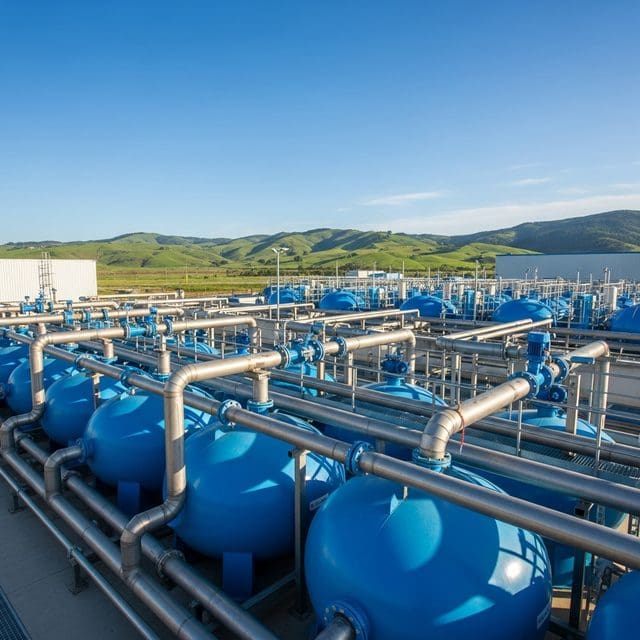
The EPA is offering water systems a two-year compliance extension for PFAS removal while simultaneously expanding federal oversight to include microplastics and pharmaceutical residues.
The Environmental Protection Agency is recalibrating its aggressive approach to the nation’s water quality, proposing a two-year compliance extension for drinking-water systems struggling to meet new standards for per- and polyfluoroalkyl substances (PFAS). Under the proposed rule, eligible systems would see their deadline for compliance shifted from 2029 to 2031. This shift provides a critical buffer for municipalities and local water districts facing the staggering technical and financial hurdles of filtering out these persistent “forever chemicals.” Systems that do not opt into this extension will remain under the original 2029 deadline, maintaining a tiered approach to federal enforcement that acknowledges the varying capabilities of local infrastructure.
This extension arrives as the agency acknowledges the significant capital required to modernize local water works. The EPA announced nearly $1 billion in new grant funding specifically for PFAS and other emerging contaminants in drinking water, bringing the total program investment to $5 billion over five years. While this funding is intended to ease the burden on local taxpayers, the sheer scale of the contamination suggests that even these billions may only scratch the surface of the necessary upgrades for rural and mid-sized water districts. For agricultural communities, where water sovereignty and cost are paramount, these federal mandates represent a massive shift in how local resources are managed and funded.
In a move that signals a significantly broader regulatory reach, the EPA has also released its draft Contaminant Candidate List 6 (CCL 6). For the first time in the agency’s history, microplastics and pharmaceuticals have been formally included as priority drinking-water contaminant groups. The list serves as a regulatory roadmap, identifying 75 chemicals and nine microbes that the agency believes may require federal oversight in the near future. By including microplastics, the EPA is entering a complex and controversial new arena of environmental health, as these particles are ubiquitous in both the natural environment and the industrial supply chain, making them notoriously difficult to regulate without impacting a wide swath of the private sector.
To assist local water managers in the interim, the EPA has released human health benchmarks for 374 different pharmaceuticals. These benchmarks are currently non-enforceable, functioning instead as a technical resource for states, Tribes, and local systems to assess the risks of drug residues found in their water supplies. However, the move toward source control is also accelerating. The agency is developing a proposed rule to curb PFAS at the source by setting wastewater discharge limits for chemical manufacturers and other industrial categories. This shift aims to prevent contaminants from entering the water cycle initially, rather than relying solely on downstream treatment, but it also places a new regulatory target on American manufacturing.
The EPA is also revisiting the legal process used for specific chemicals, including PFHxS, PFNA, and GenX, along with the PFAS hazard index. A public hearing is set for July 7, 2026, followed by a 60-day comment period, allowing stakeholders to weigh in on the scientific and legal foundations of these regulations. This second proposed rule highlights the ongoing legal volatility surrounding environmental policy, where the definitions of safety and hazard are frequently litigated in federal courts.
Simultaneously, the regulatory landscape is shifting for the American food supply. The Food and Drug Administration is currently under a court-mandated deadline of June 30, 2026, to provide a final response to a citizen petition regarding PFAS in food. This follows a federal court decision in April that kept the pressure on the FDA to address how these chemicals migrate from packaging into the food consumed by millions of Americans. For agricultural producers and food processors, the outcome of this petition could signal a new era of packaging requirements and potential liability. As federal mandates expand, the tension between environmental goals and local economic reality remains high, leaving many to wonder if these interventions will provide cleaner water or simply a more expensive bureaucratic maze.

Eric Nolan serves as the Senior Correspondent for Food, Water, and Environmental Health at Just Right News, where he brings a principled, common-sense perspective to the most fundamental issues facing the American public. With a career dedicated to uncovering the truth behind the policies that govern our natural resources, Eric has become a trusted voice for readers who value traditional stewardship over bureaucratic overreach. His reporting is defined by a commitment to the idea that true environmentalism is rooted in the protection of the American family and the preservation of the nation’s agricultural heritage.
Raised in Fresno, California, Eric’s worldview was shaped in the heart of the San Joaquin Valley. Growing up in one of the world’s most productive agricultural hubs, he witnessed firsthand the vital connection between the land, the water, and the dinner table. In Fresno, he saw the resilience of farmers and the devastating impact that distant, top-down regulations can have on local communities. This upbringing instilled in him a deep respect for the producers who feed the country and a lifelong skepticism toward the alarmist narratives often pushed by mainstream media. For Eric, environmental health is not an abstract political talking point; it is a matter of ensuring that the people who work the land have the freedom and the resources to do so effectively.
Now based in Eugene, Oregon, Eric operates from a unique vantage point in the Pacific Northwest. Living in a region often defined by intense environmental debate, he provides a necessary counter-narrative to the prevailing trends of the area. From his base in Eugene, he monitors the shifting tides of federal and state policies, ensuring that the voices of rural citizens and property owners are not drowned out by urban activism. His reporting often bridges the gap between the rugged realities of the outdoors and the legislative halls where decisions are made, offering a grounded perspective that prioritizes local sovereignty and practical solutions.
As the lead for the acclaimed feature series “Earth on the Table,” Eric explores the intricate journey of the American food supply. He tackles critical issues such as water rights, soil health, and food security through a lens of national stability and individual liberty. He believes that a healthy environment and a thriving economy are not mutually exclusive, but rather two sides of the same coin of national prosperity. His work consistently highlights how innovation and private-sector ingenuity are the most effective tools for ensuring clean water and a safe food supply, rather than the expansion of the administrative state.
At Just Right News, Eric’s reporting serves as a vital resource for those who seek accountability and transparency. Whether he is investigating the impact of federal land management on local economies or examining the safety of the national food infrastructure, his work remains anchored in the values of heritage and hard work. Eric Nolan continues to be a leading voice in environmental journalism, championing the belief that the best way to protect our natural resources is to empower the people who live and work closest to them.