

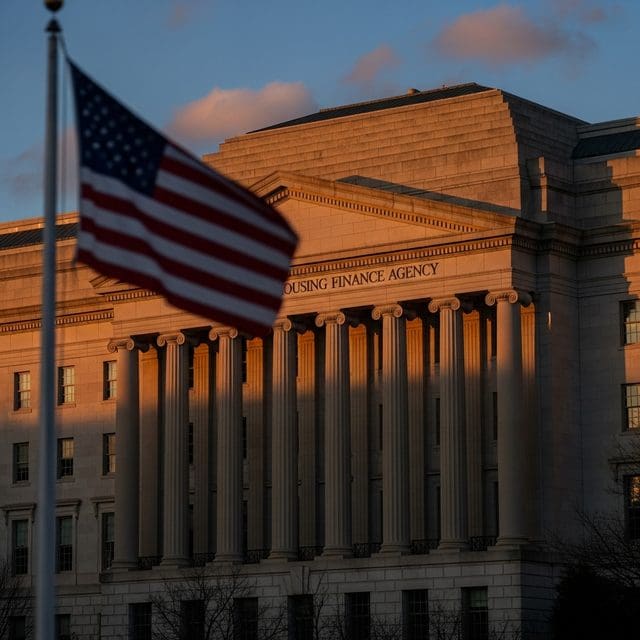
President Trump has appointed FHFA Director Bill Pulte as acting Director of National Intelligence, creating a leadership vacuum at the nation’s primary mortgage regulator.
The stability of the American housing market faces new bureaucratic uncertainty following President Trump’s decision to move Bill Pulte, Director of the Federal Housing Finance Agency (FHFA), into the role of acting Director of National Intelligence (DNI). The appointment, occurring ahead of Tulsi Gabbard’s June 30 departure, removes a central figure from the nation’s mortgage regulatory apparatus at a time when housing affordability remains a primary concern for taxpayers. Pulte’s shift appears to supersede an earlier May 22 announcement that Gabbard’s deputy, Aaron Lukas, would take the helm.
As head of the FHFA, Pulte was responsible for the oversight of Fannie Mae and Freddie Mac, the government-sponsored enterprises that underpin the secondary mortgage market and dictate credit flow to millions of homebuyers. His pivot to lead the 18-agency intelligence community, including the CIA and NSA, leaves the FHFA in a state of flux. To date, no successor has been publicly named to lead the housing regulator, raising questions about the continuity of federal mortgage policy and the administration’s strategy for stabilizing the cost of living.
This leadership shuffle occurs within a broader context of administrative transition. At the Department of Housing and Urban Development (HUD), Scott Turner is still navigating the confirmation process. Recent HUD budget testimony emphasized the necessity of homeownership access and program integrity. By pulling Pulte from the housing ecosystem to fill a national security vacancy, the administration has introduced a leadership gap in the infrastructure designed to protect private property rights and market-driven housing solutions. For the taxpayer, the concern is whether a housing specialist can effectively manage a sprawling intelligence apparatus while his former post remains vacant.
Inside the intelligence community, the move is a remarkable departure from tradition. Pulte, whose expertise is rooted in housing finance rather than global espionage, will now coordinate the nation’s defense against foreign threats. This includes managing election threats executives Dave Mastro and James Cangialosi as they prepare for the 2026 midterms. Recent reports from Check Point Software indicate that hackers are pivoting toward misinformation campaigns rather than direct ballot tampering, a nuanced threat landscape Pulte must now navigate without a traditional intelligence background.
The timing coincides with several high-stakes developments. On June 1, the Trump administration scrapped its $1.776 billion anti-weaponization fund following a federal court challenge and pushback from congressional Republicans concerned with fiscal overreach. Simultaneously, U.S. Central Command conducted self-defense strikes on Iranian radar and drone sites. These geopolitical pressures now fall under the purview of a director who was, until this week, focused on the solvency of the American mortgage market.
For the average citizen, the primary concern remains the domestic impact of these personnel shifts. The FHFA plays a vital role in determining credit availability and housing market health. With Pulte focused on national security briefs and the looming June 30 vacancy at the ODNI, the burden falls on the remaining federal bureaucracy to ensure housing policy does not stall. The administration has not yet clarified if Pulte will attempt to maintain his duties at the FHFA concurrently or if a new acting director will be installed to prioritize the housing sector during this transition.

Deborah Cole serves as a Senior Correspondent for Just Right News, where she spearheads the network’s coverage of Housing, Infrastructure, and Mobility. With a career defined by a commitment to rigorous reporting and a focus on the fundamental pillars of American community life, Deborah brings a principled perspective to the complex issues that dictate how and where we live. Her work is grounded in the belief that sound policy, fiscal responsibility, and respect for private property are the essential foundations of a prosperous society.
Originally from Boston, Massachusetts, Deborah’s upbringing in one of the nation’s oldest and most historically significant cities deeply influenced her professional trajectory. Growing up amidst the architectural legacy and dense urban planning of New England, she developed an early appreciation for the importance of durable infrastructure and the role of local tradition in shaping neighborhoods. Her perspective is informed by the classic American values of her hometown—hard work, community cohesion, and a healthy skepticism of top-down bureaucratic mandates that often overlook the unique needs of individual citizens.
Today, Deborah operates from her base in Austin, Texas, a city that serves as a primary laboratory for her reporting. Austin’s rapid expansion and its status as a hub for innovation and migration provide her with a front-row seat to the most pressing challenges in modern infrastructure and housing. From the Lone Star State, she chronicles the tensions between rapid growth and the preservation of the American Dream, often highlighting how market-driven solutions and deregulation can address the housing shortages that plague many of the country’s metropolitan areas.
At Just Right News, Deborah is perhaps best known for her signature feature series, “Where We Live.” Through this platform, she explores the intersection of public policy and private life, moving beyond mere statistics to tell the stories of families, small business owners, and local developers. Her reporting frequently highlights the importance of mobility—not just in terms of transportation and transit, but as a vehicle for economic opportunity and social stability. She remains a staunch advocate for the taxpayer, consistently scrutinizing government spending on large-scale projects and advocating for transparency in how infrastructure dollars are allocated.
Deborah’s beat is more than just a collection of policy topics; it is an investigation into the physical and legal structures that allow families to flourish. Whether she is reporting on the impact of zoning laws on suburban development or the necessity of maintaining the nation’s highway systems, her work is characterized by a dedication to the facts and a respect for the constitutional principles that protect the rights of homeowners.
As a Senior Correspondent, Deborah Cole continues to be a vital voice for Just Right News, providing the audience with the clarity and context needed to navigate an ever-changing landscape. Her reporting ensures that the values of individual liberty and local sovereignty remain at the forefront of the national conversation regarding the future of our cities and towns. Through her tireless efforts, she remains committed to informing the public on the issues that hit closest to home.