

The Pentagon is sharpening its ultimatum to NATO allies while President Trump reviews a tentative 60-day maritime truce with Iran to secure the Strait of Hormuz.
The Trump administration is executing a fundamental realignment of American global commitments, balancing a high-stakes maritime truce in the Middle East with a sharpened ultimatum to European defense partners. At the Shangri-La Dialogue in Singapore, Defense Secretary Pete Hegseth reaffirmed the United States’ commitment to its Pacific allies while delivering a blunt warning to NATO members failing to meet defense spending targets. Hegseth indicated that a failure to reach these benchmarks would result in a clear shift in how the Pentagon conducts business, sharpening previous threats of a reduced U.S. troop presence in Europe to prioritize the Indo-Pacific theater.
This strategic pivot comes as President Trump deliberates on a tentative memorandum of understanding (MOU) with Iran. Following a White House Situation Room meeting on May 29 to make a final determination on a ceasefire extension, the administration is weighing a deal that would extend the current truce by 60 days. The framework includes provisions to reopen commercial traffic through the Strait of Hormuz, ban Iranian-imposed tolls, and initiate a 30-day window for mine clearance. Crucially, the MOU aims to bring Iran’s 60% enriched uranium stockpile back into a diplomatic framework without formally reviving the architecture of the JCPOA. U.S. officials frame the MOU as a vehicle to require Iran to forswear nuclear weapons and address its enrichment levels, though Tehran has not yet formally acknowledged the deal.
Despite the diplomatic movement, the situation on the ground remains volatile. Recent Iranian drone strikes on a U.S. base in Kuwait and retaliatory U.S. strikes near Bandar Abbas underscore the fragility of the truce. President Trump has maintained that Iran is negotiating from a position of weakness, asserting on May 27 that the regime is “negotiating on fumes” and that the upcoming midterm elections will not affect his war strategy. The administration’s realist approach treats these negotiations as a tactical necessity to secure global energy corridors rather than a return to long-term rapprochement.
In Europe, the administration’s “peace through strength” rhetoric is forcing a recalibration of continental security. Dutch Deputy Prime Minister Dilan Yesilgoz-Zegerius characterized the U.S. criticism as a necessary wake-up call, arguing that Europe must build its own defense capacity to remain a viable partner. This shift occurs against a backdrop of intensifying competition with China, where the U.S. is moving toward a “home court” industrial policy. Market analysis suggests that the U.S.-China rivalry is driving a structural shift away from globalized supply chains toward bloc-based production for critical technologies, chips, and defense-linked inputs.
Beijing has responded to this shift by expanding its economic coercion toolkit, implementing new export controls on critical technologies ahead of a projected summit between President Trump and President Xi. While a temporary trade “truce” exists, China is positioning itself for sharper confrontation once current agreements expire in late 2026. Domestically, the administration continues to face legal hurdles, including a federal judge’s block on payouts from the $1.776 billion anti-weaponization settlement fund and rulings regarding voter registration rules in New Hampshire.
As the administration moves to finalize its determination on the Iran deal, the overarching strategy remains focused on reducing secondary theater burdens. By pressuring NATO to achieve self-sufficiency and seeking a managed cooling of Middle Eastern hostilities, the Pentagon aims to concentrate American power on the primary challenge in the Indo-Pacific. The coming days will reveal if the President signs off on the Iran MOU, a move that would temporarily stabilize the Strait of Hormuz while the broader pivot toward the Pacific continues to accelerate.

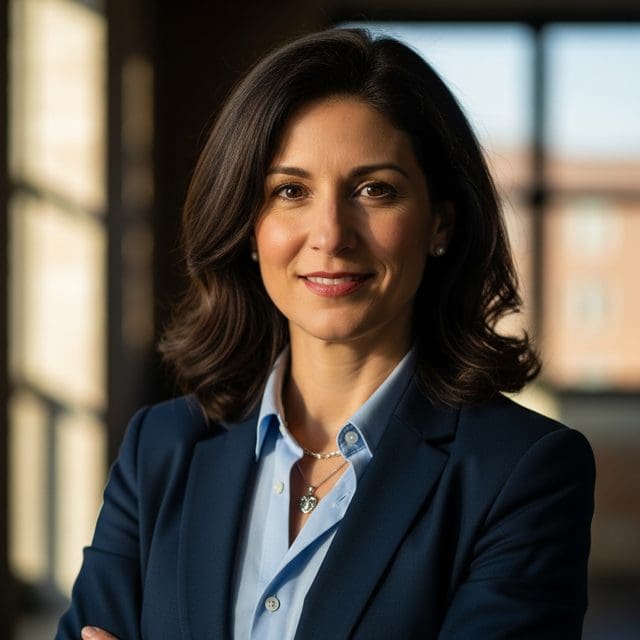
Olivia Kendall serves as the Senior Correspondent for Geopolitics, Defense, and Foreign Policy at Just Right News, where she provides a principled, conservative perspective on the complex forces shaping the global stage. With a career dedicated to deconstructing the intricacies of international relations, Kendall has become a trusted voice for readers who value national sovereignty, a robust military, and a foreign policy that prioritizes American interests above all else.
A native of Washington, D.C., Kendall’s professional journey is deeply rooted in her upbringing within the nation’s capital. Growing up in the epicenter of American political life, she developed an early and profound understanding of how policy is crafted and, more importantly, how it often fails to account for the values of the American heartland. This unique vantage point allowed her to witness firsthand the rise of globalist bureaucracies, fueling her commitment to reporting that champions the constitutional foundations of the United States. Her background as a British White American further informs her worldview, providing her with a keen appreciation for the Western tradition and the enduring importance of the “Special Relationship” in maintaining global stability.
Now based in Arlington, Virginia, Kendall operates from the doorstep of the Pentagon and the heart of the nation’s defense establishment. Her proximity to the decision-makers in the military and intelligence communities allows her to provide boots-on-the-ground reporting that is both timely and deeply informed. For Kendall, Arlington is more than just a base of operations; it is a daily reminder of the sacrifices made by the men and women in uniform. This connection to the defense community drives her rigorous coverage of military readiness and her advocacy for a “peace through strength” approach to diplomacy.
At Just Right News, Kendall is perhaps best known for her acclaimed feature series, “The World’s Shadow on America.” In this ongoing project, she explores the direct correlation between international developments and the daily lives of American citizens. Whether she is analyzing the encroachment of foreign adversaries in domestic supply chains or the impact of international treaties on local economies, Kendall’s work serves as a vital bridge between distant geopolitical shifts and their consequences at home. She rejects the notion that foreign policy is an abstract concern for elites, instead proving that what happens in the corridors of power in Brussels or Beijing has a tangible “shadow” that falls across every American doorstep.
Throughout her tenure, Kendall has remained a steadfast critic of international overreach and a vocal proponent of a clear-eyed, realistic foreign policy. She brings a sharp analytical mind to her beat, often challenging the prevailing narratives of the mainstream media to uncover the underlying truths that affect national security. Her reporting is characterized by a refusal to compromise on the truth and a dedication to the idea that a strong, secure America is the world’s best hope for liberty. As a Senior Correspondent, Olivia Kendall continues to lead the charge in providing the essential context and conservative insight necessary to navigate an increasingly volatile world.