

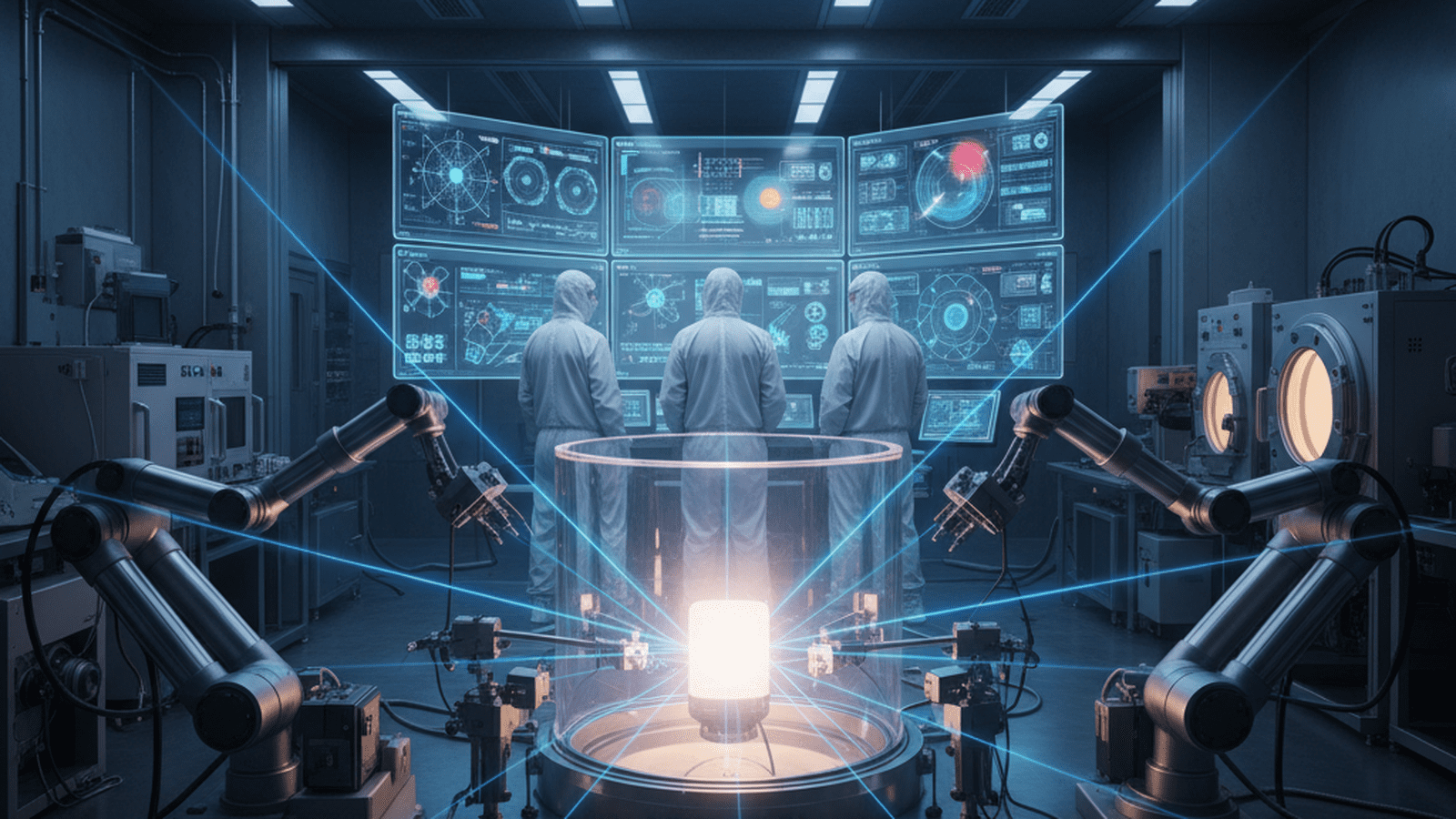
Researchers at two U.S. national laboratories have developed a new metallic alloy that maintains extreme toughness and strength at temperatures exceeding 1,200 degrees Celsius. This refractory high-entropy alloy overcomes traditional material limitations, offering a path toward more efficient aerospace engines and advanced energy systems.
TLDR: Scientists at Berkeley and Oak Ridge National Laboratories have created a refractory high-entropy alloy that remains both strong and ductile at extreme temperatures. By balancing niobium, tantalum, titanium, and hafnium, the material resists fracturing under heat that would compromise most modern aerospace metals, potentially revolutionizing jet engine efficiency.
Researchers from Lawrence Berkeley National Laboratory and Oak Ridge National Laboratory have achieved a significant milestone in materials science by engineering a new refractory high-entropy alloy that maintains unprecedented toughness and strength at extreme temperatures. This innovative material, composed of nearly equal atomic proportions of niobium, tantalum, titanium, and hafnium, represents a departure from traditional metallurgy. While conventional alloys typically consist of one primary metal with small amounts of secondary elements, high-entropy alloys utilize a complex, multi-element mixture to create unique atomic structures that offer superior mechanical performance. This specific combination allows the material to remain stable under conditions that would cause most modern metals to melt or deform.
The primary challenge that has long plagued metallurgists is the inherent trade-off between a material’s strength and its fracture toughness. In most engineering materials, increasing strength often leads to increased brittleness, making the material prone to catastrophic failure under stress. This problem is significantly exacerbated at high temperatures, where most modern metals soften, lose their structural integrity, or undergo rapid oxidation. The newly developed alloy, however, maintains its resilience at temperatures reaching 1,200 degrees Celsius—a threshold that is critical for the next generation of high-performance industrial applications.
To investigate the underlying mechanisms of this alloy’s performance, the research team utilized the Spallation Neutron Source at Oak Ridge National Laboratory. This world-class facility allowed the scientists to observe the material’s atomic structure in real-time while it was subjected to mechanical stress. The resulting data revealed a unique “kinking” mechanism within the alloy’s crystal lattice. When stress is applied, the atoms shift in a specific, coordinated manner that prevents microscopic cracks from propagating through the material. Instead of fracturing, the alloy absorbs the energy through internal reorganization, allowing it to remain ductile even under extreme thermal and mechanical loads.
The implications for the aerospace industry are particularly profound. Current jet engines and gas turbines are largely limited by the thermal properties of nickel-based superalloys. These materials have reached their operational limits, restricting the maximum temperature at which engines can run. By integrating these new refractory alloys into turbine blades and other high-heat components, engines could operate at significantly higher temperatures. According to the laws of thermodynamics, increased operating temperatures directly correlate with improved fuel efficiency and a substantial reduction in carbon emissions. Furthermore, the enhanced durability of this material could extend the operational lifespan of critical aerospace components, thereby reducing maintenance costs and improving safety for both commercial and military aviation.
Beyond the skies, this discovery holds immense promise for the global energy sector. Advanced nuclear reactors, including fusion and next-generation fission designs, as well as concentrated solar power plants, require structural materials that can withstand intense heat and corrosive environments for decades. The inherent stability of this alloy suggests it could serve as a foundational material for these sustainable energy systems. Its ability to remain ductile at high temperatures ensures that structural components can withstand sudden pressure changes or thermal shocks without the risk of brittle fracture.
The development of this alloy was not a matter of trial and error but the result of sophisticated computational modeling. By simulating millions of atomic interactions, the researchers were able to predict which elemental combinations would yield the most stable and resilient structures before moving to physical synthesis. This data-driven approach significantly accelerated the discovery timeline, demonstrating the power of integrating high-performance computing with experimental metallurgy. Moving forward, the team plans to investigate the long-term oxidation resistance of the alloy and explore the potential of additive manufacturing techniques to create the complex geometries required for industrial-scale production.

Mason Reed serves as a Staff Writer for Just Right News, where he spearheads the Future Frontiers & Special Projects desk. In an era defined by rapid technological shifts and evolving social landscapes, Mason provides a steady, principled voice, examining the innovations of tomorrow through the lens of traditional American values. His work is most prominently featured in his signature series, “The Next Horizon,” where he explores the intersection of emerging technology, national sovereignty, and the preservation of individual liberty.
A native of San Diego, California, Mason’s worldview was shaped by the unique culture of his hometown. Growing up in a region defined by its strong military presence and its history of maritime industry, he developed a deep-seated respect for the institutions that provide national stability and the entrepreneurial spirit that drives the American economy. This upbringing instilled in him a belief that true progress is not found in discarding the past, but in building upon a foundation of proven principles. His reporting often reflects this San Diego influence, emphasizing the importance of a robust national defense and the necessity of maintaining a competitive edge in the global marketplace.
Now based in San Francisco, Mason operates from the heart of the world’s technological engine. Living and working in the Bay Area provides him with a front-row seat to the advancements—and the ideological challenges—emanating from Silicon Valley. While many in the region embrace a “move fast and break things” mentality, Mason’s reporting serves as a vital counterweight. He offers Just Right News readers a “boots on the ground” perspective, documenting how radical local policies and the concentration of tech power impact the everyday lives of citizens. His proximity to the industry allows him to cut through the marketing jargon of big tech to uncover the real-world implications for privacy, free speech, and the nuclear family.
In his “Future Frontiers” beat, Mason tackles complex subjects ranging from the ethics of artificial intelligence to the burgeoning private space race. He approaches these topics with a healthy skepticism toward centralized bureaucracy, championing instead the decentralized innovations that empower individuals. Through “The Next Horizon,” he highlights the pioneers and thinkers who are working to ensure that the future remains a place where human dignity and constitutional rights are protected. He believes that the rapid pace of change requires more than just technical expertise; it requires a moral compass rooted in the Western tradition.
Throughout his tenure at Just Right News, Mason has remained committed to the idea that the future is something to be shaped, not merely accepted. His writing is characterized by a rigorous defense of American exceptionalism and a belief that the country’s best days lie ahead, provided it remains true to its founding ideals. Whether he is investigating the impact of automation on the American workforce or profiling the next generation of aerospace engineers, Mason Reed ensures that his readers are equipped with the insights they need to navigate a changing world with confidence and clarity.