

Hawaii’s aggressive climate litigation against energy companies is sparking a constitutional debate over state authority, interstate commerce, and the limits of the judiciary in setting global policy.
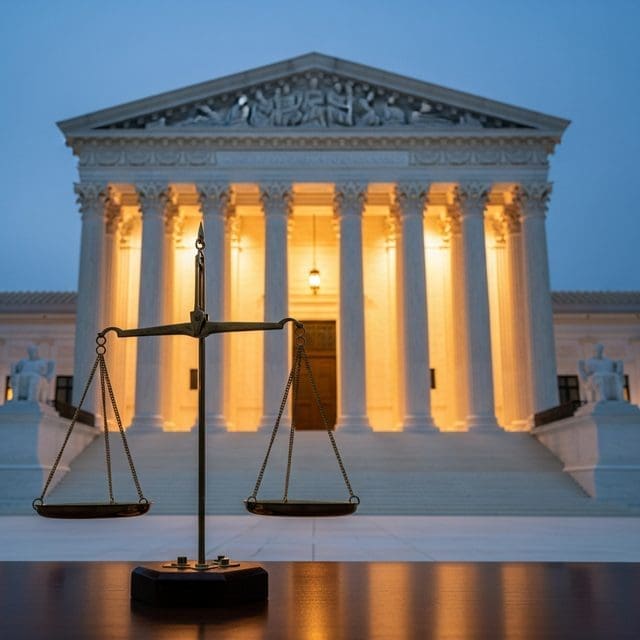
As the Supreme Court of the United States enters the final stretch of its current term, a critical constitutional tension is mounting between state-level litigation and federal supremacy. In Hawaii, a series of aggressive climate-liability lawsuits against fossil-fuel companies is moving through state courts, raising fundamental questions about whether a single state can effectively regulate global commerce through the judiciary. While the High Court previously declined to halt Honolulu’s specific suit in its early stages, the continued advancement of these ‘Aloha State’ filings suggests a looming collision with the federal government’s exclusive authority over interstate and foreign affairs.
The core of the legal dispute rests on the doctrine of federal preemption. Under the Supremacy Clause and the Commerce Clause, the Constitution vests the power to regulate matters of national and international importance in the federal government. Critics of the Hawaii litigation, including legal scholars John Yoo and Michael Toth, argue that allowing state courts to adjudicate global climate harms creates a fragmented regulatory environment. Such a patchwork of local rulings threatens to undermine the uniform standard intended by the Founders, effectively allowing state judges to dictate national energy policy under the guise of local tort law.
This judicial activity is not limited to the Pacific. Hawaii is one of at least ten states, alongside various municipalities, leveraging deception-based claims to seek billions in damages, disgorgement, and permanent injunctions against energy producers. These plaintiffs argue that fossil-fuel companies misled the public about environmental impacts, yet the remedy they seek—massive financial penalties and operational changes—functions as a regulatory mechanism. The Trump administration has countered this trend by maintaining a robust federal preemption campaign, asserting that such disputes belong in federal court where the Clean Air Act and other statutory frameworks provide the exclusive remedy for environmental grievances.
Questions of judicial impartiality have also surfaced as these cases progress. Reports indicate that some state judges and elected officials in Hawaii have received campaign support from the very plaintiffs’ firms driving the litigation. While these concerns have not yet culminated in formal misconduct proceedings, they provide a potential basis for future Due Process challenges. From an originalist perspective, the integrity of the bench is paramount; any appearance that the judiciary is being used as a political tool to bypass the legislative process threatens the separation of powers. If state courts are seen as hospitable venues for partisan policy goals, the neutral application of the law is compromised.
While the climate cases represent a long-term challenge to the constitutional order, the Supreme Court is currently managing a heavy docket of immediate concerns. Decisions are expected this term on the scope of presidential power, administrative authority, and the limits of federal agency reach. These rulings will likely provide the doctrinal clarity needed to address the Hawaii cases. For instance, if the Court continues to rein in the ‘administrative state’ and insists on clear congressional authorization for major policy shifts, it stands to reason that it will eventually view state-level attempts to regulate the global climate with similar skepticism.
In the broader landscape of American law, the outcome of these challenges will define the boundaries of state sovereignty in the 21st century. The Constitution was designed to protect American liberty by ensuring that the rule of law remains a fixed standard, not a moving target for local litigation. As these cases move toward a final reckoning, the judiciary must decide whether to uphold the historical intent of the Founders or allow the erosion of the federal system through a series of localized judicial mandates. For those who value the Rulebook of Power, the answer must lie in a return to constitutional first principles.

Lila Hayes serves as a Staff Writer for Just Right News, where she anchors the “Courts, Law, and Constitutional Order” beat. Her work is defined by a steadfast commitment to the foundational principles of the American republic and a rigorous defense of the legal frameworks that ensure national stability. As a primary voice for the outlet, she provides readers with a clear-eyed analysis of the judiciary, focusing on the importance of originalism and the preservation of the separation of powers.
Lila’s perspective was forged in the American heartland. Raised in St. Louis, Missouri, she grew up in a Hispanic household where the values of hard work, faith, and respect for the law were paramount. Her upbringing instilled in her a deep appreciation for the American Dream and the legal protections that make it possible. This Missouri background remains a cornerstone of her reporting, providing a grounded, common-sense counter-narrative to the often-insular legal circles of the coastal elite. She understands that the decisions made in high-court chambers have real-world consequences for families and small business owners across the country.
At Just Right News, Lila has become widely recognized for her signature feature series, “The Rulebook of Power.” In this ongoing project, she delves into the mechanics of the federal government, examining how administrative overreach and judicial activism can threaten the delicate balance of the Constitution. She approaches her beat with the tenacity of a veteran journalist and the precision of a legal scholar, consistently advocating for a judiciary that interprets the law as written rather than legislating from the bench. For Lila, the Constitution is not a “living” document subject to the whims of modern social trends; it is a fixed standard that ensures the government remains the servant of the people, not their master.
Now based in Philadelphia, Pennsylvania, Lila finds herself at the very epicenter of American constitutional history. Living and working in the city where the Founders drafted the documents she defends daily provides a constant source of inspiration. The historic halls and landmarks of Philadelphia serve as a daily reminder of the high stakes involved in her reporting. Her presence in the city allows her to bridge the gap between the historical intent of the law and its contemporary application, ensuring that the legacy of the Founding Fathers remains central to the national conversation.
Throughout her career, Lila has remained dedicated to the idea that a free society requires an informed citizenry and a transparent legal system. Her reporting is more than just a collection of headlines; it is a defense of the constitutional order that has sustained the nation for over two centuries. By focusing on the “Rulebook of Power,” she ensures that her readers understand not just what is happening in the courtrooms, but why those decisions matter for the future of American liberty. Lila Hayes continues to be a vital voice for those who believe that the law should be a shield for the citizen and a constraint on the state.