

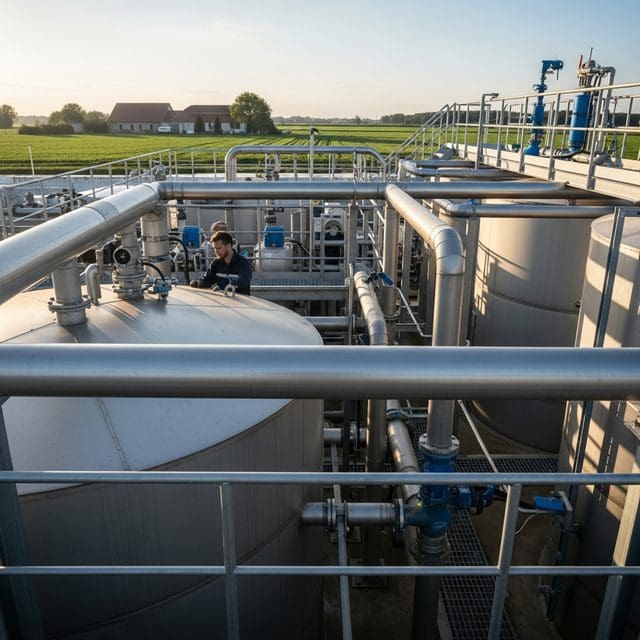
The EPA is broadening its oversight of drinking water contaminants, targeting microplastics and pharmaceuticals while the FDA maintains high-intensity enforcement on imported food products.
The Environmental Protection Agency is signaling a significant shift in its oversight of the nation’s drinking water, moving to prioritize a broad array of emerging contaminants that have long operated in a regulatory gray zone. Under the draft Contaminant Candidate List 6, the agency has identified 75 chemicals and nine microbes for potential regulation, with a newfound focus on microplastics, pharmaceuticals, and the persistent class of chemicals known as PFAS. This expansion comes at a time when local water districts are already grappling with aging infrastructure and the rising costs of filtration. By adding disinfection byproducts and various industrial chemicals to its priority list, the EPA is laying the groundwork for future mandates that could necessitate expensive technological upgrades for municipal and private water systems alike.
While the agency frames these moves as essential for public health, the burden of implementation often falls on local taxpayers and rural cooperatives who must navigate the technical complexities of removing microscopic pollutants. The inclusion of pharmaceuticals in the watchlist highlights a growing concern over the presence of trace medications in the water cycle, a challenge that traditional treatment plants were not originally designed to handle. For the American family, this means the safety of the kitchen tap is increasingly tied to federal lists that grow longer each year, often without the immediate funding necessary to address the identified risks at the local level.
On the food safety front, the Food and Drug Administration has maintained a posture of heightened enforcement rather than issuing new sweeping domestic recalls. Recent actions have focused heavily on the border, with inspectors stepping up scrutiny of imported cheese, seafood, and dried peppers as of mid-May 2026. These targeted enforcement actions suggest a strategy of containment at the point of entry, aiming to prevent contaminated agricultural products from reaching American dinner tables. This is particularly relevant as global trade remains volatile; for instance, while oil prices dropped over 10 percent following the reopening of the Strait of Hormuz in April, the logistical chains for perishable food remain under intense regulatory pressure to ensure that cost-cutting measures abroad do not result in pathogens at home.
Despite the lack of a major nationwide recall this month, the agricultural sector remains under pressure from both regulators and activists. Ongoing litigation regarding pesticide use continues to challenge traditional farming practices, with activists pressing the administration over the long-term environmental impacts of common agricultural chemicals. Simultaneously, a watchdog lawsuit alleges the USDA has been slow to release records concerning agricultural contamination following the Ohio train derailment. This lack of transparency remains a point of contention for farmers who rely on clean soil and water for their livelihoods and feel that federal agencies are more interested in bureaucratic shielding than in providing the raw data necessary for local recovery.
In the private sector, innovation is being tested against these new regulatory hurdles. While some international farming operations are being recognized for environmental efficiency, American producers are increasingly caught between the need for high-yield productivity and the expanding reach of federal environmental standards. The recent failure of Senator Bill Cassidy to advance in the Louisiana GOP primary underscores a shifting political landscape where voters are demanding more direct accountability and less federal overreach. As the EPA moves from monitoring to potential enforcement of its new contaminant list, the balance between environmental stewardship and local sovereignty will remain a central conflict in the American heartland. Protecting the food and water supply requires a grounded approach that prioritizes practical infrastructure over aspirational regulation, ensuring that the costs of a cleaner environment do not bankrupt the very families these policies are meant to protect.

Eric Nolan serves as the Senior Correspondent for Food, Water, and Environmental Health at Just Right News, where he brings a principled, common-sense perspective to the most fundamental issues facing the American public. With a career dedicated to uncovering the truth behind the policies that govern our natural resources, Eric has become a trusted voice for readers who value traditional stewardship over bureaucratic overreach. His reporting is defined by a commitment to the idea that true environmentalism is rooted in the protection of the American family and the preservation of the nation’s agricultural heritage.
Raised in Fresno, California, Eric’s worldview was shaped in the heart of the San Joaquin Valley. Growing up in one of the world’s most productive agricultural hubs, he witnessed firsthand the vital connection between the land, the water, and the dinner table. In Fresno, he saw the resilience of farmers and the devastating impact that distant, top-down regulations can have on local communities. This upbringing instilled in him a deep respect for the producers who feed the country and a lifelong skepticism toward the alarmist narratives often pushed by mainstream media. For Eric, environmental health is not an abstract political talking point; it is a matter of ensuring that the people who work the land have the freedom and the resources to do so effectively.
Now based in Eugene, Oregon, Eric operates from a unique vantage point in the Pacific Northwest. Living in a region often defined by intense environmental debate, he provides a necessary counter-narrative to the prevailing trends of the area. From his base in Eugene, he monitors the shifting tides of federal and state policies, ensuring that the voices of rural citizens and property owners are not drowned out by urban activism. His reporting often bridges the gap between the rugged realities of the outdoors and the legislative halls where decisions are made, offering a grounded perspective that prioritizes local sovereignty and practical solutions.
As the lead for the acclaimed feature series “Earth on the Table,” Eric explores the intricate journey of the American food supply. He tackles critical issues such as water rights, soil health, and food security through a lens of national stability and individual liberty. He believes that a healthy environment and a thriving economy are not mutually exclusive, but rather two sides of the same coin of national prosperity. His work consistently highlights how innovation and private-sector ingenuity are the most effective tools for ensuring clean water and a safe food supply, rather than the expansion of the administrative state.
At Just Right News, Eric’s reporting serves as a vital resource for those who seek accountability and transparency. Whether he is investigating the impact of federal land management on local economies or examining the safety of the national food infrastructure, his work remains anchored in the values of heritage and hard work. Eric Nolan continues to be a leading voice in environmental journalism, championing the belief that the best way to protect our natural resources is to empower the people who live and work closest to them.