

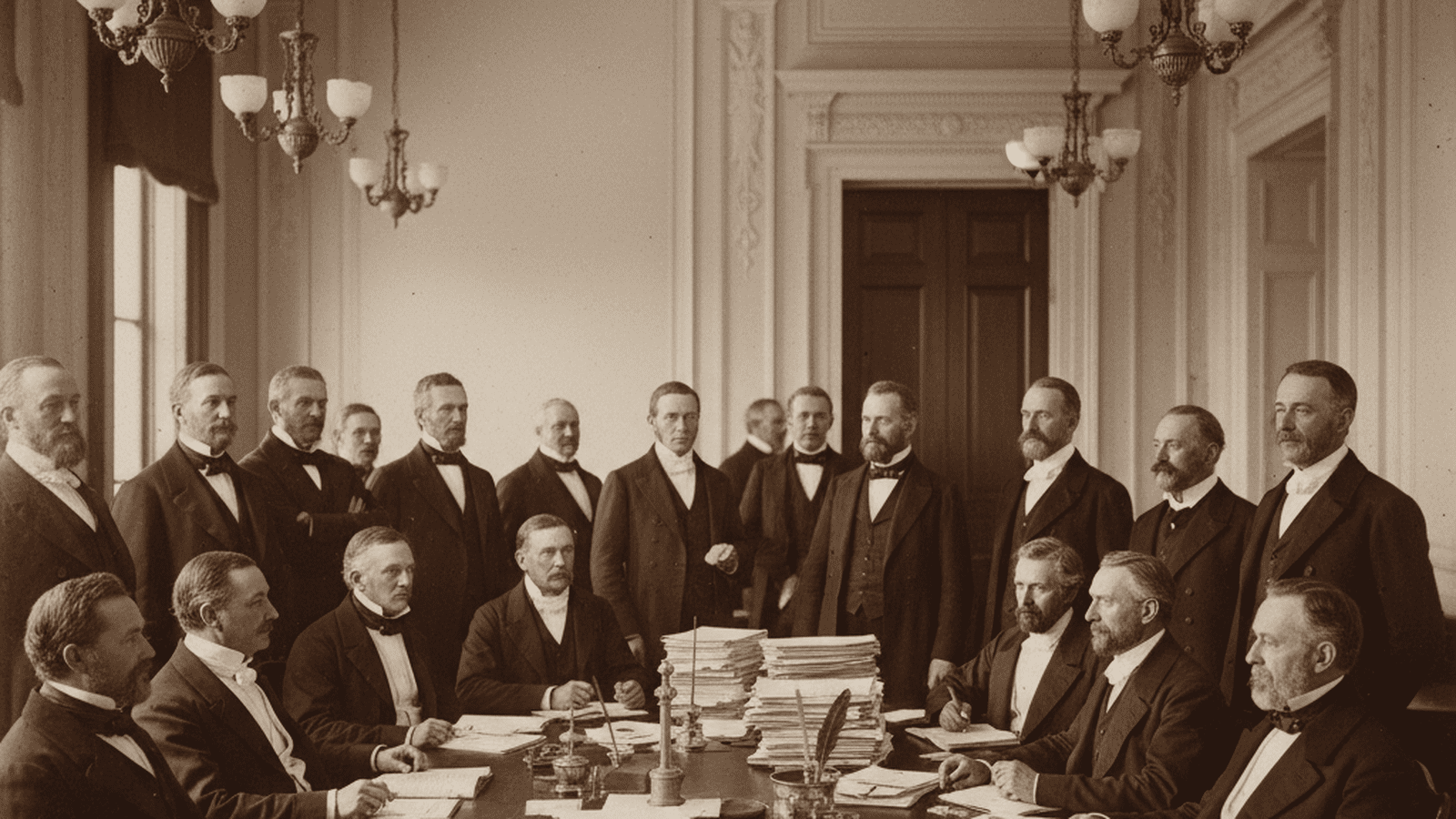
In the early 1850s, the Gardiner Claim scandal rocked Washington, D.C., revealing a massive fraudulent scheme to embezzle funds from the U.S. Treasury. The investigation exposed how high-ranking officials and lobbyists exploited the Mexican-American War claims process for personal gain.
TLDR: The 1852 Gardiner Claim investigation exposed a $500,000 fraud against the United States government involving forged documents and political influence. The scandal implicated Treasury Secretary Thomas Corwin and led to the first significant federal laws restricting government officials from profiting as agents for private claimants against the Treasury.
In the wake of the Mexican-American War, the United States faced the complex task of settling the financial obligations of the defeated Mexican government to American citizens. Under the terms of the 1848 Treaty of Guadalupe Hidalgo, the U.S. government agreed to assume up to $3.25 million in liquidated claims. This massive pool of federal money created a magnet for speculators, lawyers, and fraudsters in Washington, D.C. Among the most notorious of these schemes was the Gardiner Claim, a scandal that would eventually expose the deep-seated vulnerabilities of the antebellum political system and lead to the nation’s first significant anti-corruption laws.
The architect of the fraud was George A. Gardiner, a dentist who had practiced in Mexico. In 1849, Gardiner submitted a claim for $428,750, alleging that the Mexican government had expelled him from his lucrative silver mine, the “Laguna de la Puerta,” and destroyed his property during the war. To bolster his claim, Gardiner produced a sophisticated collection of forged documents, including mining titles, official seals, and sworn affidavits from purported witnesses. The Board of Commissioners, overwhelmed by hundreds of claims and lacking the resources to conduct on-site inspections in remote Mexican territories, approved the payout in 1851. Gardiner received nearly half a million dollars—a staggering sum at the time.
The scandal took on a high-stakes political dimension when it was revealed that Thomas Corwin, the Secretary of the Treasury under President Millard Fillmore, was intimately connected to the claim. Before joining the cabinet, Corwin had served as Gardiner’s legal counsel and had purchased a one-fourth interest in the claim for $22,000. Just before being sworn in as Secretary, Corwin sold his interest for a profit of approximately $80,000. While Corwin claimed he had no knowledge of the fraud, the fact that the head of the Treasury had personally profited from a claim paid out by the government created an immense public outcry. Critics argued that even if Corwin was not a co-conspirator, the “contingent fee” system allowed officials to trade on their political influence.
In 1852, the House of Representatives launched a formal investigation. A select committee was tasked with uncovering the truth behind the “Laguna de la Puerta.” The inquiry was exhaustive; investigators were dispatched to Mexico, where they discovered that the mine Gardiner described simply did not exist. Local officials testified that the documents Gardiner presented were clever fabrications. The committee’s report painted a damning picture of a capital city overrun by “claim agents” who exploited their connections to siphon money from the public till.
The consequences for the conspirators were tragic and swift. George Gardiner was indicted for fraud and perjury. In 1854, as the evidence against him became insurmountable and he faced a lengthy prison term, Gardiner committed suicide by swallowing strychnine. His brother, John Charles Gardiner, was also implicated and prosecuted. While Thomas Corwin was ultimately exonerated of criminal intent by the committee, his political reputation was permanently tarnished, ending his aspirations for the presidency.
The legacy of the Gardiner Claim, however, was transformative for American governance. The scandal served as the primary catalyst for the “Act to Prevent Frauds upon the Treasury of the United States,” passed in February 1853. This landmark legislation was the first to prohibit federal employees and members of Congress from acting as agents or attorneys for private claimants against the government. It effectively ended the era where high-ranking officials could legally moonlight as lobbyists against their own departments. By establishing strict penalties for bribery and perjury in the claims process, the Act marked a pivotal step toward the professionalization of the federal civil service and the establishment of modern conflict-of-interest standards.
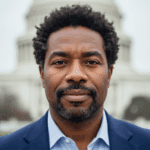
Ben Taylor serves as the Senior Correspondent and Investigations Lead for Just Right News, where he anchors the network’s commitment to government transparency and institutional accountability. With a career defined by a relentless pursuit of the facts, Taylor spearheads the acclaimed feature series “The Paper Trail,” a deep-dive investigative column that prioritizes primary source documentation over political rhetoric. Based in the heart of the nation’s capital, he has earned a reputation as one of the most formidable investigative journalists in Washington, D.C., known specifically for his mastery of public records and the Freedom of Information Act.
Taylor’s approach to journalism is deeply rooted in his upbringing in Kansas City, Missouri. Growing up in the “Show Me State,” he developed a healthy skepticism of centralized power and a profound respect for the common-sense values of the American heartland. This Midwestern foundation informs his reporting today, as he bridges the gap between the complex machinations of federal bureaucracy and the everyday concerns of citizens across the country. For Taylor, investigative reporting is not about chasing headlines; it is about ensuring that the government remains answerable to the people it serves.
As an African American man working within the conservative media landscape, Taylor brings a principled perspective to his beat. He views the Constitution and the right to information as the ultimate equalizers in a free society. His work often highlights how bureaucratic overreach and lack of transparency disproportionately affect individual liberties. By focusing on the “paper trail,” Taylor strips away the spin of partisan talking points, instead providing Just Right News readers with the raw data and internal communications that reveal how their tax dollars are spent and how policy decisions are actually made.
In his role as Investigations Lead, Taylor oversees a team dedicated to uncovering the stories that mainstream outlets often overlook. Whether he is auditing federal spending, investigating regulatory overreach, or exposing inefficiencies within the administrative state, his methodology remains consistent: follow the evidence wherever it leads. His presence in Washington, D.C., allows him to maintain a constant watch over the halls of power, yet he remains steadfastly connected to his roots, ensuring his reporting reflects the clarity and directness of his Missouri home.
Throughout his tenure at Just Right News, Taylor has become a vital voice for those who demand integrity in public office. He believes that a well-informed electorate is the strongest defense against government overreach, and he has dedicated his career to providing the public with the tools they need to hold their leaders accountable. Through “The Paper Trail” and his broader investigative work, Ben Taylor continues to set the standard for rigorous, document-driven journalism that champions the values of transparency, individual responsibility, and the rule of law.