


High-stakes exam leaks in India and program cuts at Seattle Central College highlight a growing disconnect between educational institutions and the workforce they serve.
The fundamental promise of education as a reliable ladder for upward mobility is facing a severe stress test. Across the globe, the systems designed to measure merit and provide practical skills are buckling under administrative failure, fiscal instability, and criminal interference. These developments leave students to navigate a landscape where personal responsibility is frequently met with institutional incompetence.
In India, the integrity of the NEET-UG 2026 medical entrance exam has collapsed into a national scandal. The Central Bureau of Investigation recently registered a First Information Report following allegations of a massive paper leak that surfaced on May 3. Invoking the new Public Examination Act, authorities are grappling with a crisis where students admit their families “bought the paper.” Investigators have traced a network involving Telegram channels and organized rackets stretching to Rajasthan. This breach mocks the millions of aspirants who rely on a fair process to enter the medical profession, suggesting that access is increasingly a matter of wealth rather than work.
Seattle Central College illustrates a different institutional failure. While the college celebrates instructor Stacey Levine as a Pulitzer finalist, the school is mired in fiscal instability. As the district conducts a presidential search through August, it is weighing the closure of the Wood Technology Center. Such a move would end enrollments in carpentry and boat building this fall, cutting off vital pathways to skilled trades. The tension between Levine’s prestige and the precarious reality of contingent teaching reflects a broader trend: institutions are often more focused on accolades than the ground-level training required for student success.
In the K-12 sector, the focus is shifting from high-tech surveillance to basic operational discipline. Experts warn that 2026 must be the year of execution over acquisition. New state laws, such as those in Pennsylvania, are tightening safety requirements, yet the real challenge remains the gap between written protocols and actual staff training. There is a growing concern that districts over-invest in detection technologies while failing to ensure adults can function under stress. These measures now collide with local debates over student phone bans as schools struggle to balance communication with security.
Accountability remains elusive even in private settings. At Mayville High School, a former teacher was exposed for maintaining inappropriate photos of a student, highlighting a recurring theme: the adults charged with stewarding these institutions frequently fail to uphold necessary standards. This failure of leadership is particularly frustrating when contrasted with the efforts of private organizations like the Elks National Foundation, which awarded $4.9 million in scholarships this month to 900 seniors, rewarding the individual achievement that institutions seem unable to protect.
There are glimmers of common-sense reform. The USDA recently finalized a rule restoring whole and 2% milk to school programs, favoring parental choice over rigid restrictions. Additionally, Kid Spark Education launched a STEM initiative for Head Start programs, focusing on hands-on learning. However, these successes remain outliers in a season defined by the erosion of the educational contract. If the goal of education is to build human capital, the current trajectory suggests a system struggling to maintain the integrity required to fulfill its mission.
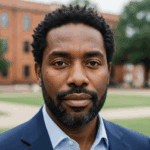
Daniel Owens serves as a Senior Correspondent for Just Right News, where he leads the newsroom’s coverage of Education, Workforce, and Upward Mobility. In an era where the national conversation often overlooks the practical foundations of success, Owens brings a principled perspective to the forefront of the media landscape. His work is defined by a commitment to the idea that a strong society is built on the pillars of quality education, a robust work ethic, and the removal of bureaucratic barriers to individual achievement.
Born and raised in Cleveland, Ohio, Owens’s worldview was shaped by the industrial landscape of the Midwest. Growing up in a city known for its grit and resilience, he witnessed firsthand the transformative power of steady employment and the devastating effects of economic stagnation. This background instilled in him a deep respect for the American worker and a healthy skepticism toward top-down government solutions that often fail to reach the communities they intend to help. As an African American man who has navigated the path to professional success, Owens approaches his beat with a nuanced understanding of how meritocracy and personal responsibility intersect with opportunity. He frequently draws on his roots to highlight the importance of family stability and community-led initiatives in fostering the next generation of leaders.
At Just Right News, Owens is the architect of the acclaimed feature series, “The Learning Curve.” Through this platform, he explores the evolving landscape of American schooling, from the rise of the school choice movement to the revitalization of trade schools and vocational training. He frequently challenges the status quo of higher education, advocating for a return to academic rigor and the practical alignment of degrees with market demands. For Owens, education is not merely about obtaining credentials; it is about equipping young people with the tools necessary to lead self-sufficient, meaningful lives. His reporting on “The Learning Curve” has become essential reading for parents and policymakers who believe that educational competition and parental rights are the keys to a brighter future.
Now based in Raleigh, North Carolina, Owens finds himself at the heart of one of the nation’s most dynamic regions for innovation and growth. Raleigh’s unique blend of traditional values and a fast-paced economy provides the perfect backdrop for his reporting on the modern workforce. From the tech hubs of the Research Triangle to the rural communities of the South, he tracks how shifts in the economy are impacting families and local industries. His reporting often highlights the success stories of entrepreneurs and workers who are thriving by embracing the values of hard work and innovation.
Throughout his career, Daniel Owens has remained a steadfast voice for the student seeking a better path and the worker striving for a better life. His reporting for Just Right News serves as a vital resource for readers who value common-sense solutions to the challenges of the 21st-century economy. By focusing on the intersection of policy and the human spirit, Owens continues to provide a roadmap for how individuals and communities can achieve lasting upward mobility.