

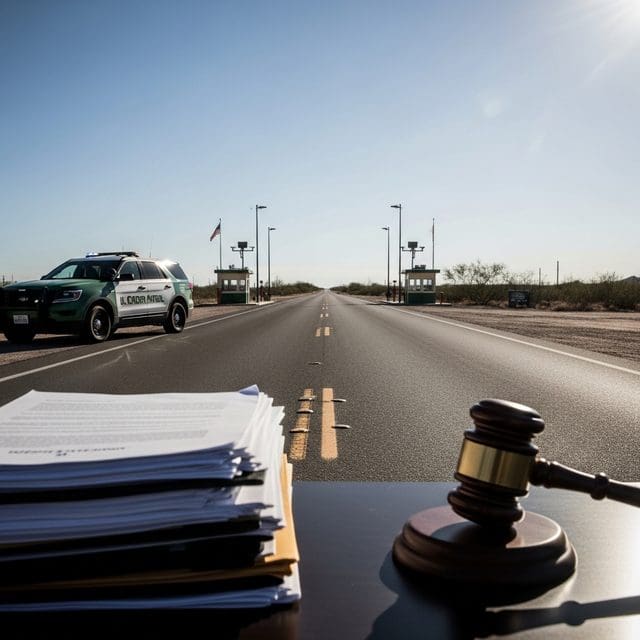
Federal courts have struck down key asylum restrictions as the administration implements enhanced background checks and visa freezes, creating a volatile environment for national immigration policy.
The Trump administration’s efforts to fundamentally restructure the U.S. asylum system face significant judicial headwinds following two major federal court rulings that challenge the current enforcement framework. On April 24, a D.C. Circuit panel ruled that the administration’s Day 1 proclamation, which effectively shuttered asylum access at the southern border, was unlawful. The court rejected the executive use of Section 212(f) of the Immigration and Nationality Act to summarily deport asylum seekers, a core pillar of the current administration’s strategy to maintain border integrity. The administration is expected to seek an en banc review or appeal to the Supreme Court, but the ruling creates immediate legal uncertainty for agents on the ground.
This legal setback was compounded on May 9 when a separate federal court struck down the “Circumvention of Lawful Pathways” rule. Originally a Biden-era policy maintained by the current executive, the rule restricted asylum eligibility for those who passed through third countries without seeking protection there first. Its removal potentially allows detained migrants previously deemed ineligible to seek release and re-apply for protection. For local communities and enforcement agencies, this shift threatens to reopen processing channels that the administration had sought to close permanently.
Despite these legal challenges, operational data shows that border apprehensions remain at their lowest levels in decades. The first half of fiscal year 2026 saw only 42,757 apprehensions. While March 2026 recorded 8,300 detected crossings—a 15.2% increase year-on-year reflecting typical seasonal trends—the total volume remains on track for the lowest annual figures since 1967. This sustained reduction is attributed to a combination of mass-deportation policies and the broader deterrent effect of the administration’s posture, even as the courts begin to chip away at the specific legal mechanisms used to achieve these numbers.
Beyond the border, the administration is tightening legal immigration channels through aggressive administrative maneuvers. A January 2026 suspension of immigrant visas for nationals from 75 countries remains in effect, estimated to cut legal immigration roughly in half. While this policy is currently being litigated in the Southern District of New York, the administration has shown some flexibility; on May 3, it partially eased the freeze for foreign medical doctors to address critical physician shortages. However, broader application backlogs and country-based suspensions remain intact for the general population.
Administrative shifts are also affecting nonimmigrant applicants through new, rigorous screening protocols. Late April State Department guidance now obliges consular officers to verbally ask all nonimmigrant visa applicants—including tourists, students, and workers—if they have suffered mistreatment or fear harm at home. Under the new rule, any affirmative answer or a refusal to answer triggers an automatic visa denial. Critics suggest this will chill potential asylum claims from those entering on legal visas, while proponents argue it prevents the exploitation of the visa system by those intending to bypass standard refugee processing.
Simultaneously, USCIS has implemented “enhanced” FBI background checks for a wide range of pending cases, including naturalization and refugee status. These checks, effective as of April 27, have temporarily slowed adjudications and deepened existing backlogs. On the legislative front, the “End H-1B Visa Abuse Act of 2026” has gained traction in the House. The bill would suspend new H-1B visas for three years and slash the annual cap to 25,000, signaling a move toward a wage-based selection system. Together, these executive, judicial, and legislative actions represent a significant pivot in the American social contract, prioritizing the rule of law and community stability over expanded migration volumes.

Julie Harris serves as a Staff Writer for Just Right News, where she tackles some of the most pressing and complex issues facing the nation today. As the lead reporter for the Migration, Demographics & Cultural Shifts beat, Julie provides a grounded, principled perspective on how the movement of people and the changing makeup of communities are reshaping the American landscape. Her work is defined by a commitment to exploring the long-term consequences of social change, prioritizing the stability of local institutions and the preservation of national identity.
Her deep understanding of these issues is rooted in her upbringing in Tucson, Arizona. Growing up in a prominent border state, Julie witnessed firsthand the intricate realities of migration and the profound impact it has on local infrastructure, law enforcement, and the social fabric. This early exposure instilled in her a respect for the rule of law and a keen awareness of the challenges that arise when federal policies fail to align with the needs of border communities. Her reporting often reflects this lived experience, bringing a necessary level of nuance to topics that are often treated with abstraction in coastal newsrooms.
Now based in Santa Fe, New Mexico, Julie continues to report from the heart of the American Southwest. Her location provides a unique vantage point to observe the intersection of traditional regional cultures and the modern shifts brought about by both internal and external migration. In Santa Fe, a city defined by its rich history and distinct cultural heritage, she finds a perfect environment to explore how communities strive to maintain their character while navigating the pressures of a rapidly changing world. This perspective allows her to bridge the gap between policy debates in Washington and the reality of life in the high desert.
At Just Right News, Julie’s work is characterized by a dedication to examining the data and the human stories that define the “New Mosaic” of America. Her signature feature series, “The New Mosaic,” has become a cornerstone of her reporting. Through this series, Julie explores the evolving social architecture of the United States, documenting how shifts in population affect everything from local economies to the political landscape. She brings a critical eye to the narrative of demographic inevitability, instead asking how these shifts impact the average citizen’s sense of belonging and the integrity of the American social contract.
Julie’s background and her dedication to conservative principles make her a vital voice in contemporary journalism. She understands that demographics are more than just numbers on a spreadsheet; they represent the future of the American family and the nation’s enduring legacy. Through her diligent reporting and insightful analysis, Julie Harris ensures that her readers are informed about the forces shaping their world, providing a perspective that is as thoughtful as it is necessary for the modern era.