

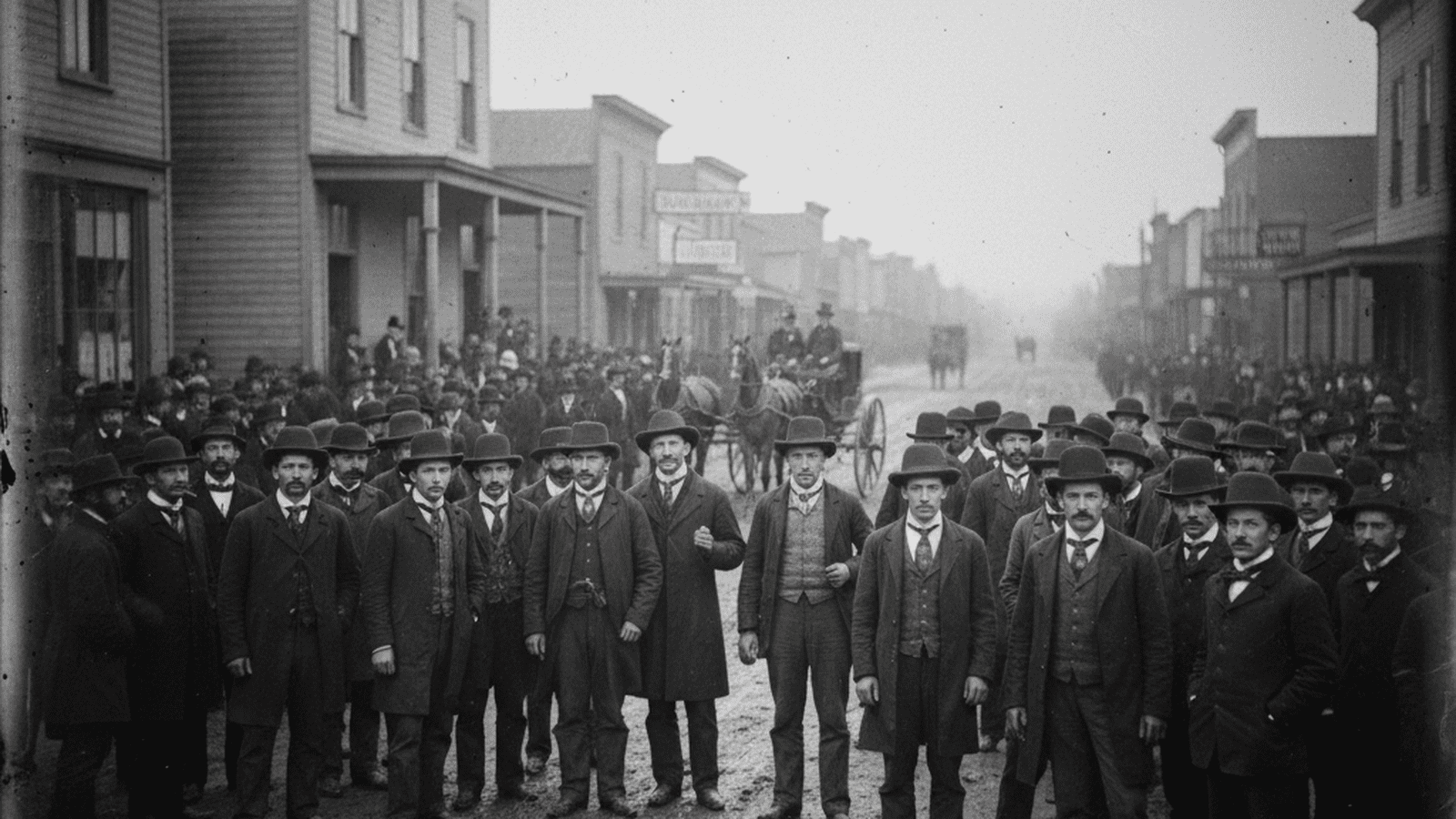
In 1855, the American Party, known as the Know Nothings, swept California’s state elections on a platform of nativism and election reform. This movement sought to overhaul United States voting procedures in the West by implementing stricter residency requirements and targeting the influence of naturalized citizens.
TLDR: The 1855 California elections saw the nativist American Party seize control of the state government. Their “purity of elections” agenda introduced restrictive voting measures aimed at foreign-born residents. This era highlighted the tension between rapid Western expansion and the struggle to define the United States electorate during the antebellum period.
The 1855 election cycle in California represented a significant upheaval in the political order of the young state. As the fervor of the Gold Rush began to transition into a more settled society, anxieties regarding social stability and the influence of foreign-born residents reached a boiling point. The American Party, popularly known as the “Know Nothings” due to their secretive origins and members’ habit of claiming they “knew nothing” when asked about the organization, capitalized on these fears to achieve a stunning sweep of the state’s executive and legislative branches.
Led by gubernatorial candidate J. Neely Johnson, the American Party campaigned on a platform of “purity of elections” and nativist reform. They argued that the existing political machinery in cities like San Francisco was being corrupted by the rapid enfranchisement of immigrants, particularly those from Ireland and Germany. In the view of the Know Nothings, these new citizens were susceptible to the influence of foreign hierarchies and corrupt party bosses, threatening the integrity of United States democratic institutions in the West. This rhetoric resonated with native-born miners and laborers who felt economically and socially displaced by the influx of international migrants.
Upon taking office in early 1856, the Know Nothing-dominated legislature moved to implement their vision of election reform. Their primary objective was to restrict the political power of naturalized citizens. They proposed extending the residency requirement for naturalization to twenty-one years, a move that would have effectively disenfranchised a large portion of the state’s active workforce. While naturalization was a federal matter, the state legislature sought to use its authority over the time, place, and manner of elections to achieve similar ends through state-level restrictions.
The 1856 session focused heavily on the creation of formal voter registries. Prior to this era, California elections were often informal affairs with little centralized oversight, leading to frequent accusations of ballot box stuffing and multiple voting. The American Party argued that a rigorous registration system was necessary to ensure that only legal voters—by which they meant native-born or long-resident citizens—could participate. This push for registration was framed as a moral crusade against the perceived chaos of the frontier’s early democratic experiments. They sought to transform the act of voting from a community-based event into a state-regulated process.
However, the American Party’s governance was hampered by internal divisions and the escalating national crisis over slavery. While they succeeded in passing some administrative reforms, their more radical nativist agenda faced legal and practical hurdles. The party’s focus on purity often clashed with the economic reality of California, which relied heavily on the labor and capital of a diverse international population. Many merchants and landowners feared that extreme nativism would drive away the very people building the state’s infrastructure.
By the time the 1857 elections arrived, the Know Nothing movement in California had largely fractured. The national party’s inability to take a clear stand on the expansion of slavery alienated many members. In California, the movement dissolved as quickly as it had risen, with many members drifting toward the newly formed Republican Party or returning to the Democratic fold.
Despite their brief tenure, the Know Nothings left a lasting mark on California’s political infrastructure. Their emphasis on voter registration as a tool for purity established a legislative template that would be revisited in the following decades. The tension between expanding the franchise and securing the ballot box remained a defining feature of United States political development. Later reforms in the late 19th century, including the adoption of the Australian ballot and more sophisticated registration laws, drew upon the arguments first popularized during this antebellum surge of nativist reform.

Sophie Carter serves as a Staff Writer for Just Right News, where she anchors the outlet’s critical coverage of Elections, Influence, and Democracy Infrastructure. In an era where the mechanics of voting and the flow of political capital are under constant scrutiny, Sophie provides a steady, principled voice dedicated to the preservation of American institutional integrity and the rule of law.
Raised in Charlotte, North Carolina, Sophie’s perspective was forged in a community that balances rapid modern growth with a deep respect for tradition and civic duty. Growing up in the Queen City, she witnessed firsthand how a robust local culture depends on the trust between the citizen and the state. This upbringing instilled in her a foundational belief that the right to vote is a sacred trust—one that must be protected from both administrative overreach and the encroaching influence of special interest groups. Her reporting reflects these North Carolina roots, emphasizing the importance of community-led governance and the preservation of the individual’s voice in the face of nationalized political movements.
Now based in Atlanta, Georgia, Sophie operates from the heart of one of the nation’s most pivotal and contested political landscapes. Her location allows her to report from the front lines of the debate over election security, legislative reform, and the modernization of voting systems. For Sophie, the “infrastructure” of democracy is not merely a matter of machines and ballots; it is the collection of laws, people, and transparent processes required to maintain public confidence. Her work often highlights the necessity of clear, enforceable standards that ensure every legal vote is counted fairly and that the machinery of our republic remains accountable to the taxpayers who fund it.
Central to her work at Just Right News is her acclaimed feature series, “The Price of a Vote.” Through this ongoing project, Sophie explores the complex web of influence that shapes modern campaigns and policy decisions. She delves into how high-level lobbying, non-governmental organizations, and shifting bureaucratic regulations impact the weight of an individual citizen’s ballot. By examining the financial and structural pressures placed on the electoral process, she provides readers with a comprehensive look at the forces vying for control over the American political system.
Sophie’s approach to journalism is rooted in a commitment to the constitutional framework. She views her role as a watchdog for the voter, ensuring that the systems meant to serve the public remain transparent and free from corruption. Whether she is analyzing the implementation of new voting technologies or investigating the influence of outside money on state-level policy, her work is characterized by a rigorous adherence to facts and a refusal to succumb to the sensationalism that often plagues modern political reporting.
At Just Right News, Sophie Carter continues to be a vital resource for readers who value clarity, conviction, and a defense of traditional American values. Her deep ties to the Southeast and her specialized focus on the mechanics of our republic make her an essential voice in the ongoing conversation about the future of American self-governance. Through her reporting, she remains dedicated to the idea that a secure and honest electoral system is the bedrock of a free and prosperous society.