


Newly disclosed financial records and concierge logs show Jeffrey Epstein utilized seventeen American Express accounts and a dedicated concierge to facilitate travel decoys for foreign nationals between 2012 and 2018.
The paper trail documenting the financial machinery of Jeffrey Epstein has expanded following the disclosure of internal American Express records and concierge logs. These documents reveal that Epstein maintained 17 separate accounts, including nine Centurion “Black” cards and eight Gold cards, which he utilized to manage a high-volume travel operation involving foreign nationals. The records provide a granular look at how Epstein leveraged premium financial services to facilitate the movement of individuals across international borders.
Transaction records and concierge communications, specifically involving a staffer identified as Molotkova, indicate the credit card company’s premium services were leveraged to facilitate visa approvals. Between 2012 and 2018, the concierge reportedly booked refundable “decoy” flights and hotel stays in cities such as Rome, London, and Miami. These bookings were designed to provide Eastern European models with the documentation necessary to satisfy visa interview requirements, despite there being no intention for the individuals to utilize the specific itineraries. This administrative maneuver allowed the individuals to present a legitimate-looking travel history to immigration authorities.
Epstein’s financial footprint within the American Express ecosystem was substantial, with annual spending reaching seven figures across his various accounts. Records show he amassed approximately 11 million Membership Rewards points, which were frequently redeemed for gift cards at a standard valuation of one cent per point. The banal administrative nature of these records highlights how established financial institutions provided the infrastructure for Epstein’s international movements and personal logistics through standard rewards programs and concierge perks.
In a separate matter of federal transparency and administrative oversight, the Department of Labor (DOL) is currently processing 564 public comments regarding a proposed Pharmacy Benefit Manager (PBM) fee disclosure rule. The comment period, which closed April 15, reveals a significant rift between industry stakeholders and federal regulators. While healthcare providers are advocating for strengthened transparency measures to expose hidden costs, PBMs are calling for the rule’s withdrawal, citing overlap with the Consolidated Appropriations Act of 2026 and potential regulatory redundancy.
Internal filings and public submissions indicate that many stakeholders view the current July 1, 2026, effective date as technically infeasible. Industry representatives argue that the timeline does not allow for necessary system updates or the complex contract renegotiations required by the new mandate. The records suggest a growing demand for broader audit rights and a narrower scope of disclosure to ensure the administrative state can effectively monitor fee structures that impact public health costs without overwhelming the industry’s existing infrastructure.
Finally, New York City property records recently obtained through public filings show actor David Harbour sold a renovated Nolita condominium for $2.7 million in August 2025. While the transaction was handled quietly, the deed transfer provides a factual anchor for the actor’s recent real estate divestments following a personal split. These disparate records—from credit card logs to property deeds and federal comment registries—continue to serve as the primary evidence for public accountability, stripping away narrative in favor of documented fact.
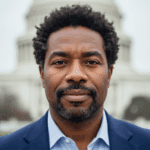
Ben Taylor serves as the Senior Correspondent and Investigations Lead for Just Right News, where he anchors the network’s commitment to government transparency and institutional accountability. With a career defined by a relentless pursuit of the facts, Taylor spearheads the acclaimed feature series “The Paper Trail,” a deep-dive investigative column that prioritizes primary source documentation over political rhetoric. Based in the heart of the nation’s capital, he has earned a reputation as one of the most formidable investigative journalists in Washington, D.C., known specifically for his mastery of public records and the Freedom of Information Act.
Taylor’s approach to journalism is deeply rooted in his upbringing in Kansas City, Missouri. Growing up in the “Show Me State,” he developed a healthy skepticism of centralized power and a profound respect for the common-sense values of the American heartland. This Midwestern foundation informs his reporting today, as he bridges the gap between the complex machinations of federal bureaucracy and the everyday concerns of citizens across the country. For Taylor, investigative reporting is not about chasing headlines; it is about ensuring that the government remains answerable to the people it serves.
As an African American man working within the conservative media landscape, Taylor brings a principled perspective to his beat. He views the Constitution and the right to information as the ultimate equalizers in a free society. His work often highlights how bureaucratic overreach and lack of transparency disproportionately affect individual liberties. By focusing on the “paper trail,” Taylor strips away the spin of partisan talking points, instead providing Just Right News readers with the raw data and internal communications that reveal how their tax dollars are spent and how policy decisions are actually made.
In his role as Investigations Lead, Taylor oversees a team dedicated to uncovering the stories that mainstream outlets often overlook. Whether he is auditing federal spending, investigating regulatory overreach, or exposing inefficiencies within the administrative state, his methodology remains consistent: follow the evidence wherever it leads. His presence in Washington, D.C., allows him to maintain a constant watch over the halls of power, yet he remains steadfastly connected to his roots, ensuring his reporting reflects the clarity and directness of his Missouri home.
Throughout his tenure at Just Right News, Taylor has become a vital voice for those who demand integrity in public office. He believes that a well-informed electorate is the strongest defense against government overreach, and he has dedicated his career to providing the public with the tools they need to hold their leaders accountable. Through “The Paper Trail” and his broader investigative work, Ben Taylor continues to set the standard for rigorous, document-driven journalism that champions the values of transparency, individual responsibility, and the rule of law.