

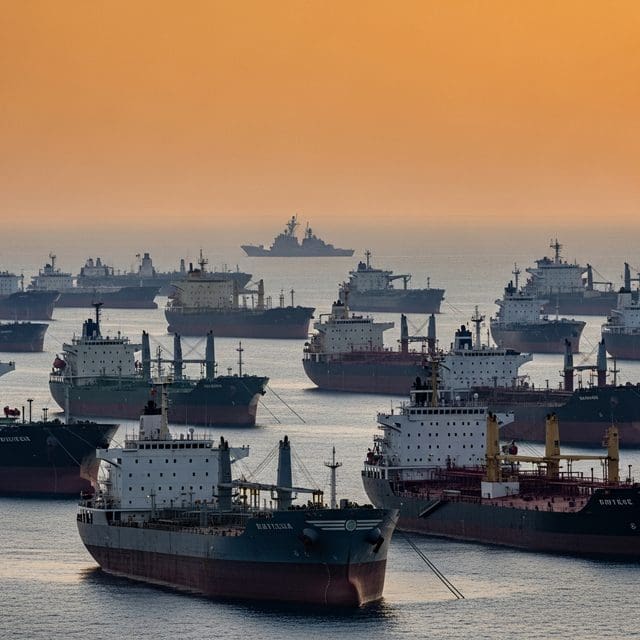
President Trump maintains a peace framework is intact despite direct naval skirmishes with Iran and retaliatory strikes that have paralyzed global shipping in the Strait of Hormuz.
The Trump administration’s efforts to secure a diplomatic exit from hostilities with Iran faced a severe test on May 8, as U.S. forces engaged in direct combat with Iranian vessels in the Persian Gulf. Despite the exchange of drone, missile, and gunfire, President Trump insisted during a call with ABC that a nascent ceasefire remains in effect, characterizing the recent U.S. bombings as a “love tap” intended to maintain order.
U.S. Central Command reported that the engagement was a response to “unprovoked” Iranian attacks. Conversely, Tehran alleged the U.S. Navy targeted an oil tanker within Iranian territorial waters, prompting a retaliatory strike. The Iranian Ministry of Foreign Affairs, which had been reviewing a one-page U.S. proposal to end the two-month conflict, condemned the action. Foreign Minister Abbas Araghchi described the strikes as a “reckless military adventure” that undermines the diplomatic framework currently on the table.
The tactical reality on the ground suggests a widening theater of conflict. Air defenses were activated over Tehran following overnight explosions, and the United Arab Emirates reported intercepting several drones and missiles launched from Iran. The regional instability has created a mounting humanitarian and economic crisis at sea. Approximately 20,000 seafarers are currently stranded on 1,500 ships due to the closure of the Strait of Hormuz, a vital chokepoint for global energy supplies.
While the administration pursues a “peace through strength” resolution, the economic ripples are being felt by American households. A report from Senator Ed Markey’s office indicates that the average two-car family may pay an additional $1,750 at the pump this year due to war-related price spikes. This surge in energy costs coincides with record-high U.S. auto loan debt of $1.7 trillion. Nevertheless, senior economic adviser Kevin Hassett noted that consumer spending remains high, even as a larger portion of that capital is diverted to gasoline.
Beyond the Gulf, the administration’s foreign policy remains aggressive on multiple fronts. Secretary of State Marco Rubio announced new sanctions against Cuba, targeting military-linked enterprises despite warnings of “energy starvation” from the United Nations. Simultaneously, leaked recordings have surfaced suggesting U.S. involvement in a regional effort to destabilize leftist governments in Latin America through coordinated information campaigns.
In the Middle East, the conflict continues to bleed across borders. An Israeli airstrike in southern Lebanon reportedly killed 12 people, including a paramedic and two children, as the U.N. warns that over half of the Lebanese population now requires humanitarian aid. As the U.S. and Iran navigate a memorandum to end hostilities, the persistence of kinetic engagements suggests that a formal return to stability remains elusive.

Olivia Kendall serves as the Senior Correspondent for Geopolitics, Defense, and Foreign Policy at Just Right News, where she provides a principled, conservative perspective on the complex forces shaping the global stage. With a career dedicated to deconstructing the intricacies of international relations, Kendall has become a trusted voice for readers who value national sovereignty, a robust military, and a foreign policy that prioritizes American interests above all else.
A native of Washington, D.C., Kendall’s professional journey is deeply rooted in her upbringing within the nation’s capital. Growing up in the epicenter of American political life, she developed an early and profound understanding of how policy is crafted and, more importantly, how it often fails to account for the values of the American heartland. This unique vantage point allowed her to witness firsthand the rise of globalist bureaucracies, fueling her commitment to reporting that champions the constitutional foundations of the United States. Her background as a British White American further informs her worldview, providing her with a keen appreciation for the Western tradition and the enduring importance of the “Special Relationship” in maintaining global stability.
Now based in Arlington, Virginia, Kendall operates from the doorstep of the Pentagon and the heart of the nation’s defense establishment. Her proximity to the decision-makers in the military and intelligence communities allows her to provide boots-on-the-ground reporting that is both timely and deeply informed. For Kendall, Arlington is more than just a base of operations; it is a daily reminder of the sacrifices made by the men and women in uniform. This connection to the defense community drives her rigorous coverage of military readiness and her advocacy for a “peace through strength” approach to diplomacy.
At Just Right News, Kendall is perhaps best known for her acclaimed feature series, “The World’s Shadow on America.” In this ongoing project, she explores the direct correlation between international developments and the daily lives of American citizens. Whether she is analyzing the encroachment of foreign adversaries in domestic supply chains or the impact of international treaties on local economies, Kendall’s work serves as a vital bridge between distant geopolitical shifts and their consequences at home. She rejects the notion that foreign policy is an abstract concern for elites, instead proving that what happens in the corridors of power in Brussels or Beijing has a tangible “shadow” that falls across every American doorstep.
Throughout her tenure, Kendall has remained a steadfast critic of international overreach and a vocal proponent of a clear-eyed, realistic foreign policy. She brings a sharp analytical mind to her beat, often challenging the prevailing narratives of the mainstream media to uncover the underlying truths that affect national security. Her reporting is characterized by a refusal to compromise on the truth and a dedication to the idea that a strong, secure America is the world’s best hope for liberty. As a Senior Correspondent, Olivia Kendall continues to lead the charge in providing the essential context and conservative insight necessary to navigate an increasingly volatile world.