

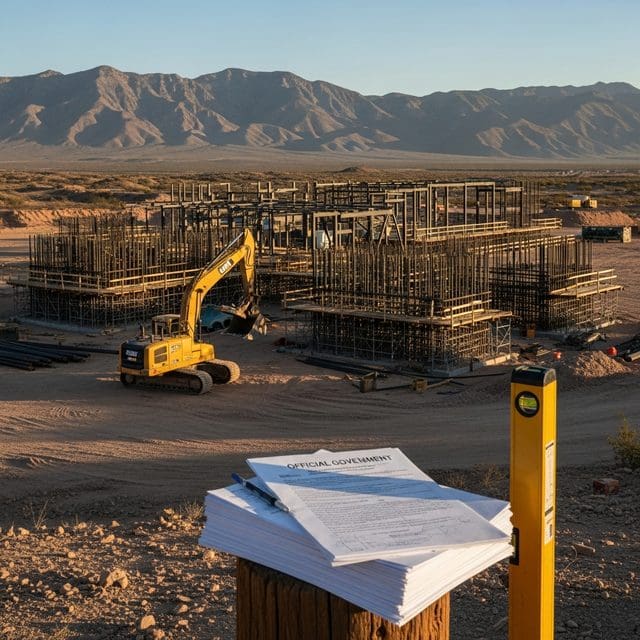
A massive new funding package aims to overhaul border operations and double detention capacity as federal courts continue to strike down executive asylum bans.
A significant escalation in federal immigration strategy is taking shape as Senate Republicans released a $72 billion reconciliation package on May 5, 2026. This legislative move is designed to provide sustained funding for U.S. Immigration and Customs Enforcement (ICE) and Customs and Border Protection (CBP) through fiscal year 2029. The proposal includes a massive $30.73 billion allocation for ICE operations and $10 billion specifically earmarked for the expansion of detention facilities. To address the persistent backlog in the legal system, the bill also directs $1.5 billion toward Department of Justice immigration courts. This funding follows the House of Representatives’ April 30 passage of a budget resolution that enabled the reconciliation process for these specific enforcement measures, following a narrow 216-210 party-line vote on April 29 to adopt rules for FISA reauthorization and immigration funding.
Internal budget documents submitted to Congress reveal that ICE has established an official removal target of 1 million individuals for the 2026–2027 period. However, current data suggests a significant gap between these policy goals and operational reality. As of April 4, 2026, ICE had completed 234,236 removals, a pace that would result in approximately 460,000 annual deportations—less than half of the administration’s stated objective. While detention numbers reached a peak of 68,289 in early February, they have since declined to 60,311. Notably, approximately 70.8% of those currently held in federal custody have no criminal convictions, while the Alternatives to Detention program has remained stagnant, monitoring roughly 180,700 individuals. This data highlights the logistical challenges of scaling enforcement to meet the ambitious targets set by the new legislative framework.
The administration’s enforcement efforts face persistent legal challenges from the judiciary, which has repeatedly checked the use of executive power. On April 24, 2026, a federal appeals court ruled that an executive order banning asylum claims at the southern border was illegal, rejecting the administration’s effort to block migrants from seeking protection. Furthermore, a federal judge in Massachusetts blocked a halt on processing immigration applications for citizens of countries listed under the travel ban on May 1, determining the policy was unlawful. These rulings highlight the ongoing tension between executive enforcement priorities and the judicial interpretation of the American social contract and existing statutory law, particularly regarding the rights of those already within the system.
Despite these legal setbacks, administrative changes continue to tighten the existing system through procedural shifts that do not require new legislation. U.S. Citizenship and Immigration Services (USCIS) mandated enhanced security checks on April 27, requiring the resubmission of fingerprint-based applications for green cards, asylum, naturalization, and refugee status to the FBI for expanded screening. Immigration attorneys have warned that these requirements will further slow a processing system already strained by historic backlogs. Simultaneously, ICE has engaged in an aggressive campaign to pretermit asylum cases, resulting in over 75,500 cases being terminated without a hearing as of early May. This administrative pressure, combined with third-country deportation efforts, has led many asylum seekers to abandon their claims entirely before they ever reach a judge.
State legislatures are also moving to fill perceived gaps in federal enforcement, asserting local control over demographic shifts and community stability. Tennessee and five other states recently enacted laws requiring public agencies to verify immigration status and report undocumented residents to federal authorities. These laws carry criminal penalties of up to one year in jail for officials who fail to comply, reflecting a growing trend of local governments seeking to preserve community character through stricter adherence to the rule of law. As the $72 billion package moves through the reconciliation process, the balance between federal mandate, judicial restraint, and state-level enforcement remains the central friction point in American migration policy. These developments suggest a future where the integrity of the social contract is increasingly defined by a mix of high-tech screening, expanded physical detention, and a more rigid application of existing statutes.

Julie Harris serves as a Staff Writer for Just Right News, where she tackles some of the most pressing and complex issues facing the nation today. As the lead reporter for the Migration, Demographics & Cultural Shifts beat, Julie provides a grounded, principled perspective on how the movement of people and the changing makeup of communities are reshaping the American landscape. Her work is defined by a commitment to exploring the long-term consequences of social change, prioritizing the stability of local institutions and the preservation of national identity.
Her deep understanding of these issues is rooted in her upbringing in Tucson, Arizona. Growing up in a prominent border state, Julie witnessed firsthand the intricate realities of migration and the profound impact it has on local infrastructure, law enforcement, and the social fabric. This early exposure instilled in her a respect for the rule of law and a keen awareness of the challenges that arise when federal policies fail to align with the needs of border communities. Her reporting often reflects this lived experience, bringing a necessary level of nuance to topics that are often treated with abstraction in coastal newsrooms.
Now based in Santa Fe, New Mexico, Julie continues to report from the heart of the American Southwest. Her location provides a unique vantage point to observe the intersection of traditional regional cultures and the modern shifts brought about by both internal and external migration. In Santa Fe, a city defined by its rich history and distinct cultural heritage, she finds a perfect environment to explore how communities strive to maintain their character while navigating the pressures of a rapidly changing world. This perspective allows her to bridge the gap between policy debates in Washington and the reality of life in the high desert.
At Just Right News, Julie’s work is characterized by a dedication to examining the data and the human stories that define the “New Mosaic” of America. Her signature feature series, “The New Mosaic,” has become a cornerstone of her reporting. Through this series, Julie explores the evolving social architecture of the United States, documenting how shifts in population affect everything from local economies to the political landscape. She brings a critical eye to the narrative of demographic inevitability, instead asking how these shifts impact the average citizen’s sense of belonging and the integrity of the American social contract.
Julie’s background and her dedication to conservative principles make her a vital voice in contemporary journalism. She understands that demographics are more than just numbers on a spreadsheet; they represent the future of the American family and the nation’s enduring legacy. Through her diligent reporting and insightful analysis, Julie Harris ensures that her readers are informed about the forces shaping their world, providing a perspective that is as thoughtful as it is necessary for the modern era.