

The American Gaming Association is intensifying its opposition to decentralized prediction markets, citing concerns over state sovereignty and the integrity of traditional gambling frameworks.
The American Gaming Association (AGA) and its allies are escalating a campaign against the technical and legal foundations of decentralized prediction markets, marking a significant shift in the lobbying landscape of the United States. Following a series of high-profile departures from the AGA by major operators like DraftKings and FanDuel, the organization has refocused its efforts on the perceived threat posed by cryptographic event contracts and decentralized engineering protocols.
At the heart of the dispute is the classification of prediction markets, which utilize decentralized protocols to allow users to hedge on real-world outcomes. AGA President and CEO Bill Miller has characterized these platforms as a direct encroachment on the established regulatory frameworks that govern state and tribal gaming operations. In a recent address in Las Vegas, Miller criticized the Commodity Futures Trading Commission (CFTC) and described prediction markets as a form of illegal sports betting that bypasses the consumer protections and tax obligations inherent in traditional systems.
The technical architecture of these platforms, which often relies on immutable smart contracts and decentralized oracles to verify event outcomes, presents a unique challenge to administrative overreach. While proponents argue that these protocols offer a transparent and tamper-proof method for data aggregation, regulators and tribal gaming operators contend that they undermine the rule of law by operating outside the jurisdiction of state gaming commissions. A joint letter issued by the AGA and the International Gaming Association (IGA) earlier this year urged Congress to curb these markets to preserve state and tribal sovereignty.
Legislative activity is accelerating in response to this friction. Three major bills—the Event Contract Enforcement Act, the Prediction Markets are Gambling Act, and the Prediction Markets Security and Integrity Act of 2026—are currently under consideration. These proposals aim to define the boundaries between financial hedging instruments and traditional wagering, with significant implications for how decentralized engineering is treated under federal law.
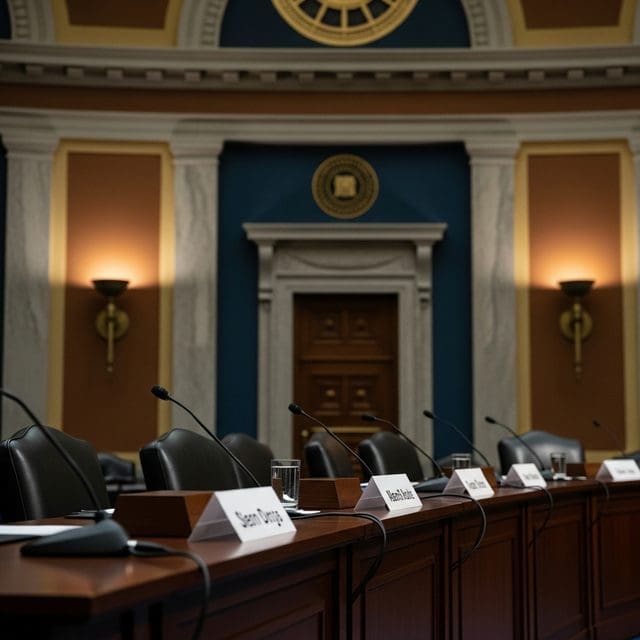
A Senate Commerce hearing scheduled for May 20, 2026, will bring this debate to the forefront of the democratic process. Witnesses including Miller and Patrick McHenry of the Coalition for Prediction Markets are expected to testify on the intersection of cryptography and commerce. The outcome of these proceedings will likely determine whether decentralized protocols are integrated into the national infrastructure or restricted to protect the interests of established institutional players.
As the cryptographic community continues to advance the engineering behind these platforms, the tension between decentralized innovation and the preservation of existing regulatory hierarchies remains a central theme in the defense of democracy’s institutional integrity. The focus remains on whether the rule of law can adapt to a landscape where code and protocol increasingly perform the functions once reserved for centralized state authorities.

Sophie Carter serves as a Staff Writer for Just Right News, where she anchors the outlet’s critical coverage of Elections, Influence, and Democracy Infrastructure. In an era where the mechanics of voting and the flow of political capital are under constant scrutiny, Sophie provides a steady, principled voice dedicated to the preservation of American institutional integrity and the rule of law.
Raised in Charlotte, North Carolina, Sophie’s perspective was forged in a community that balances rapid modern growth with a deep respect for tradition and civic duty. Growing up in the Queen City, she witnessed firsthand how a robust local culture depends on the trust between the citizen and the state. This upbringing instilled in her a foundational belief that the right to vote is a sacred trust—one that must be protected from both administrative overreach and the encroaching influence of special interest groups. Her reporting reflects these North Carolina roots, emphasizing the importance of community-led governance and the preservation of the individual’s voice in the face of nationalized political movements.
Now based in Atlanta, Georgia, Sophie operates from the heart of one of the nation’s most pivotal and contested political landscapes. Her location allows her to report from the front lines of the debate over election security, legislative reform, and the modernization of voting systems. For Sophie, the “infrastructure” of democracy is not merely a matter of machines and ballots; it is the collection of laws, people, and transparent processes required to maintain public confidence. Her work often highlights the necessity of clear, enforceable standards that ensure every legal vote is counted fairly and that the machinery of our republic remains accountable to the taxpayers who fund it.
Central to her work at Just Right News is her acclaimed feature series, “The Price of a Vote.” Through this ongoing project, Sophie explores the complex web of influence that shapes modern campaigns and policy decisions. She delves into how high-level lobbying, non-governmental organizations, and shifting bureaucratic regulations impact the weight of an individual citizen’s ballot. By examining the financial and structural pressures placed on the electoral process, she provides readers with a comprehensive look at the forces vying for control over the American political system.
Sophie’s approach to journalism is rooted in a commitment to the constitutional framework. She views her role as a watchdog for the voter, ensuring that the systems meant to serve the public remain transparent and free from corruption. Whether she is analyzing the implementation of new voting technologies or investigating the influence of outside money on state-level policy, her work is characterized by a rigorous adherence to facts and a refusal to succumb to the sensationalism that often plagues modern political reporting.
At Just Right News, Sophie Carter continues to be a vital resource for readers who value clarity, conviction, and a defense of traditional American values. Her deep ties to the Southeast and her specialized focus on the mechanics of our republic make her an essential voice in the ongoing conversation about the future of American self-governance. Through her reporting, she remains dedicated to the idea that a secure and honest electoral system is the bedrock of a free and prosperous society.