

In 1983, a significant income tax increase in Michigan led to the historic recall of two Democratic state senators. This event shifted control of the Michigan Senate to the Republican Party, marking a major parliamentary realignment in the United States.
TLDR: Following a controversial 38 percent income tax hike in 1983, Michigan voters successfully recalled two Democratic state senators. This unprecedented move flipped the Senate majority to Republicans, ending Democratic trifecta control and establishing a GOP stronghold in the chamber that would last for nearly forty years.
In the early 1980s, Michigan was the epicenter of a severe economic downturn that threatened the state’s long-term solvency. The decline of the automotive industry, which had been the backbone of the regional economy for decades, coupled with a punishing national recession, left the state with a staggering $900 million budget deficit. Newly elected Democratic Governor James Blanchard took office in January 1983, inheriting a fiscal crisis that required immediate and drastic action. To stabilize the treasury and maintain essential services, Blanchard proposed a permanent 38 percent increase in the state income tax, raising the rate from 4.6 percent to 6.35 percent. While the measure narrowly passed the Democratic-controlled legislature, it ignited a firestorm of public opposition that would fundamentally alter the state’s political landscape for nearly forty years.
The tax hike was particularly controversial because it was pushed through with the thinnest of margins, relying on a strict party-line vote in a state already reeling from record-high unemployment. Opponents of the measure quickly organized, focusing their efforts on Michigan’s unique recall process. Under state law, voters possessed the power to remove elected officials from office before their terms expired if enough signatures were gathered to trigger a special election. The primary targets of this movement were Democratic State Senators Phil Mastin of Pontiac and David Serotkin of Mount Clemens. Both represented districts that, while currently held by Democrats, were increasingly suburban and had shown significant Republican leanings in previous election cycles.
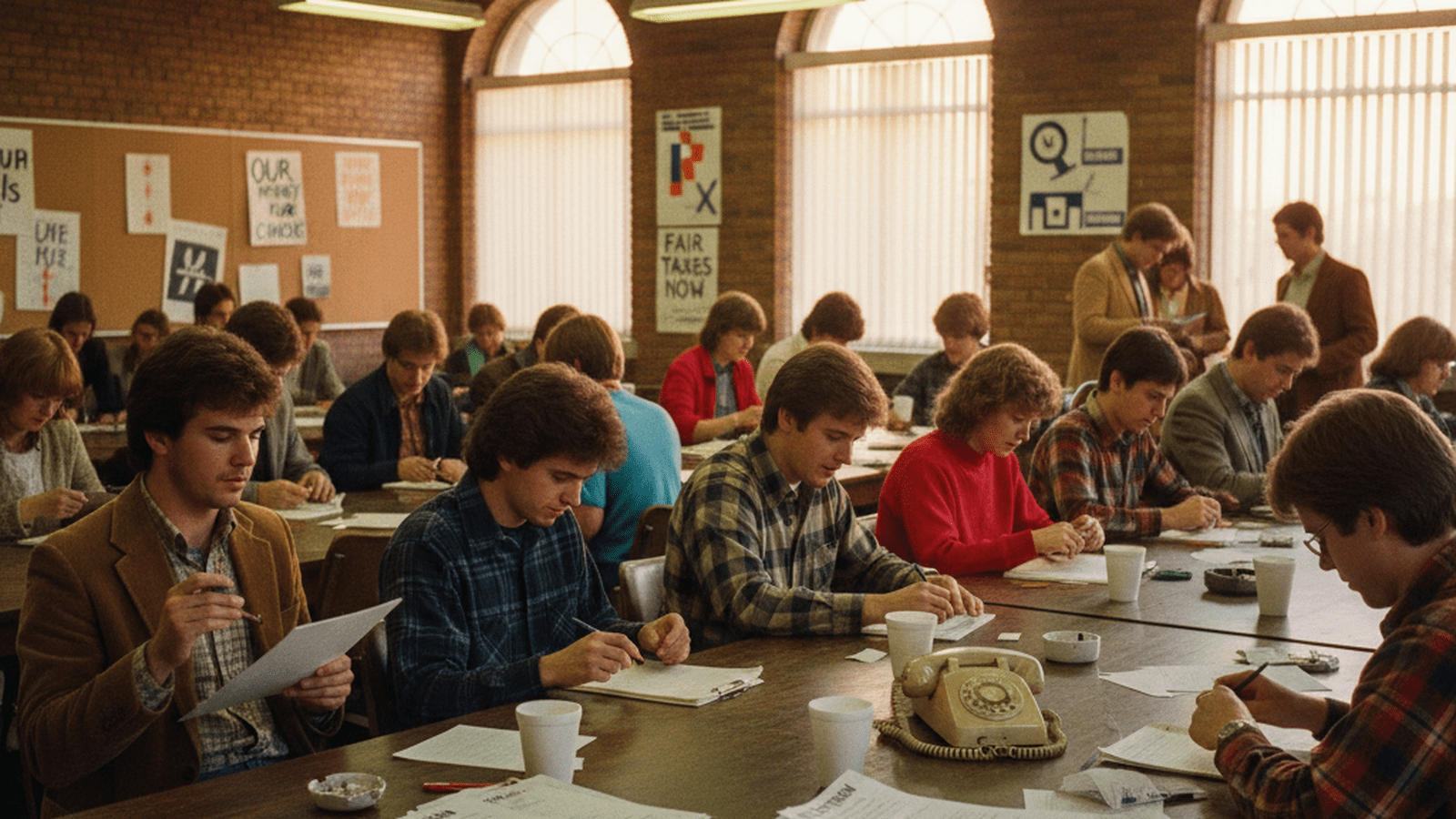
The recall campaigns were a potent mix of grassroots populist anger and strategic Republican coordination. Local activists, many of whom were blue-collar workers feeling the dual pinch of a stagnant economy and the new tax burden, led the signature-gathering drives. They argued that the legislature had ignored the will of the people and that the tax increase was a betrayal of the campaign promises made just months earlier. The Republican Party provided organizational support and funding, recognizing a rare opportunity to break the Democratic trifecta in Lansing. This marked a significant shift in how special elections were contested, as the recall was transformed from a tool for punishing personal corruption into a weapon for ideological and parliamentary realignment.
The recall elections took place on November 22, 1983. The results sent shockwaves through the United States political establishment. Both Mastin and Serotkin were successfully removed from office by substantial margins. These were the first successful recalls of state legislators in Michigan’s history. The immediate consequence was the loss of the Democratic majority in the State Senate, which had stood at 20-18 before the recalls. Following the removal of the incumbents, special elections were held to fill the vacancies. Republicans won both seats, effectively seizing control of the chamber with a 20-18 majority of their own.
This realignment was not merely a temporary setback for the Democratic Party; it signaled a broader shift in Midwestern political dynamics. The tax revolt sentiment that had gained national prominence with California’s Proposition 13 in 1978 had found a successful expression in the industrial heartland. The Michigan recalls demonstrated that legislative majorities built on narrow margins could be dismantled through direct democracy if they moved too aggressively on fiscal policy without broad consensus. The event also professionalized the recall process in the region, turning it into a standard strategic tool for party realignment.
The Republican takeover of the Michigan Senate in 1984 began an extraordinary period of GOP dominance. For the next 38 years, Republicans maintained control of the Michigan Senate, a streak that only ended with the 2022 midterm elections. The 1983 recalls forced a significant moderation of Governor Blanchard’s fiscal agenda, leading to subsequent tax rollbacks as the state’s economy began to recover. This era established a lasting precedent for how fiscal policy and voter backlash could trigger rapid structural changes in state governance, influencing legislative strategies across the United States for the remainder of the century.

Dylan Brooks serves as the Senior Correspondent for Statehouses and Local Governance at Just Right News, where he brings a principled, constitutionalist lens to the often-overlooked machinery of state-level politics. As the lead voice behind the acclaimed feature series “Fifty Laboratories of Power,” Dylan has dedicated his career to the idea that the most impactful governance happens closest to home. His reporting consistently champions the Tenth Amendment, exploring how individual states can serve as testing grounds for innovative, conservative policy solutions that prioritize personal liberty and fiscal responsibility.
A native of Des Moines, Iowa, Dylan’s journalistic philosophy was forged in the heart of the American Midwest. Growing up in a community where local school board meetings and town halls were the bedrock of civic life, he developed a deep appreciation for the “retail politics” of the heartland. This upbringing instilled in him a fundamental belief that the American experiment is best preserved when power is decentralized. He carries the values of his Iowa roots into every assignment, maintaining a healthy skepticism of federal overreach and a steadfast commitment to the concerns of everyday citizens over the interests of the administrative state.
Now based in Madison, Wisconsin, Dylan operates from one of the nation’s most pivotal political battlegrounds. His location in a state capital known for its rigorous policy debates allows him to provide Just Right News readers with a front-row seat to the legislative process. From Madison, he tracks the ripple effects of statehouse decisions on local municipalities, ensuring that the connection between high-level policy and community impact is never lost. His work often highlights the success of conservative governors and legislatures in fostering economic growth, protecting parental rights, and securing the integrity of local institutions.
As an African American man in the conservative media landscape, Dylan offers a vital perspective on how limited government and free-market principles empower individuals and families. He frequently reports on how deregulation and school choice initiatives provide new avenues for success in underserved communities, challenging the monolithic narratives often presented by legacy media outlets. Dylan’s work is characterized by a commitment to the facts and a refusal to shy away from the complex realities of modern governance.
Throughout his tenure at Just Right News, Dylan has become a trusted authority for readers who value a rigorous, principled approach to the news. Whether he is dissecting a complex state budget or profiling a local grassroots movement, his goal remains the same: to provide the American public with the information they need to hold their local leaders accountable. By focusing on the “Fifty Laboratories of Power,” Dylan Brooks ensures that the vital work being done in statehouses across the country receives the national attention it deserves, always through a lens that respects the traditions and sovereignty of the American people.