

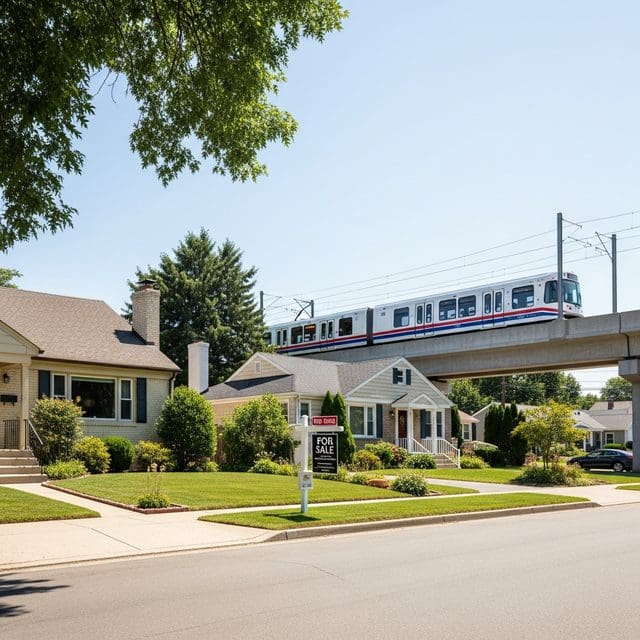
As the 30-year mortgage rate climbs to 6.20 percent, a proposed $10.7 billion reduction in federal housing funds threatens to exacerbate the nation’s 7-million-unit affordable housing shortage.
The American dream of homeownership is facing a renewed squeeze this May as the 30-year fixed mortgage rate reached an average of 6.20 percent. This uptick, driven by persistent inflation concerns, coincides with a federal pivot toward fiscal austerity that could fundamentally reshape the landscape for low-income renters and prospective buyers alike.
In Washington, the executive branch has signaled a significant retreat from traditional housing subsidies. The proposed FY2027 budget includes a $10.7 billion cut to the Department of Housing and Urban Development (HUD), representing a 13 percent reduction. These cuts specifically target Section 8 vouchers and low-income housing initiatives, just as the National Low Income Housing Coalition reports a nationwide deficit of 7 million affordable units.
While the federal government moves to tighten its belt, the private market is showing signs of increased activity. National inventory has risen to over one million homes for sale, an 8 percent increase compared to mid-April 2025. However, this supply surge has yet to provide significant relief for renters. Average rents in the 100 largest U.S. cities have climbed to $1,843, with extreme spikes in tech hubs like San Francisco, where prices surged 14 percent to an average of $3,830.
Faced with federal retrenchment, several states are asserting local sovereignty through zoning reform. Recent legislative sessions have seen a wave of mandates aimed at eliminating parking minimums and encouraging high-density residential development near transit corridors. These market-driven reforms seek to bypass bureaucratic bottlenecks and lower the cost of construction by reducing regulatory overhead.
Infrastructure remains a critical lever in this equation. While global energy markets saw a temporary reprieve following the reopening of the Strait of Hormuz and a subsequent 10 percent drop in oil prices, the long-term cost of living remains tied to local transit accessibility. The push for transit-oriented development reflects a growing consensus that housing affordability cannot be solved in a vacuum, but must be integrated with efficient, cost-effective mobility solutions.
The tension between federal budget cuts and the worsening homelessness crisis suggests a period of transition. As the taxpayer-funded safety net shrinks, the burden of innovation falls on state legislatures and private developers. Whether zoning deregulation can fill the 7-million-unit gap left by federal withdrawal remains the defining question for the 2026 housing market.

Deborah Cole serves as a Senior Correspondent for Just Right News, where she spearheads the network’s coverage of Housing, Infrastructure, and Mobility. With a career defined by a commitment to rigorous reporting and a focus on the fundamental pillars of American community life, Deborah brings a principled perspective to the complex issues that dictate how and where we live. Her work is grounded in the belief that sound policy, fiscal responsibility, and respect for private property are the essential foundations of a prosperous society.
Originally from Boston, Massachusetts, Deborah’s upbringing in one of the nation’s oldest and most historically significant cities deeply influenced her professional trajectory. Growing up amidst the architectural legacy and dense urban planning of New England, she developed an early appreciation for the importance of durable infrastructure and the role of local tradition in shaping neighborhoods. Her perspective is informed by the classic American values of her hometown—hard work, community cohesion, and a healthy skepticism of top-down bureaucratic mandates that often overlook the unique needs of individual citizens.
Today, Deborah operates from her base in Austin, Texas, a city that serves as a primary laboratory for her reporting. Austin’s rapid expansion and its status as a hub for innovation and migration provide her with a front-row seat to the most pressing challenges in modern infrastructure and housing. From the Lone Star State, she chronicles the tensions between rapid growth and the preservation of the American Dream, often highlighting how market-driven solutions and deregulation can address the housing shortages that plague many of the country’s metropolitan areas.
At Just Right News, Deborah is perhaps best known for her signature feature series, “Where We Live.” Through this platform, she explores the intersection of public policy and private life, moving beyond mere statistics to tell the stories of families, small business owners, and local developers. Her reporting frequently highlights the importance of mobility—not just in terms of transportation and transit, but as a vehicle for economic opportunity and social stability. She remains a staunch advocate for the taxpayer, consistently scrutinizing government spending on large-scale projects and advocating for transparency in how infrastructure dollars are allocated.
Deborah’s beat is more than just a collection of policy topics; it is an investigation into the physical and legal structures that allow families to flourish. Whether she is reporting on the impact of zoning laws on suburban development or the necessity of maintaining the nation’s highway systems, her work is characterized by a dedication to the facts and a respect for the constitutional principles that protect the rights of homeowners.
As a Senior Correspondent, Deborah Cole continues to be a vital voice for Just Right News, providing the audience with the clarity and context needed to navigate an ever-changing landscape. Her reporting ensures that the values of individual liberty and local sovereignty remain at the forefront of the national conversation regarding the future of our cities and towns. Through her tireless efforts, she remains committed to informing the public on the issues that hit closest to home.