


A new statutory board will consolidate national training efforts to better align individual skills with market demands and provide direct support for mid-career workers.
The pursuit of upward mobility requires a streamlined approach to human capital, and Singapore is taking a decisive step toward that goal. On May 5, 2026, the Parliament passed the Skills and Workforce Development Agency (SWDA) Bill, a legislative move that merges SkillsFuture Singapore and Workforce Singapore into a single, cohesive statutory board. This consolidation, set to take effect in the third quarter of 2026, represents a shift away from fragmented government oversight toward a more integrated model of jobs, skills, and training.
Manpower Minister Tan See Leng emphasized during the bill’s second reading that the new agency will focus on serving individuals and employers more directly. By removing the barriers between separate agencies, the government aims to create a more responsive ecosystem that can keep pace with rapid economic shifts. This is a practical recognition that education does not end at graduation; rather, it is a lifelong investment that requires clear pathways and reliable institutional support. The merger is designed to strengthen the ecosystem by partnering with service providers to ensure training remains relevant to the evolving needs of the private sector.
One of the most significant aspects of this restructuring is the renewed focus on mid-career and lower-income workers. The SWDA will oversee programs designed to assist those facing job loss, ensuring that retraining is not just a theoretical exercise but a bridge to real-world employment. Furthermore, the agency is already signaling a return to market-driven solutions by resuming funding for popular online course providers like Coursera and Udemy. This move acknowledges that flexible, industry-aligned certifications often provide more immediate value to workers than traditional, slow-moving academic programs that often struggle to keep pace with technological advancement.
Private sector integration is also a key pillar of this new strategy. For instance, Singtel recently launched its AI.dea program, which utilizes SkillsFuture funding to help small and medium enterprises adopt artificial intelligence. By subsidizing up to 90 percent of the costs, the initiative demonstrates how public-private partnerships can drive technological literacy without placing an undue financial burden on individual workers or small business owners. This approach aligns with the broader goal of ensuring that the workforce remains competitive in an increasingly automated global market where AI adoption is becoming a baseline requirement for entry.
This administrative overhaul serves as a reminder that the value of an education system is measured by the employability and resilience of its workforce. While other nations struggle with the bloat of educational bureaucracies and mounting student debt, the establishment of the SWDA suggests a preference for efficiency and personal responsibility. By centralizing resources and focusing on tangible outcomes, the new agency aims to empower workers to navigate the modern economy through merit and skill acquisition rather than government dependency. The focus remains on removing bureaucratic barriers to allow for a more agile, market-aligned workforce that can adapt to the challenges of the 21st century through practical, results-oriented training.
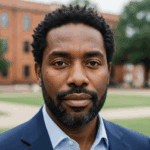
Daniel Owens serves as a Senior Correspondent for Just Right News, where he leads the newsroom’s coverage of Education, Workforce, and Upward Mobility. In an era where the national conversation often overlooks the practical foundations of success, Owens brings a principled perspective to the forefront of the media landscape. His work is defined by a commitment to the idea that a strong society is built on the pillars of quality education, a robust work ethic, and the removal of bureaucratic barriers to individual achievement.
Born and raised in Cleveland, Ohio, Owens’s worldview was shaped by the industrial landscape of the Midwest. Growing up in a city known for its grit and resilience, he witnessed firsthand the transformative power of steady employment and the devastating effects of economic stagnation. This background instilled in him a deep respect for the American worker and a healthy skepticism toward top-down government solutions that often fail to reach the communities they intend to help. As an African American man who has navigated the path to professional success, Owens approaches his beat with a nuanced understanding of how meritocracy and personal responsibility intersect with opportunity. He frequently draws on his roots to highlight the importance of family stability and community-led initiatives in fostering the next generation of leaders.
At Just Right News, Owens is the architect of the acclaimed feature series, “The Learning Curve.” Through this platform, he explores the evolving landscape of American schooling, from the rise of the school choice movement to the revitalization of trade schools and vocational training. He frequently challenges the status quo of higher education, advocating for a return to academic rigor and the practical alignment of degrees with market demands. For Owens, education is not merely about obtaining credentials; it is about equipping young people with the tools necessary to lead self-sufficient, meaningful lives. His reporting on “The Learning Curve” has become essential reading for parents and policymakers who believe that educational competition and parental rights are the keys to a brighter future.
Now based in Raleigh, North Carolina, Owens finds himself at the heart of one of the nation’s most dynamic regions for innovation and growth. Raleigh’s unique blend of traditional values and a fast-paced economy provides the perfect backdrop for his reporting on the modern workforce. From the tech hubs of the Research Triangle to the rural communities of the South, he tracks how shifts in the economy are impacting families and local industries. His reporting often highlights the success stories of entrepreneurs and workers who are thriving by embracing the values of hard work and innovation.
Throughout his career, Daniel Owens has remained a steadfast voice for the student seeking a better path and the worker striving for a better life. His reporting for Just Right News serves as a vital resource for readers who value common-sense solutions to the challenges of the 21st-century economy. By focusing on the intersection of policy and the human spirit, Owens continues to provide a roadmap for how individuals and communities can achieve lasting upward mobility.