

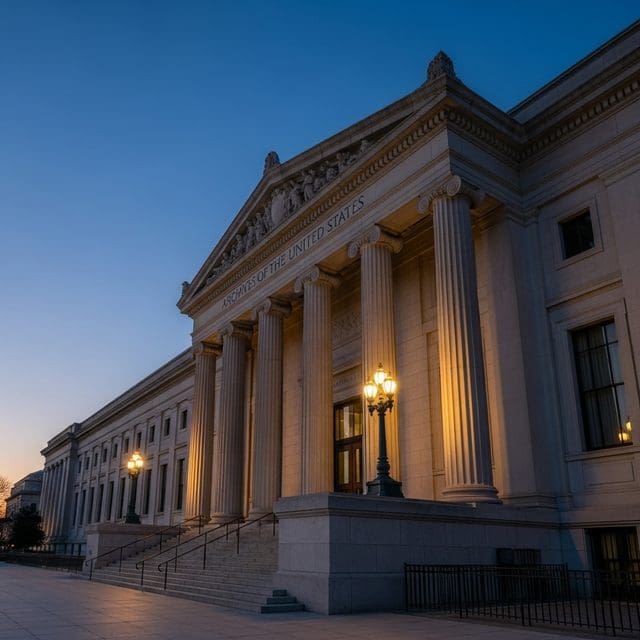
New disclosures from the National Archives detail private email use by Joe Biden as Vice President, while Jacksonville officials face rising costs and subpoenas in a utility investigation.
The National Archives and Records Administration (NARA) has initiated the release of records from Joe Biden’s tenure as Vice President, following a mandatory 60-day review period established in late 2025. These documents, released under the Presidential Records Act, confirm that then-Vice President Biden utilized private Gmail accounts to handle government information. The disclosure follows a notification of intent to release the materials issued on March 20, 2026, marking a significant moment in the ongoing scrutiny of executive branch record-keeping practices.
While federal records come to light in Washington, local government transparency faces financial and legal hurdles in Florida. The Jacksonville City Council is currently navigating an investigation into JEA, the city’s municipal utility. Recent estimates place the cost of fulfilling JEA-related public records requests at approximately $4,000, highlighting the administrative burden often associated with large-scale transparency efforts. The probe intensified on April 12, 2026, when the State Attorney issued subpoenas for records involving the utility’s CEO, City Council President Carrico, and a prominent lobbying firm.
The JEA investigation, which includes allegations of a toxic workplace and the undercollection of capacity fees, has met resistance from the Jacksonville Civic Council. The civic group has urged elected officials to drop the probe and allow existing legal processes to conclude. However, internal reports from the Inspector General continue to drive the inquiry, focusing on institutional accountability within the utility’s leadership. This push for transparency at the local level mirrors the document-driven demands being made of federal agencies.
In the private sector, cybersecurity firm Trellix notified law enforcement on May 4, 2026, regarding unauthorized access to its source code repository. While the company stated there is currently no evidence that product distribution or version releases were compromised, the breach underscores the persistent vulnerability of sensitive technical data. The investigation remains active as the company works to determine the full scope of the unauthorized access and ensure that proprietary code has not been exploited for malicious use.
On Capitol Hill, Representative Nancy Mace has signaled a separate push for internal accountability. The South Carolina Republican recently vowed to disclose the names of colleagues she characterized as predators, framing the move as a commitment to transparency within the legislative branch. This follows a period of heightened tension between Mace and former advisors, illustrating the often-contentious nature of whistleblower-style disclosures in the political arena.
These developments occur against a backdrop of broader federal activity and judicial oversight. Justice Samuel Alito issued a temporary stay on May 4, 2026, regarding the availability of the abortion pill mifepristone, pausing lower court restrictions for one week while the Supreme Court considers the case. Additionally, the Equal Employment Opportunity Commission is reportedly preparing a discrimination lawsuit against The New York Times, further signaling a period of intense legal and administrative oversight across both public and private institutions. Whether through FOIA requests, subpoenas, or internal audits, the current climate reflects an increasing reliance on the paper trail to hold powerful entities accountable.
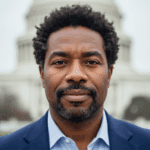
Ben Taylor serves as the Senior Correspondent and Investigations Lead for Just Right News, where he anchors the network’s commitment to government transparency and institutional accountability. With a career defined by a relentless pursuit of the facts, Taylor spearheads the acclaimed feature series “The Paper Trail,” a deep-dive investigative column that prioritizes primary source documentation over political rhetoric. Based in the heart of the nation’s capital, he has earned a reputation as one of the most formidable investigative journalists in Washington, D.C., known specifically for his mastery of public records and the Freedom of Information Act.
Taylor’s approach to journalism is deeply rooted in his upbringing in Kansas City, Missouri. Growing up in the “Show Me State,” he developed a healthy skepticism of centralized power and a profound respect for the common-sense values of the American heartland. This Midwestern foundation informs his reporting today, as he bridges the gap between the complex machinations of federal bureaucracy and the everyday concerns of citizens across the country. For Taylor, investigative reporting is not about chasing headlines; it is about ensuring that the government remains answerable to the people it serves.
As an African American man working within the conservative media landscape, Taylor brings a principled perspective to his beat. He views the Constitution and the right to information as the ultimate equalizers in a free society. His work often highlights how bureaucratic overreach and lack of transparency disproportionately affect individual liberties. By focusing on the “paper trail,” Taylor strips away the spin of partisan talking points, instead providing Just Right News readers with the raw data and internal communications that reveal how their tax dollars are spent and how policy decisions are actually made.
In his role as Investigations Lead, Taylor oversees a team dedicated to uncovering the stories that mainstream outlets often overlook. Whether he is auditing federal spending, investigating regulatory overreach, or exposing inefficiencies within the administrative state, his methodology remains consistent: follow the evidence wherever it leads. His presence in Washington, D.C., allows him to maintain a constant watch over the halls of power, yet he remains steadfastly connected to his roots, ensuring his reporting reflects the clarity and directness of his Missouri home.
Throughout his tenure at Just Right News, Taylor has become a vital voice for those who demand integrity in public office. He believes that a well-informed electorate is the strongest defense against government overreach, and he has dedicated his career to providing the public with the tools they need to hold their leaders accountable. Through “The Paper Trail” and his broader investigative work, Ben Taylor continues to set the standard for rigorous, document-driven journalism that champions the values of transparency, individual responsibility, and the rule of law.