

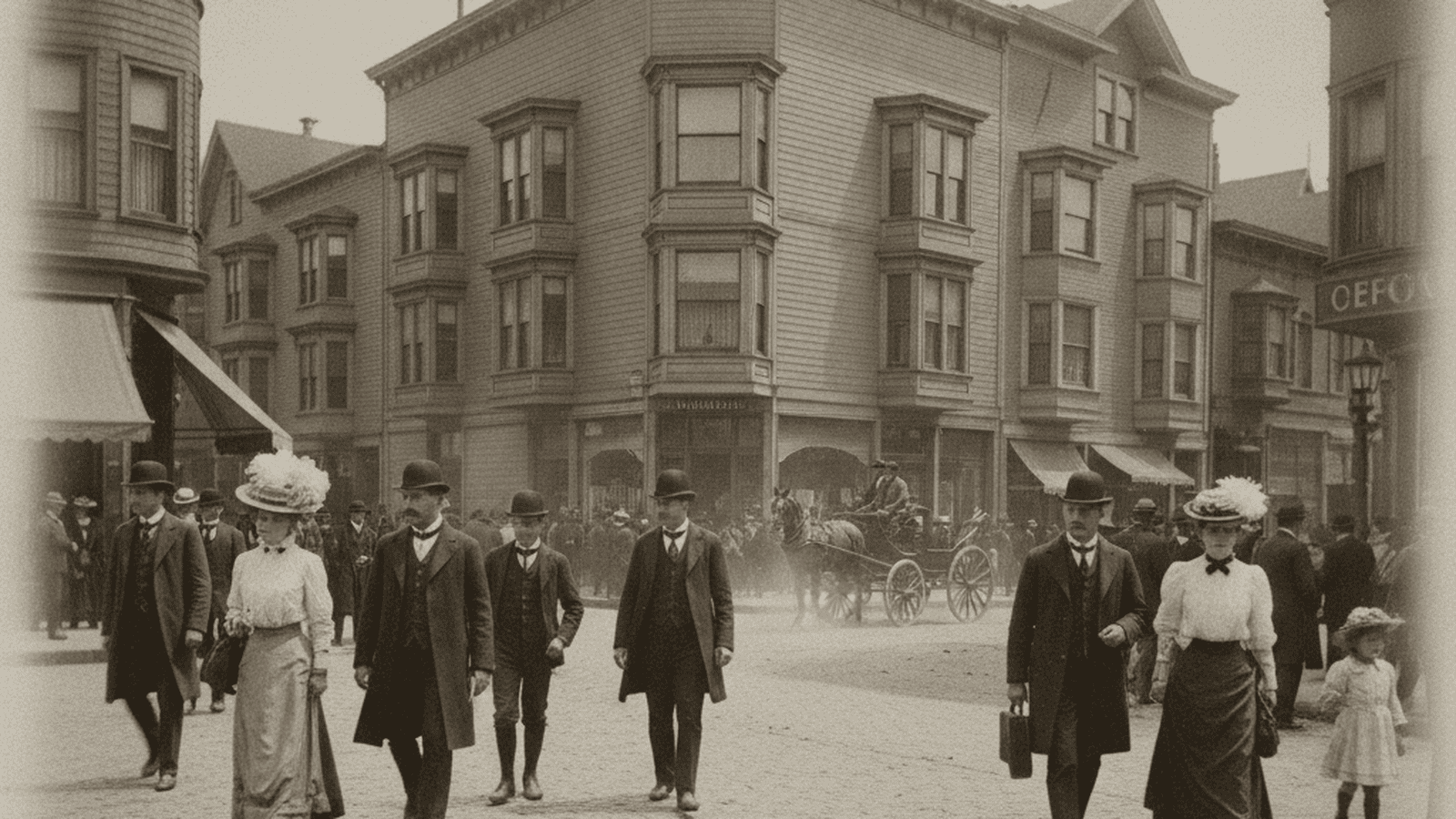
In 1905, the San Francisco Board of Education passed a resolution to segregate Japanese students into a separate school, creating a major diplomatic rift. The United States federal government was forced to intervene to prevent an international crisis with Japan, leading to the Gentlemen’s Agreement of 1907.
TLDR: San Francisco’s 1905 attempt to segregate Japanese students triggered a major diplomatic crisis between the United States and Japan. President Theodore Roosevelt intervened, eventually negotiating the 1907 Gentlemen’s Agreement, which ended local segregation in exchange for Japan restricting further emigration of laborers to the U.S.
In May 1905, the San Francisco Board of Education passed a resolution that would fundamentally alter the landscape of civil rights and international diplomacy in the United States. The board announced its intention to segregate Japanese and Korean students, forcing them to attend the “Chinese Primary School” alongside students of Chinese descent. This move was fueled by the rising influence of the Asiatic Exclusion League and a broader climate of nativism that permeated the Pacific Coast during the Progressive Era. Labor unions and local politicians campaigned on platforms of racial exclusion, viewing the growing Japanese population as a threat to economic stability and social cohesion.
The timing of the resolution was particularly sensitive for the federal government. Japan had recently emerged as a significant global power following its decisive victory in the Russo-Japanese War. The Japanese government viewed the segregation order as a direct insult and a violation of the 1894 Treaty of Commerce and Navigation between the two nations. News of the discrimination sparked outrage in Tokyo, leading to formal diplomatic protests that reached the desk of President Theodore Roosevelt. The Japanese press characterized the move as a betrayal by a supposed ally, and the tension threatened to escalate into a military or economic confrontation.
Roosevelt found himself in a precarious political position. While he personally disdained the racial prejudice of the San Francisco officials, he faced a constitutional challenge regarding the limits of federal authority over local school districts. The “separate but equal” doctrine established by Plessy v. Ferguson in 1896 provided a legal shield for the board’s actions at the time. However, the President recognized that the local policy was jeopardizing vital national security interests and trans-Pacific trade. He feared that if the federal government could not control the actions of a single city, its ability to conduct foreign policy would be permanently undermined.
In his 1906 annual message to Congress, Roosevelt characterized the segregation as a “wicked absurdity” and a “confession of weakness.” He invited the members of the San Francisco Board of Education and Mayor Eugene Schmitz to the White House to negotiate a resolution. The federal government filed lawsuits to challenge the segregation, but Roosevelt preferred a diplomatic solution that would appease both the Californians and the Japanese government. He argued that the city was essentially dictating the foreign policy of the entire nation, a situation he found intolerable.
The resulting compromise, known as the Gentlemen’s Agreement of 1907, saw the San Francisco Board of Education rescind its segregation order. In exchange, the United States government secured an informal agreement from Japan to stop issuing passports to laborers seeking to emigrate to the U.S. mainland. This arrangement allowed the children of Japanese residents to return to integrated schools while effectively curtailing further Japanese immigration without the need for a formal, insulting legislative ban. The agreement was a masterclass in executive diplomacy, bypassing the need for a treaty that might have been blocked by the Senate.
The 1905 segregation crisis highlighted the tension between state-level discriminatory practices and federal foreign policy objectives. While the immediate crisis was averted, the underlying nativism persisted, eventually leading to the more restrictive Immigration Act of 1924. This event remains a pivotal moment in the history of Asian American civil rights, illustrating how local educational policies could trigger international confrontations and shape national immigration law for decades. It also set a precedent for federal intervention in local civil rights matters when national interests were at stake.

Julie Harris serves as a Staff Writer for Just Right News, where she tackles some of the most pressing and complex issues facing the nation today. As the lead reporter for the Migration, Demographics & Cultural Shifts beat, Julie provides a grounded, principled perspective on how the movement of people and the changing makeup of communities are reshaping the American landscape. Her work is defined by a commitment to exploring the long-term consequences of social change, prioritizing the stability of local institutions and the preservation of national identity.
Her deep understanding of these issues is rooted in her upbringing in Tucson, Arizona. Growing up in a prominent border state, Julie witnessed firsthand the intricate realities of migration and the profound impact it has on local infrastructure, law enforcement, and the social fabric. This early exposure instilled in her a respect for the rule of law and a keen awareness of the challenges that arise when federal policies fail to align with the needs of border communities. Her reporting often reflects this lived experience, bringing a necessary level of nuance to topics that are often treated with abstraction in coastal newsrooms.
Now based in Santa Fe, New Mexico, Julie continues to report from the heart of the American Southwest. Her location provides a unique vantage point to observe the intersection of traditional regional cultures and the modern shifts brought about by both internal and external migration. In Santa Fe, a city defined by its rich history and distinct cultural heritage, she finds a perfect environment to explore how communities strive to maintain their character while navigating the pressures of a rapidly changing world. This perspective allows her to bridge the gap between policy debates in Washington and the reality of life in the high desert.
At Just Right News, Julie’s work is characterized by a dedication to examining the data and the human stories that define the “New Mosaic” of America. Her signature feature series, “The New Mosaic,” has become a cornerstone of her reporting. Through this series, Julie explores the evolving social architecture of the United States, documenting how shifts in population affect everything from local economies to the political landscape. She brings a critical eye to the narrative of demographic inevitability, instead asking how these shifts impact the average citizen’s sense of belonging and the integrity of the American social contract.
Julie’s background and her dedication to conservative principles make her a vital voice in contemporary journalism. She understands that demographics are more than just numbers on a spreadsheet; they represent the future of the American family and the nation’s enduring legacy. Through her diligent reporting and insightful analysis, Julie Harris ensures that her readers are informed about the forces shaping their world, providing a perspective that is as thoughtful as it is necessary for the modern era.