

Chicken of the Sea achieves a major sustainability milestone while Consumer Reports advocates for non-chemical pest management, reflecting a growing preference for private-sector solutions over federal regulatory mandates.
The landscape of American food safety and environmental stewardship is undergoing a quiet but significant transformation, driven more by market accountability and local common sense than by the heavy hand of federal regulators. As families across the country grow increasingly skeptical of the EPA’s ability to manage chemical runoff and industrial contamination, private entities and consumer advocates are stepping into the void to provide practical solutions for the food we eat and the land we maintain.
In a landmark move for the seafood industry, Chicken of the Sea announced on May 2, 2026, that it has secured 100% Marine Stewardship Council (MSC) certification for its entire tuna product line. This makes it the first mainstream U.S. seafood brand to achieve such a standard. For the American consumer, this isn’t just about environmental optics; it is about the rigorous tracking of water quality and catch methods that federal agencies often struggle to monitor in international waters. By adhering to third-party standards, the private sector is demonstrating that it can ensure the integrity of the food supply chain without the need for new, cumbersome federal mandates that often drive up costs for working families.
On the domestic front, the conversation regarding environmental health is shifting toward the reduction of chemical dependency in our own backyards. Consumer Reports has recently begun advocating for mechanical and landscape-based alternatives to traditional pesticides for tick control. Rather than relying on the EPA’s revolving door of approved chemical sprays—many of which eventually face scrutiny for groundwater contamination—the focus is moving toward defensive landscaping and physical barriers. This approach prioritizes the health of the local ecosystem and the safety of children and pets by removing the hazard entirely rather than managing it with synthetic toxins.
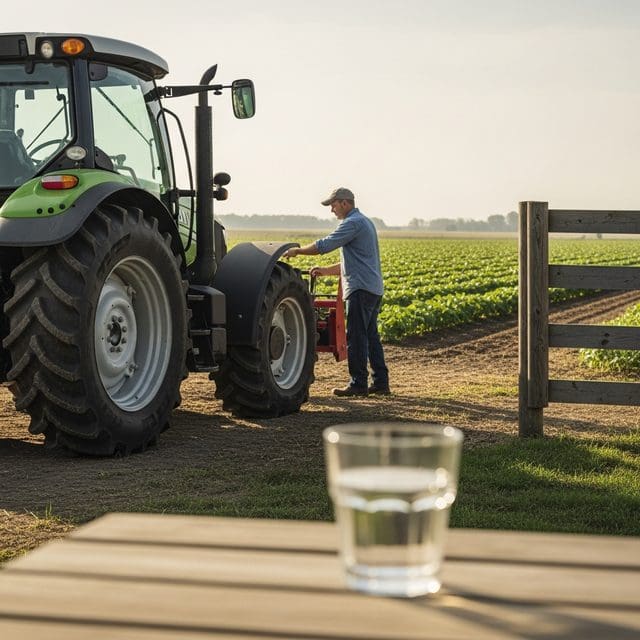
However, the agricultural sector continues to face sobering reminders of the inherent risks of the trade. In Bristol, Virginia, a tragic accident involving a tractor and a young child has highlighted the ongoing need for safety education within the farming community. While regulators often respond to such tragedies with calls for more restrictive equipment mandates, the reality on the ground suggests that local safety culture and immediate emergency response training are far more effective tools for protecting farm families.
As oil prices climb above $120 per barrel and geopolitical tensions rise, the cost of maintaining a safe and clean food supply will only increase. Farmers and processors are finding that the most resilient path forward lies in local sovereignty and voluntary standards. Whether it is ensuring the purity of the catch in the Pacific or managing the soil in the San Joaquin Valley, the trend is clear: Americans are looking for transparency they can trust and solutions that work, independent of the bureaucratic delays in Washington.

Eric Nolan serves as the Senior Correspondent for Food, Water, and Environmental Health at Just Right News, where he brings a principled, common-sense perspective to the most fundamental issues facing the American public. With a career dedicated to uncovering the truth behind the policies that govern our natural resources, Eric has become a trusted voice for readers who value traditional stewardship over bureaucratic overreach. His reporting is defined by a commitment to the idea that true environmentalism is rooted in the protection of the American family and the preservation of the nation’s agricultural heritage.
Raised in Fresno, California, Eric’s worldview was shaped in the heart of the San Joaquin Valley. Growing up in one of the world’s most productive agricultural hubs, he witnessed firsthand the vital connection between the land, the water, and the dinner table. In Fresno, he saw the resilience of farmers and the devastating impact that distant, top-down regulations can have on local communities. This upbringing instilled in him a deep respect for the producers who feed the country and a lifelong skepticism toward the alarmist narratives often pushed by mainstream media. For Eric, environmental health is not an abstract political talking point; it is a matter of ensuring that the people who work the land have the freedom and the resources to do so effectively.
Now based in Eugene, Oregon, Eric operates from a unique vantage point in the Pacific Northwest. Living in a region often defined by intense environmental debate, he provides a necessary counter-narrative to the prevailing trends of the area. From his base in Eugene, he monitors the shifting tides of federal and state policies, ensuring that the voices of rural citizens and property owners are not drowned out by urban activism. His reporting often bridges the gap between the rugged realities of the outdoors and the legislative halls where decisions are made, offering a grounded perspective that prioritizes local sovereignty and practical solutions.
As the lead for the acclaimed feature series “Earth on the Table,” Eric explores the intricate journey of the American food supply. He tackles critical issues such as water rights, soil health, and food security through a lens of national stability and individual liberty. He believes that a healthy environment and a thriving economy are not mutually exclusive, but rather two sides of the same coin of national prosperity. His work consistently highlights how innovation and private-sector ingenuity are the most effective tools for ensuring clean water and a safe food supply, rather than the expansion of the administrative state.
At Just Right News, Eric’s reporting serves as a vital resource for those who seek accountability and transparency. Whether he is investigating the impact of federal land management on local economies or examining the safety of the national food infrastructure, his work remains anchored in the values of heritage and hard work. Eric Nolan continues to be a leading voice in environmental journalism, championing the belief that the best way to protect our natural resources is to empower the people who live and work closest to them.