

Bureaucratic delays in Geneva and a 26 percent drop in African aid signal a new era of fiscal scrutiny for international health initiatives.
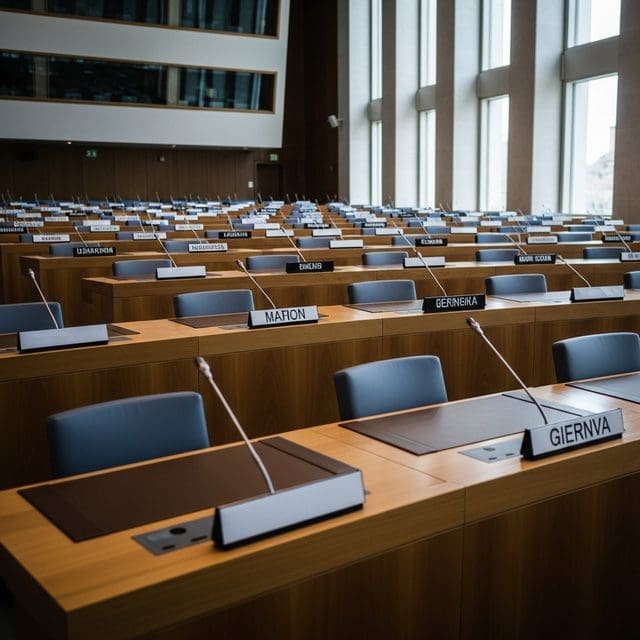
The machinery of global health governance is grinding through a period of intense friction as the World Health Organization (WHO) pushes its Pandemic Agreement negotiations into the summer of 2026. Following an April 30 session that failed to produce a final consensus, the WHO has extended talks on the Pathogen Access and Benefit-Sharing (PABS) system through mid-July. This delay highlights a growing rift between the desire for centralized international authority and the practical realities of national sovereignty and fiscal accountability.
While diplomats in Geneva debate the fine print of future pandemic responses, the ground reality in Sub-Saharan Africa reveals a stark contraction in the traditional foreign aid model. Official Development Assistance (ODA) to the region has fallen by 26.3%, settling at $174.3 billion globally. This decline is largely driven by a pivot in Western priorities, with Ukraine receiving $44.9 billion in support—a figure that now exceeds the total aid directed to the entire Sub-Saharan region. For the American taxpayer, this represents a significant reshuffling of the geopolitical deck, moving away from open-ended health subsidies toward targeted security interests.
The impact of these budgetary shifts is already visible. Recent data indicates that U.S. aid cuts have led to the closure of 1,175 clinics across Africa, disrupting reproductive health and HIV services for approximately 9 million people. In response to this vacuum, the WHO has launched a $1 billion emergency appeal to address care gaps in conflict zones like Sudan and Somalia. However, the success of such appeals is increasingly doubtful as donor nations demand greater transparency and evidence of efficacy before committing further capital.
Parallel to these funding challenges, the Africa CDC used the recent World Health Summit in Nairobi to pivot toward self-reliance. The launch of the Continental Immunisation Strategy suggests a move away from total dependence on Western pharmaceutical benevolence, focusing instead on regional manufacturing and mental health initiatives. This shift aligns with a broader market-driven philosophy: local problems require local infrastructure, not just perennial infusions of foreign cash that often bypass the very communities they intend to serve.
Climate adaptation remains the most significant financial hurdle, with Africa requiring an estimated $70 billion annually to build resilience against environmental volatility. Current capital flows remain insufficient, yet the emerging narrative suggests that private sector investment, rather than bureaucratic grants, may be the only viable path forward. As the WHO prepares for the World Health Assembly later this month, the overarching theme is no longer just about disease prevention, but about who holds the purse strings in an increasingly multipolar world.
For those observing from a U.S. perspective, the lesson is clear. The era of unquestioned expansion for global health bureaucracies is meeting the hard wall of fiscal reality. Whether through the negotiation of uranium stockpiles in the Middle East or the restructuring of health clinics in Mozambique, the focus has returned to national interest and the strategic allocation of limited resources.

Rachel Vaughn serves as a Senior Correspondent for Just Right News, where she leads the network’s coverage of Global Health, Climate, and Development. With a career defined by intellectual rigor and a commitment to principled reporting, Rachel provides a vital conservative perspective on some of the most complex and high-stakes issues facing the world today. Her work is characterized by a refusal to accept bureaucratic narratives at face value, focusing instead on how international policies impact national sovereignty, individual liberty, and the American taxpayer.
Raised in New Haven, Connecticut, Rachel grew up in an environment dominated by elite academic discourse. This upbringing provided her with a front-row seat to the inner workings of the American establishment, but it also instilled in her a healthy skepticism of the “ivory tower” consensus. She learned early on that while academic theories may sound promising in a lecture hall, they often fail to account for the practical realities of the working class. This background drives her to bridge the gap between high-level policy discussions and the common-sense concerns of everyday citizens, ensuring that her reporting remains grounded and accessible.
Now based in Burlington, Vermont, Rachel operates from a unique vantage point within one of the nation’s most progressive political landscapes. Living and working in a region that often serves as a testing ground for radical social and environmental experiments allows her to witness the real-world consequences of these policies firsthand. From her base in the Green Mountain State, she provides Just Right News readers with essential “boots on the ground” reporting, documenting the friction between local mandates and the constitutional freedoms of the individual. Her presence in Burlington ensures that her critiques of globalist agendas are informed by a direct understanding of how those ideologies manifest at the local level.
In her acclaimed feature series, “Planetary Stakes,” Rachel explores the intersection of international development and environmental stewardship. She rejects the alarmism often found in mainstream media, opting instead for a sober analysis of the economic and geopolitical costs of global climate agreements. Her reporting frequently highlights the importance of market-driven innovation and the role of American leadership in fostering global health without ceding authority to unelected international bodies. Through “Planetary Stakes,” she has become a leading voice for those who believe that true conservation and public health are best achieved through transparency, accountability, and the protection of private property rights.
Throughout her tenure at Just Right News, Rachel has distinguished herself as a journalist who is unafraid to ask difficult questions of global institutions. Whether she is investigating the influence of non-governmental organizations on domestic policy or analyzing the fiscal transparency of international health initiatives, her goal remains the same: to provide her audience with the facts necessary to navigate an increasingly interconnected world. Her blend of East Coast intellectual heritage and her current immersion in the political heart of the Northeast makes her an indispensable asset to the newsroom and a trusted source for readers seeking a principled, conservative take on the issues that define our era.