

President Trump has dismissed Tehran’s latest ceasefire proposal and ordered 5,000 U.S. troops out of Germany, signaling a hardline shift in both Middle Eastern and European security posture.
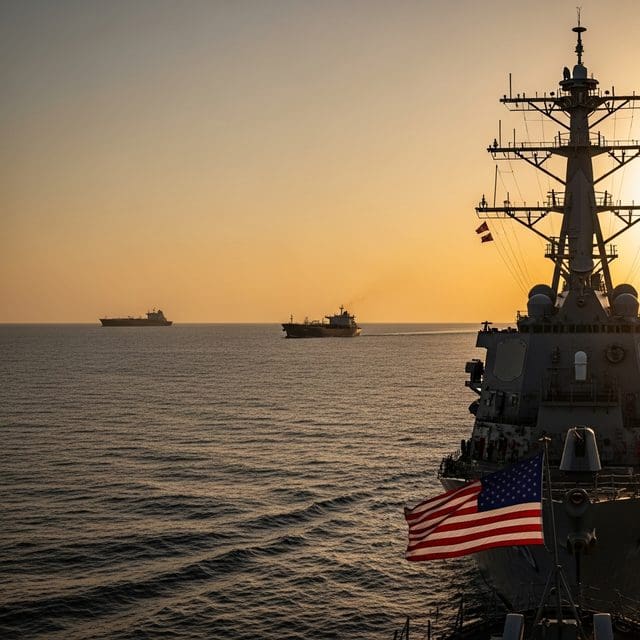
The White House confirmed on May 1 that President Trump has rejected the latest diplomatic proposal from Tehran aimed at ending the ongoing conflict. Citing dissatisfaction with the offered terms, the administration signaled that the current naval blockade and military pressure—collectively known as Operation Epic Fury—will continue. The President informed Congress that the 60-day deadline for war powers authorization is no longer applicable, as the current state of hostilities has been periodically interrupted by ceasefires.
This refusal to pivot toward a diplomatic off-ramp comes as the economic toll of the conflict begins to manifest domestically. Spirit Airlines announced it would cease all operations after 30 years, with leadership specifically citing the surge in fuel costs driven by the war in the Middle East. Despite the domestic pressure, the Pentagon’s blockade remains a potent tool of economic statecraft, having cost the Iranian regime an estimated $4.8 billion in lost oil revenue as of early May. Total costs for Operation Epic Fury are now estimated between $25 billion and $100 billion, reflecting the high stakes of the administration’s refusal to accept a compromise that does not meet American security requirements.
In a move that has rattled the NATO alliance, the Pentagon also announced the withdrawal of approximately 5,000 U.S. troops from Germany. This reduction, representing roughly 14 percent of the American force presence in the country, follows a public rift between President Trump and German Chancellor Friedrich Merz regarding Iran policy. The withdrawal underscores a realist shift in American foreign policy, where security guarantees are increasingly tied to bilateral cooperation and shared strategic objectives. The administration has made it clear that European partners must align more closely with U.S. interests if they wish to maintain current levels of American military investment.
Regional dynamics are further complicated by the involvement of Moscow. Russian Foreign Minister Sergey Lavrov held high-level discussions with Iranian officials this week regarding freedom of navigation in the Strait of Hormuz. While Russia has offered to act as a repository for Iran’s highly enriched uranium—a central demand of the Trump administration—Tehran has thus far refused to surrender its stockpile. This deadlock is exacerbated by reports of internal fracturing within the Iranian leadership, as IRGC generals and civilian negotiators remain at odds over their counter-strategy, leaving the regime unable to present a unified front to the West.
On the trade front, the administration is doubling down on its leverage. President Trump announced a 25 percent tariff on European Union cars and trucks starting next week, citing non-compliance with existing trade agreements. This multifaceted approach—combining military blockades, troop redeployments, and trade penalties—reflects a broader strategy to reassert American interests by challenging the status quo in both European and Middle Eastern theaters. While domestic critics point to the collapse of companies like Spirit Airlines as a warning sign, the White House remains committed to a policy of maximum pressure until its core objectives are met.

Olivia Kendall serves as the Senior Correspondent for Geopolitics, Defense, and Foreign Policy at Just Right News, where she provides a principled, conservative perspective on the complex forces shaping the global stage. With a career dedicated to deconstructing the intricacies of international relations, Kendall has become a trusted voice for readers who value national sovereignty, a robust military, and a foreign policy that prioritizes American interests above all else.
A native of Washington, D.C., Kendall’s professional journey is deeply rooted in her upbringing within the nation’s capital. Growing up in the epicenter of American political life, she developed an early and profound understanding of how policy is crafted and, more importantly, how it often fails to account for the values of the American heartland. This unique vantage point allowed her to witness firsthand the rise of globalist bureaucracies, fueling her commitment to reporting that champions the constitutional foundations of the United States. Her background as a British White American further informs her worldview, providing her with a keen appreciation for the Western tradition and the enduring importance of the “Special Relationship” in maintaining global stability.
Now based in Arlington, Virginia, Kendall operates from the doorstep of the Pentagon and the heart of the nation’s defense establishment. Her proximity to the decision-makers in the military and intelligence communities allows her to provide boots-on-the-ground reporting that is both timely and deeply informed. For Kendall, Arlington is more than just a base of operations; it is a daily reminder of the sacrifices made by the men and women in uniform. This connection to the defense community drives her rigorous coverage of military readiness and her advocacy for a “peace through strength” approach to diplomacy.
At Just Right News, Kendall is perhaps best known for her acclaimed feature series, “The World’s Shadow on America.” In this ongoing project, she explores the direct correlation between international developments and the daily lives of American citizens. Whether she is analyzing the encroachment of foreign adversaries in domestic supply chains or the impact of international treaties on local economies, Kendall’s work serves as a vital bridge between distant geopolitical shifts and their consequences at home. She rejects the notion that foreign policy is an abstract concern for elites, instead proving that what happens in the corridors of power in Brussels or Beijing has a tangible “shadow” that falls across every American doorstep.
Throughout her tenure, Kendall has remained a steadfast critic of international overreach and a vocal proponent of a clear-eyed, realistic foreign policy. She brings a sharp analytical mind to her beat, often challenging the prevailing narratives of the mainstream media to uncover the underlying truths that affect national security. Her reporting is characterized by a refusal to compromise on the truth and a dedication to the idea that a strong, secure America is the world’s best hope for liberty. As a Senior Correspondent, Olivia Kendall continues to lead the charge in providing the essential context and conservative insight necessary to navigate an increasingly volatile world.