

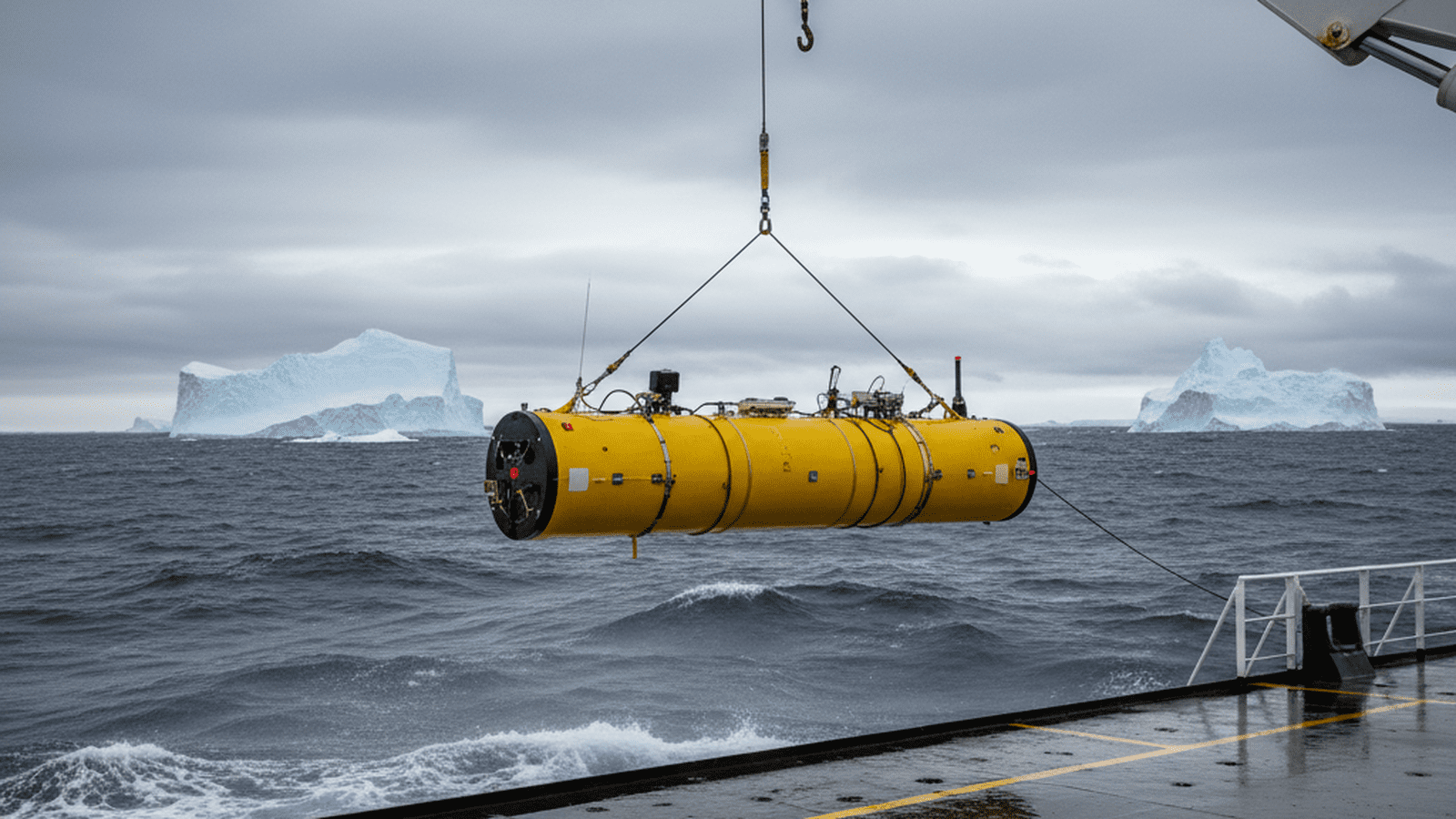
An international research collaboration has identified a significant acceleration in heat uptake within the deep layers of the Southern Ocean. Utilizing advanced autonomous diving floats, scientists determined that the region’s capacity to buffer global atmospheric warming is being tested as thermal energy penetrates into previously stable abyssal zones.
TLDR: A global study utilizing Deep Argo robotic floats has revealed that the Southern Ocean is absorbing heat at an accelerating rate, with warming reaching depths of over 2,000 meters. This discovery suggests that the deep ocean is playing a more critical role in regulating climate than previously understood, though it may have long-term consequences for sea-level rise.
The Southern Ocean has long served as the planet’s primary thermal buffer, absorbing nearly 90 percent of the excess heat generated by anthropogenic greenhouse gas emissions. Recent findings from an international research initiative have revealed that this heat is penetrating the deep ocean at a rate far exceeding previous projections. By utilizing a sophisticated network of autonomous diving floats, scientists have documented significant warming in the abyssal layers of the Antarctic waters, a region previously thought to be relatively insulated from rapid climate shifts. This discovery challenges existing models of ocean heat distribution and highlights the dynamic nature of the deep-sea environment.
This discovery is the result of a multi-year collaboration involving oceanographers from Australia’s CSIRO, the United States’ NOAA, and several European research institutions. The team relied on the Deep Argo program, an ambitious expansion of the original Argo array that has monitored the upper 2,000 meters of the global ocean for decades. These newer, high-pressure-resistant floats are engineered to withstand the crushing forces of the deep sea, capable of descending to depths of 6,000 meters. By providing the first continuous look at the thermal state of the deep sea, these instruments have filled a critical gap in the global climate record.
The data collected indicates that the warming trend is not confined to the surface but is actively altering the characteristics of the Antarctic Bottom Water (AABW). AABW is the densest water mass in the global ocean and plays a crucial role in driving the global overturning circulation, often referred to as the ocean’s conveyor belt. As this water warms and becomes less dense, the circulation that distributes heat, carbon, and nutrients around the globe may begin to slow or shift. The study found that the warming in these deep layers has accelerated over the past decade, suggesting that the deep ocean is becoming an increasingly active participant in the global climate response.
The mechanisms driving this deep-sea warming are linked to changes in atmospheric wind patterns and the accelerating melt of Antarctic ice shelves. Stronger westerly winds are pushing warmer surface waters southward, where they are eventually pulled into the deep ocean through complex subduction processes. Additionally, the influx of freshwater from melting glaciers reduces the salinity of the surface layers, which alters the buoyancy and mixing patterns that regulate deep-ocean temperatures. These interconnected processes demonstrate the extreme sensitivity of the Southern Ocean to broader atmospheric changes.
One of the most immediate consequences of this deep-ocean warming is the acceleration of sea-level rise through thermal expansion. As water molecules heat up, they move more vigorously and occupy more space. When this expansion occurs throughout the entire water column, rather than just the surface, the impact on global sea levels is significantly magnified. While the deep ocean provides a temporary reprieve by sequestering heat away from the atmosphere, this energy remains within the planetary system, influencing oceanic stability and marine ecosystems for centuries to come.
The international research team emphasizes that these findings underscore the necessity of a permanent, global deep-ocean monitoring system. Current models of climate change often struggle to accurately represent the complexities of deep-sea circulation due to a lack of high-resolution data. Future efforts will focus on expanding the Deep Argo array to other ocean basins, including the North Atlantic and the Pacific, to determine if similar trends are occurring globally. Understanding the precise rate at which the deep ocean is warming is essential for refining climate projections and developing effective global adaptation strategies for a warming world.

Rachel Vaughn serves as a Senior Correspondent for Just Right News, where she leads the network’s coverage of Global Health, Climate, and Development. With a career defined by intellectual rigor and a commitment to principled reporting, Rachel provides a vital conservative perspective on some of the most complex and high-stakes issues facing the world today. Her work is characterized by a refusal to accept bureaucratic narratives at face value, focusing instead on how international policies impact national sovereignty, individual liberty, and the American taxpayer.
Raised in New Haven, Connecticut, Rachel grew up in an environment dominated by elite academic discourse. This upbringing provided her with a front-row seat to the inner workings of the American establishment, but it also instilled in her a healthy skepticism of the “ivory tower” consensus. She learned early on that while academic theories may sound promising in a lecture hall, they often fail to account for the practical realities of the working class. This background drives her to bridge the gap between high-level policy discussions and the common-sense concerns of everyday citizens, ensuring that her reporting remains grounded and accessible.
Now based in Burlington, Vermont, Rachel operates from a unique vantage point within one of the nation’s most progressive political landscapes. Living and working in a region that often serves as a testing ground for radical social and environmental experiments allows her to witness the real-world consequences of these policies firsthand. From her base in the Green Mountain State, she provides Just Right News readers with essential “boots on the ground” reporting, documenting the friction between local mandates and the constitutional freedoms of the individual. Her presence in Burlington ensures that her critiques of globalist agendas are informed by a direct understanding of how those ideologies manifest at the local level.
In her acclaimed feature series, “Planetary Stakes,” Rachel explores the intersection of international development and environmental stewardship. She rejects the alarmism often found in mainstream media, opting instead for a sober analysis of the economic and geopolitical costs of global climate agreements. Her reporting frequently highlights the importance of market-driven innovation and the role of American leadership in fostering global health without ceding authority to unelected international bodies. Through “Planetary Stakes,” she has become a leading voice for those who believe that true conservation and public health are best achieved through transparency, accountability, and the protection of private property rights.
Throughout her tenure at Just Right News, Rachel has distinguished herself as a journalist who is unafraid to ask difficult questions of global institutions. Whether she is investigating the influence of non-governmental organizations on domestic policy or analyzing the fiscal transparency of international health initiatives, her goal remains the same: to provide her audience with the facts necessary to navigate an increasingly interconnected world. Her blend of East Coast intellectual heritage and her current immersion in the political heart of the Northeast makes her an indispensable asset to the newsroom and a trusted source for readers seeking a principled, conservative take on the issues that define our era.