

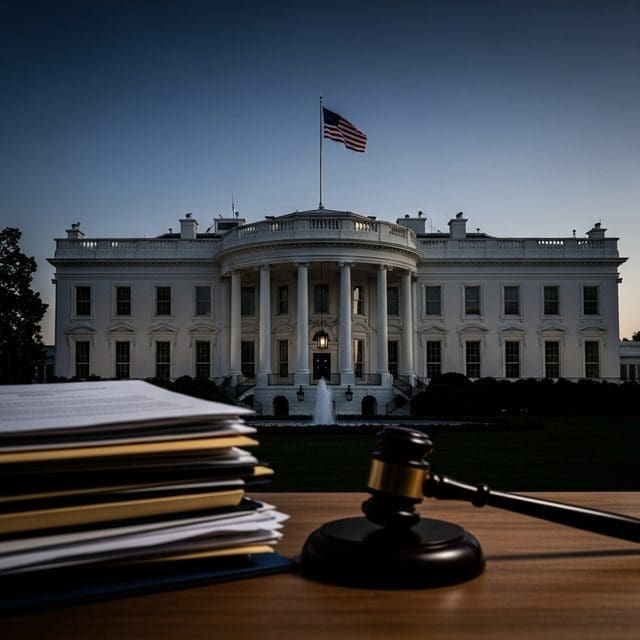
President Trump rejected a revised Iranian peace proposal while announcing new 25 percent tariffs on European vehicles, signaling a dual-track strategy of military pressure and economic protectionism.
A series of high-stakes executive decisions on May 1, 2026, has shifted the landscape of American foreign and domestic policy. President Trump formally rejected a proposal from Tehran aimed at ending the current hostilities, signaling that the administration will maintain its naval blockade despite growing domestic skepticism and a looming War Powers Act deadline.
The Iranian proposal suggested reopening the Strait of Hormuz and ending active combat operations in exchange for postponing nuclear discussions. However, the President indicated he will use the blockade as leverage to force immediate nuclear concessions. This rejection comes as a Washington Post-ABC News-Ipsos survey reveals that 61 percent of Americans believe the administration erred in launching Operation Epic Fury. Discrepancies regarding the cost of the conflict have also emerged; while the Pentagon maintains a lower official figure, Iranian Foreign Minister Abbas Araghchi claims the operation has cost the U.S. approximately $100 billion.
On the trade front, the White House announced a significant escalation in tariffs on European Union vehicles. Starting May 5, the administration will implement a 25 percent tariff on EU cars and trucks, an increase from the 15 percent rate established last summer. While heavy-duty trucks were already subject to the 25 percent rate, this expansion represents a broader shift toward protectionist measures following the President’s recent state visit with King Charles III, which notably resulted in the lifting of tariffs on Scotch whisky.
Security concerns have also intensified following the release of surveillance footage involving Cole Tomas Allen, the 31-year-old suspect in the White House Correspondents’ Dinner shooting. The footage shows Allen casing the Hilton and breaching security perimeters without initial intervention by agents. This development coincides with the President withdrawing Casey Means’ nomination for surgeon general, opting instead for Dr. Nicole Saphier, a radiologist and former media contributor.
In the legislative and judicial branches, the administrative state faced a setback when a federal judge in Massachusetts blocked the administration’s halt on processing immigration applications for citizens from travel-ban countries, labeling the policy unlawful. Meanwhile, the ten-week government shutdown—the longest in history—concluded as the President signed a bill to fund the Department of Homeland Security. Notably, the funding excludes Border Patrol and ICE, a compromise required to reopen the agency.
Finally, the political map for the 2026 midterms was redrawn as Maine Governor Janet Mills suspended her Senate campaign on April 30. Citing a lack of financial resources, Mills’ exit leaves a vacuum in a critical race just as Nebraska becomes the first state to implement Medicaid work requirements under the One Big Beautiful Bill Act, months ahead of the federal deadline.
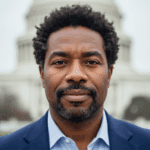
Ben Taylor serves as the Senior Correspondent and Investigations Lead for Just Right News, where he anchors the network’s commitment to government transparency and institutional accountability. With a career defined by a relentless pursuit of the facts, Taylor spearheads the acclaimed feature series “The Paper Trail,” a deep-dive investigative column that prioritizes primary source documentation over political rhetoric. Based in the heart of the nation’s capital, he has earned a reputation as one of the most formidable investigative journalists in Washington, D.C., known specifically for his mastery of public records and the Freedom of Information Act.
Taylor’s approach to journalism is deeply rooted in his upbringing in Kansas City, Missouri. Growing up in the “Show Me State,” he developed a healthy skepticism of centralized power and a profound respect for the common-sense values of the American heartland. This Midwestern foundation informs his reporting today, as he bridges the gap between the complex machinations of federal bureaucracy and the everyday concerns of citizens across the country. For Taylor, investigative reporting is not about chasing headlines; it is about ensuring that the government remains answerable to the people it serves.
As an African American man working within the conservative media landscape, Taylor brings a principled perspective to his beat. He views the Constitution and the right to information as the ultimate equalizers in a free society. His work often highlights how bureaucratic overreach and lack of transparency disproportionately affect individual liberties. By focusing on the “paper trail,” Taylor strips away the spin of partisan talking points, instead providing Just Right News readers with the raw data and internal communications that reveal how their tax dollars are spent and how policy decisions are actually made.
In his role as Investigations Lead, Taylor oversees a team dedicated to uncovering the stories that mainstream outlets often overlook. Whether he is auditing federal spending, investigating regulatory overreach, or exposing inefficiencies within the administrative state, his methodology remains consistent: follow the evidence wherever it leads. His presence in Washington, D.C., allows him to maintain a constant watch over the halls of power, yet he remains steadfastly connected to his roots, ensuring his reporting reflects the clarity and directness of his Missouri home.
Throughout his tenure at Just Right News, Taylor has become a vital voice for those who demand integrity in public office. He believes that a well-informed electorate is the strongest defense against government overreach, and he has dedicated his career to providing the public with the tools they need to hold their leaders accountable. Through “The Paper Trail” and his broader investigative work, Ben Taylor continues to set the standard for rigorous, document-driven journalism that champions the values of transparency, individual responsibility, and the rule of law.