

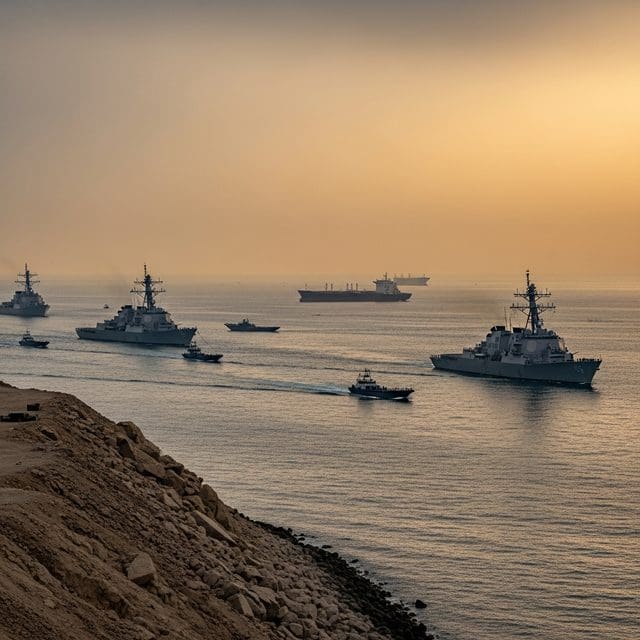
Diplomatic efforts in Pakistan falter as Iran launches drone strikes in Iraq and demands a full U.S. blockade lift before reopening the world’s most critical energy chokepoint.
The fragile peace in the Middle East faced a dual blow this week as Iranian forces violated a standing ceasefire and diplomatic negotiations in Pakistan reached a stalemate. Despite a temporary cessation of hostilities intended to pave the way for a long-term resolution, an Iranian drone strike targeted Kurdish groups near Sulaimaniyah, Iraq, effectively signaling the end of the truce. This kinetic escalation coincides with the expiration of the U.S.-Iran ceasefire, leaving the region in a state of high-alert military posturing.
At the center of the friction is the Strait of Hormuz, which remains largely closed to commercial traffic. Through Pakistani mediators, Tehran presented a new proposal offering to reopen the waterway and end active hostilities on the condition that the United States lifts its naval blockade and ends the current war. Crucially, the Iranian offer defers all nuclear negotiations to an unspecified later date. President Trump has signaled that the United States will not accept these terms, maintaining that any deal must address the totality of Iran’s destabilizing behavior, including its nuclear ambitions and regional proxy warfare.
The breakdown of the Pakistan-hosted talks has triggered a shift in diplomatic alignment. Iranian Foreign Minister Abbas Araghchi traveled to Moscow for consultations with President Vladimir Putin, where he reportedly blamed American intransigence for the collapse of the negotiations. This pivot toward Russia underscores the emerging Eurasian bloc’s attempt to bypass Western-led security frameworks. Meanwhile, the U.S. has withdrawn its high-level negotiators from Islamabad, with President Trump stating that Iranian officials must now contact Washington directly if they seek to avoid further escalation.
Tensions are also rising within the Western alliance. German Chancellor Friedrich Merz expressed public concern over the trajectory of the conflict, warning that Israeli military operations in Lebanon could jeopardize the broader peace process. While Merz suggested that the European Union might consider sanctions relief as part of a comprehensive settlement, he cautioned that Tehran appears to be “playing for time” rather than seeking a genuine strategic shift. The internal NATO friction is compounded by political shifts in Hungary, where election winner Peter Magyar has indicated a willingness to enforce ICC warrants against Israeli leadership, a move that would break the previous administration’s staunchly pro-Israel alignment.
On the ground, the military reality continues to outpace diplomatic rhetoric. Israel has begun deploying Iron Dome batteries and ground troops to the United Arab Emirates to bolster regional defenses against potential Iranian retaliation. Simultaneously, the humanitarian and economic costs of the blockade are mounting. While a Russian superyacht was notably permitted to transit the blocked Strait of Hormuz, global energy markets remain volatile as the trickle of commercial traffic fails to meet global demand. For the American heartland, the stakes are increasingly visible in domestic markets, where mortgage rates have ticked upward in response to the renewed uncertainty in the Persian Gulf.

Olivia Kendall serves as the Senior Correspondent for Geopolitics, Defense, and Foreign Policy at Just Right News, where she provides a principled, conservative perspective on the complex forces shaping the global stage. With a career dedicated to deconstructing the intricacies of international relations, Kendall has become a trusted voice for readers who value national sovereignty, a robust military, and a foreign policy that prioritizes American interests above all else.
A native of Washington, D.C., Kendall’s professional journey is deeply rooted in her upbringing within the nation’s capital. Growing up in the epicenter of American political life, she developed an early and profound understanding of how policy is crafted and, more importantly, how it often fails to account for the values of the American heartland. This unique vantage point allowed her to witness firsthand the rise of globalist bureaucracies, fueling her commitment to reporting that champions the constitutional foundations of the United States. Her background as a British White American further informs her worldview, providing her with a keen appreciation for the Western tradition and the enduring importance of the “Special Relationship” in maintaining global stability.
Now based in Arlington, Virginia, Kendall operates from the doorstep of the Pentagon and the heart of the nation’s defense establishment. Her proximity to the decision-makers in the military and intelligence communities allows her to provide boots-on-the-ground reporting that is both timely and deeply informed. For Kendall, Arlington is more than just a base of operations; it is a daily reminder of the sacrifices made by the men and women in uniform. This connection to the defense community drives her rigorous coverage of military readiness and her advocacy for a “peace through strength” approach to diplomacy.
At Just Right News, Kendall is perhaps best known for her acclaimed feature series, “The World’s Shadow on America.” In this ongoing project, she explores the direct correlation between international developments and the daily lives of American citizens. Whether she is analyzing the encroachment of foreign adversaries in domestic supply chains or the impact of international treaties on local economies, Kendall’s work serves as a vital bridge between distant geopolitical shifts and their consequences at home. She rejects the notion that foreign policy is an abstract concern for elites, instead proving that what happens in the corridors of power in Brussels or Beijing has a tangible “shadow” that falls across every American doorstep.
Throughout her tenure, Kendall has remained a steadfast critic of international overreach and a vocal proponent of a clear-eyed, realistic foreign policy. She brings a sharp analytical mind to her beat, often challenging the prevailing narratives of the mainstream media to uncover the underlying truths that affect national security. Her reporting is characterized by a refusal to compromise on the truth and a dedication to the idea that a strong, secure America is the world’s best hope for liberty. As a Senior Correspondent, Olivia Kendall continues to lead the charge in providing the essential context and conservative insight necessary to navigate an increasingly volatile world.