

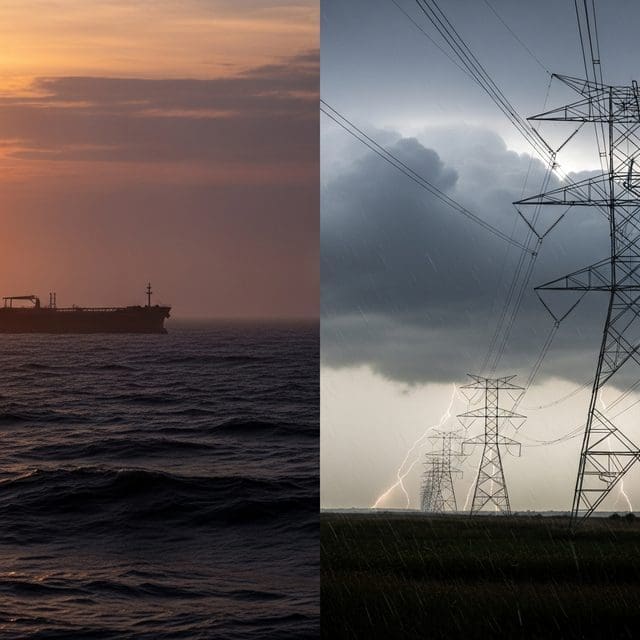
Oil prices remain volatile as President Trump rejects Iran’s proposal to reopen the Strait of Hormuz, insisting on nuclear concessions while domestic energy infrastructure faces severe weather challenges.
The global energy landscape faced a fresh wave of uncertainty this week as the delicate balance between Middle Eastern geopolitics and domestic infrastructure reliability shifted. West Texas Intermediate (WTI) crude, which spiked above $101 following the April 22 tanker attacks in the Strait of Hormuz, has retreated slightly to the $95 range. However, the risk premium remains high as diplomatic efforts to secure the world’s most vital oil transit point have stalled.
President Trump recently canceled a high-level diplomatic mission to Islamabad, citing an “inadequate” proposal from Tehran. While Iran offered to reopen the Strait and end hostilities, the offer was contingent on postponing nuclear negotiations. The administration has maintained that nuclear transparency must be a prerequisite for any easing of the naval blockade. Consequently, U.S. Central Command has intensified enforcement, reportedly turning back 38 vessels as the regional standoff escalates. In a significant shift, Iranian Foreign Minister Abbas Araghchi traveled to Moscow to meet with Vladimir Putin, suggesting a pivot toward Russian alignment as Western talks fracture.
The economic fallout of these disruptions is being felt acutely across the Atlantic. New data indicates that geopolitical conflicts have cost British households an additional £3,400 in energy expenses since 2021. This serves as a stark reminder of the “security tax” embedded in globalized energy markets, reinforcing the argument for localized, resilient energy production to insulate consumers from foreign volatility.
Domestically, the American energy grid is facing immediate physical threats. A series of fast-moving, severe storms has battered the Midwest and Plains, resulting in at least two fatalities and significant infrastructure damage. An EF4 tornado in Oklahoma and an EF2 in Texas have highlighted the ongoing challenge of maintaining grid reliability during extreme weather events. These storms have caused localized flooding and power disruptions, testing the limits of regional utility providers during a period of high seasonal demand.
On the technological front, the demand for reliable, baseload power continues to be driven by the rapid expansion of the artificial intelligence sector. While China recently blocked Meta’s $2 billion acquisition of AI startup Manus on regulatory grounds, the race for AI dominance remains a primary driver of energy policy. OpenAI’s move to develop its own consumer hardware signifies a deepening of the AI ecosystem, which will inevitably place greater long-term strain on the domestic electric grid.
For the American taxpayer, the intersection of these events—stalled Middle East peace, rising industrial power needs, and weather-related grid stress—underscores the necessity of a pragmatic energy strategy. Market analysts suggest that the “higher-for-longer” interest rate environment may persist as the oil crisis feeds into broader inflationary pressures, making the push for energy independence not just a matter of security, but of fundamental economic survival.
Mark Davis serves as the Senior Correspondent for Energy, Climate, and Resource Economics at Just Right News. In an era where the conversation around the environment is often dominated by alarmism and top-down mandates, Mark provides a vital, market-oriented perspective on the complex forces shaping our world. As the lead voice behind the acclaimed feature series “Power and the Planet,” he explores the intersection of environmental policy, global energy markets, and the fundamental economic principles that sustain modern civilization.
Mark’s pragmatic approach to resource management was forged in the high desert of his hometown, Albuquerque, New Mexico. Growing up in a region defined by both its breathtaking natural beauty and its rugged, resource-dependent landscape, he developed an early appreciation for the delicate balance between conservation and utilization. New Mexico’s unique position as a hub for both traditional energy production and cutting-edge scientific research provided Mark with a front-row seat to the evolution of the American energy sector. This upbringing instilled in him a deep-seated belief that true environmental stewardship is inseparable from economic prosperity and technological innovation.
Now based in Boulder, Colorado, Mark operates from the heart of the nation’s climate research community. While Boulder is often seen as a bastion of environmental idealism, Mark utilizes his post to provide a necessary counterweight, grounded in the realities of resource economics. He understands that energy policy does not exist in a vacuum; it has tangible consequences for the American taxpayer, the stability of the national power grid, and the strength of the domestic manufacturing sector. By reporting from the front lines of the climate debate, he is able to challenge prevailing narratives with hard data and a commitment to the principles of the free market.
Throughout his tenure at Just Right News, Mark has distinguished himself by focusing on the “Resource Economics” aspect of his beat. He frequently highlights the hidden costs of rapid energy transitions and advocates for an “all-of-the-above” energy strategy that prioritizes American energy independence. His work often shines a light on the geopolitical implications of resource scarcity, arguing that a secure nation must first be an energy-secure nation. Whether he is analyzing the impact of federal land-use regulations or investigating the supply chains required for new technologies, Mark remains focused on how policy decisions affect the lives and livelihoods of everyday citizens.
In “Power and the Planet,” Mark continues to bridge the gap between complex scientific concepts and the economic realities facing the country. He rejects the false choice between a healthy environment and a thriving economy, instead seeking out solutions that leverage American ingenuity and private-sector competition. For Mark, reporting on the climate is not about following the latest trends, but about ensuring that the conversation remains tethered to the foundational values of liberty, property rights, and fiscal responsibility. His contributions ensure that Just Right News readers receive a comprehensive, clear-eyed view of the challenges and opportunities defining the future of our planet.