

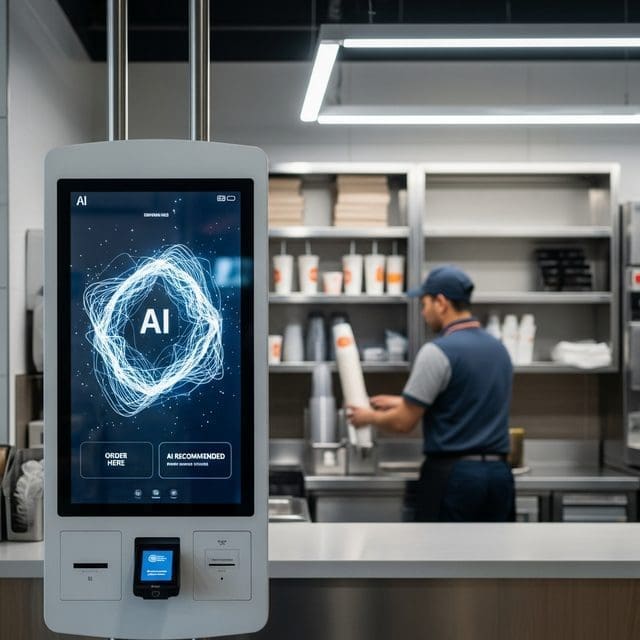
As Starbucks and Little Caesars integrate AI ordering, the service industry faces a shift toward automation that could permanently alter the landscape for entry-level workers.
The American service industry is entering a period of significant structural change as major brands pivot toward automated customer interactions. As of late April 2026, Starbucks and Little Caesars have officially launched ordering applications on ChatGPT. This move represents more than just a technological upgrade; it is a direct challenge to the traditional role of the service worker as the primary interface between the business and the consumer.
For decades, entry-level positions in food service have provided a critical starting point for the American workforce. However, the integration of AI-powered agents suggests a future where the demand for human labor at the counter is drastically reduced. While tech proponents argue these tools increase efficiency, the reality for the blue-collar worker is a narrowing path to stable employment. This shift occurs as OpenAI seeks to further redefine the mobile experience through dedicated AI-powered hardware and ecosystems, potentially automating administrative and service tasks on a mass scale.
In the technology sector itself, the workforce is showing signs of internal friction regarding the application of their labor. Hundreds of Google employees have recently petitioned leadership to reject classified AI work with the Pentagon. These workers are expressing concern over the ethical implications of their code being used in military settings, mirroring previous internal revolts at other tech giants. This tension highlights a growing divide between the corporate drive for high-stakes government contracts and the personal convictions of the highly skilled labor force.
While automation threatens to displace workers in the West, other global regions are grappling with the long-term status of their labor pools. In Nigeria, Governor Adeleke of Osun State recently converted casual workers at the state teaching hospital to permanent staff. These individuals had served in temporary capacities for 12 years without the security of full-time benefits or job protection. This move toward formalizing labor stands in contrast to the ‘gig-ification’ often seen in developed economies, where permanent roles are frequently replaced by temporary or automated solutions.
Economic growth figures from Tamil Nadu, India, which reported a 10.83% real growth rate for the 2025-26 period, further underscore the global competition for industrial and service dominance. As these emerging markets strengthen their economic foundations, the American worker is squeezed between high-growth foreign competition and domestic automation.
The stability of the American family depends on the dignity of work and the availability of jobs that pay a living wage. When major corporations replace the neighborhood barista or the cashier with a chatbot, they are not just optimizing a balance sheet; they are removing a rung from the economic ladder. The challenge for policymakers in the coming months will be to ensure that the drive for technological progress does not leave the backbone of the American economy—the manual and service worker—behind in the pursuit of efficiency.

Tom Blake serves as the Senior Correspondent for Labor, Wages, and Automation at Just Right News, where he brings a grounded, principled perspective to the most pressing economic issues facing the American heartland. As the lead voice behind the acclaimed feature series “The Price of Work,” Tom focuses his reporting on the intersection of traditional industry and the rapidly evolving technological landscape, always prioritizing the dignity of the individual worker and the health of the American family.
Tom’s deep understanding of the labor market is not merely academic; it is rooted in his upbringing in Detroit, Michigan. Growing up in the shadow of the automotive industry, he witnessed firsthand the triumphs and tribulations of the American blue-collar workforce. He saw how the stability of a manufacturing job could build a community and, conversely, how the erosion of those industries could tear the social fabric apart. This background instilled in him a lifelong respect for the trades and a healthy skepticism toward economic policies that prioritize globalist interests over the well-being of local communities.
Now based in Pittsburgh, Pennsylvania, Tom continues to report from the front lines of the shifting economy. Pittsburgh, a city that has reinvented itself while maintaining its gritty, industrious spirit, provides the perfect vantage point for his beat. From the steel mills that remain to the high-tech robotics labs reshaping the city’s future, Tom explores how automation is changing the nature of employment. His reporting often highlights the tension between innovation and tradition, arguing that while progress is inevitable, it must not come at the expense of the American worker’s ability to provide for their family through honest, meaningful labor.
In his role at Just Right News, Tom has become a vital voice for those who feel overlooked by mainstream economic coverage. He rejects the notion that the decline of American manufacturing is an unavoidable casualty of the modern era. Instead, his work often examines how regulatory overreach, rising energy costs, and the unchecked rise of automation impact the take-home pay of everyday citizens. Through “The Price of Work,” Tom delves into the true cost of economic shifts, looking beyond the raw data to tell the stories of the people behind the statistics.
Tom’s reporting is characterized by a commitment to the conservative values of self-reliance, fiscal responsibility, and the preservation of the American dream. He believes that a strong nation is built on a foundation of stable jobs and fair wages, and his work seeks to hold both government and corporate entities accountable to that standard. Whether he is interviewing a shop floor manager about the implementation of new AI technology or analyzing the impact of wage inflation on small businesses, Tom provides a clear-eyed analysis that resonates with readers who value hard work and common sense.
Through his dedicated coverage, Tom Blake remains a steadfast advocate for the American workforce, ensuring that the voices of those in the industrial heartland are heard loud and clear in the national conversation. His perspective is essential for anyone seeking to understand the complex realities of labor and automation in the twenty-first century.